Bactrian camel, Scythian art, Eurasian steppe, Scythian-Siberian Animal Style
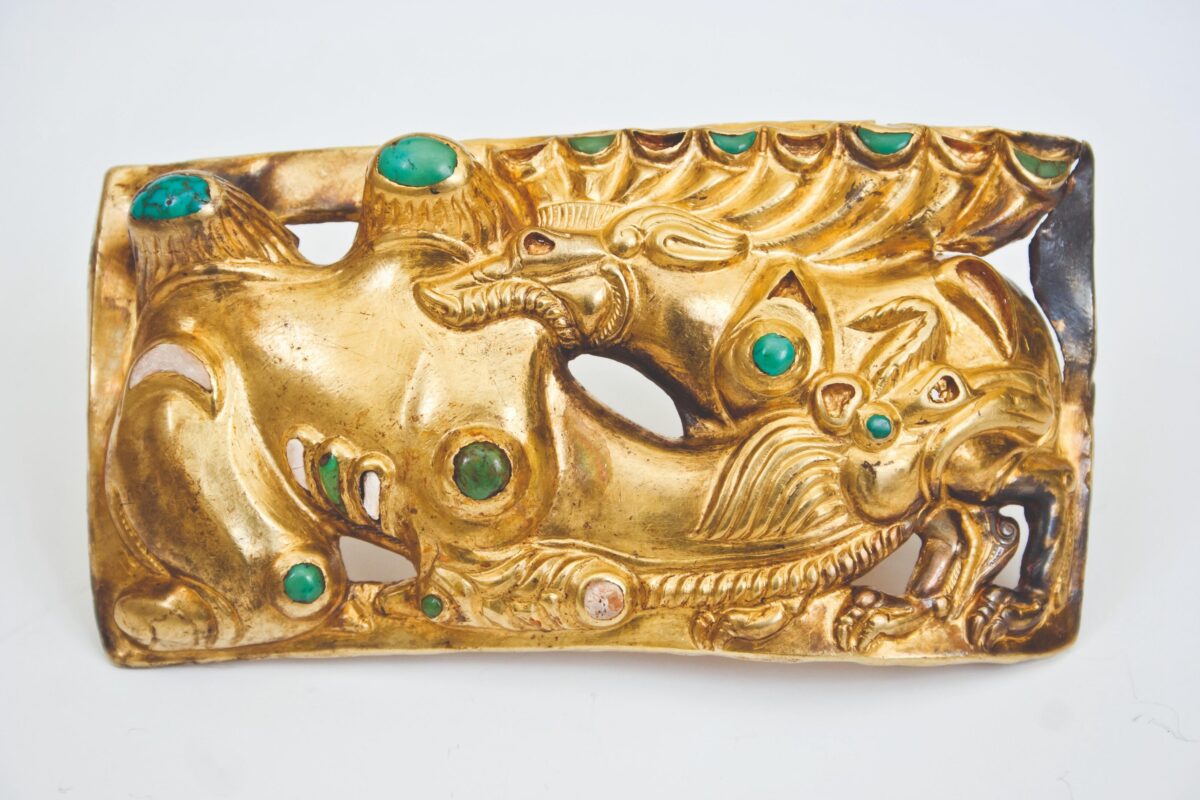
Excavations by L. I. Pogodin near the village of Isakovka, Gorky District, Omsk Region, Western Syberia, Russia. From the Omsk Museum collection.
Photo source https://idemvmuzei.ru
Lit.
Mordvintseva V. I., Polychrome Animal Style [Мордвинцева В. И. Полихромный звериный стиль]
Cheremisin D.V., On the Semantics of the Image of the Beak-Headed Deer in Pazyryk Art
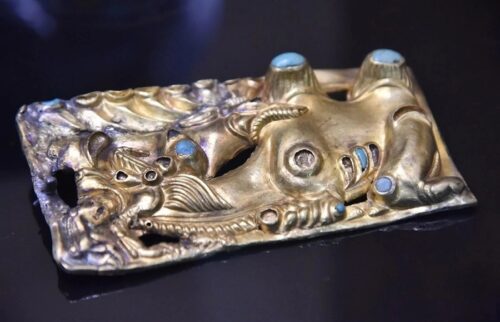
Belt plates, 2nd-4th century. Gold, silver, turquoise. Burial 6, mound 3, Isakovka burial ground, Sargat culture.
Belt plates from Isakovka depicting a fight between a camel and a fantastic wolf predator. Such scenes are well known in the art of Central Asia, but usually involve a camel and a feline predator. [Mordvintseva V. I.]
A horned wolf tearing apart a camel is the subject of a gold plaque from the Sargat burial ground of Isakovka; images of “deer-horned predators” are also known in the Scythian animal style of the Kuban region and in the art of the forest-steppe Tagar culture. [Cheremisin D.V.]
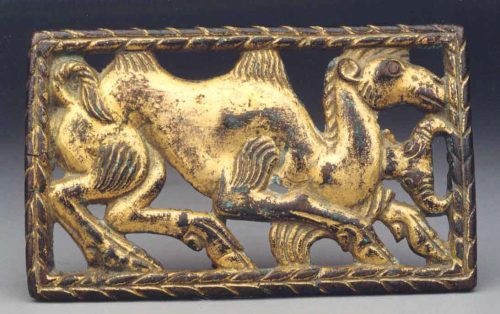
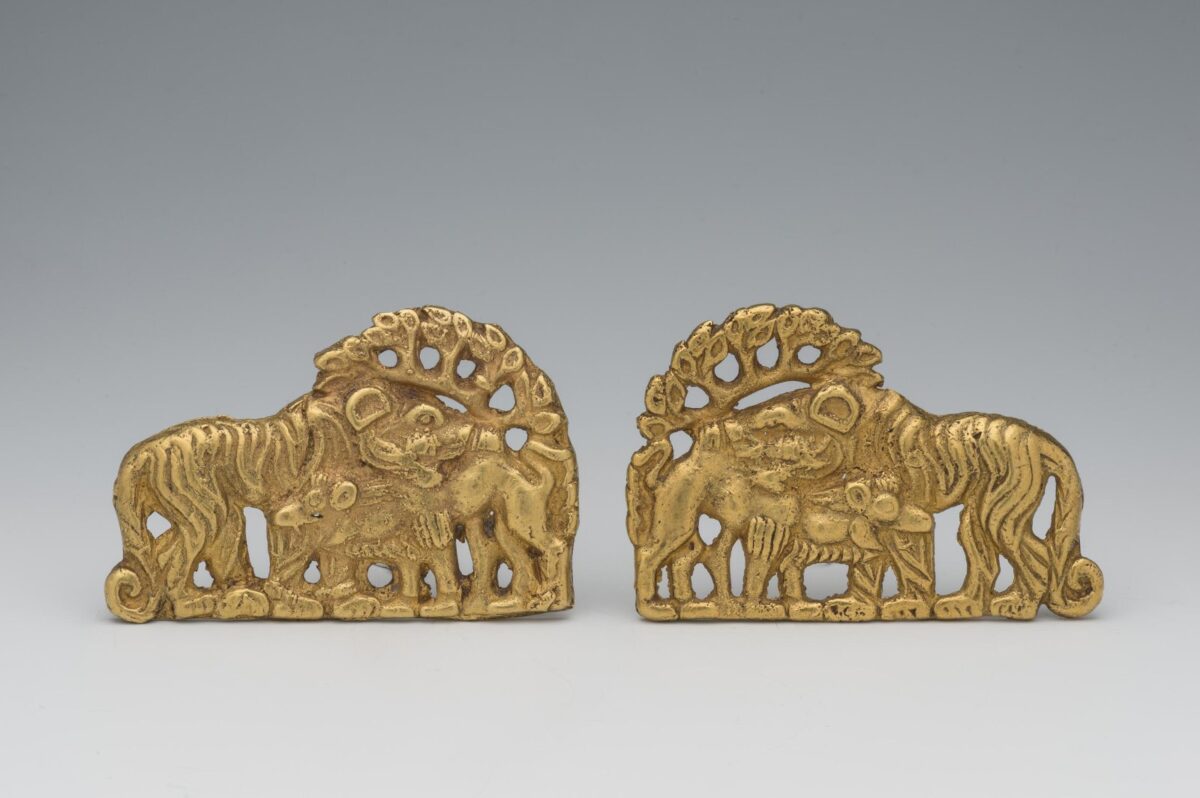
2nd–1st century BCE, North China
The Met 2002.201.115
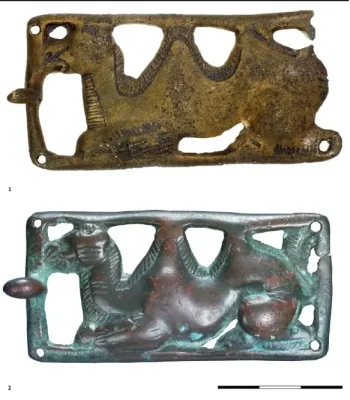
1 – Могильник Ново Калкашевский -II. Курган № 2/1990.
Погребение № 5. Уфа, НМРБ, инв. № ОФ 17013/17.
Novo-Kalkashsky II burial mound. Sterlibashevsky district of the Republic of Bashkortostan. Excavations by Akbulatov I.M., 1990. Early Iron Age, early nomads of the Southern Urals (Sarmatians), 3rd-2nd C BCE
2 – Могильник Донской. Курган № 1/1991. Погребение № 21.
Ростов на Дону, РОМК, инв. № 21728.
[Rostov Museum. 1st C BCE-1st C CE]
Фото:1 – М.Ю. Трейстер, 2015; 2 – РОМК
M. Treister, „Imports“ from Central Asia and Siberia in the Burials of Asian Sarmatia of the 2nd–1st Centuries BC
https://www.academia.edu
Fabric imprints on the reverse, cast in double-sided clay molds made from the imprint of two models [R.S. Minasyan]
Hermitage Си.1727-1/242
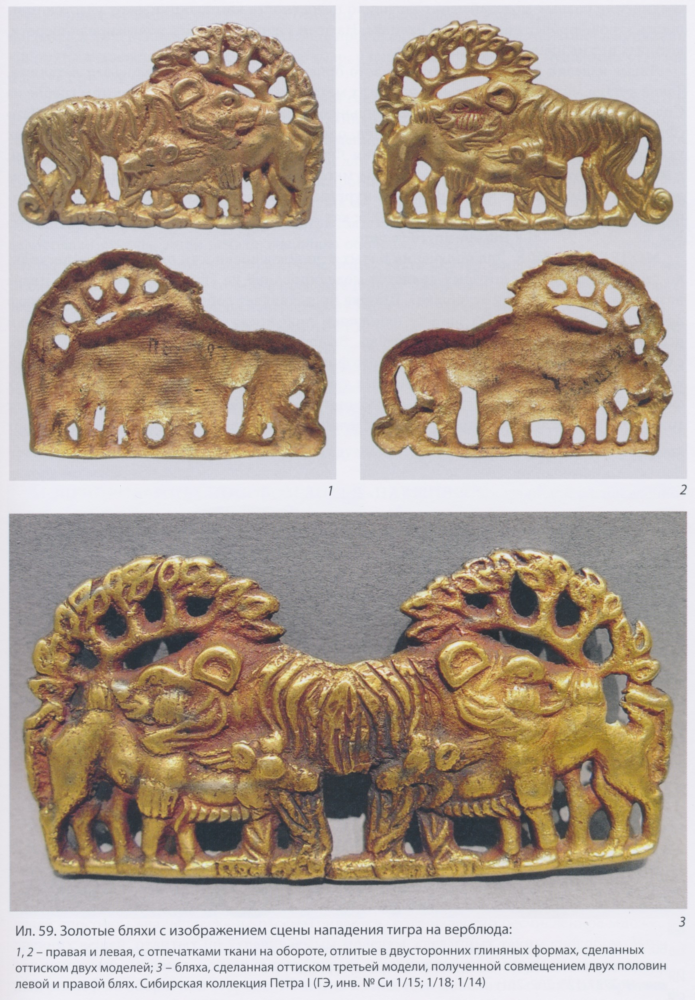
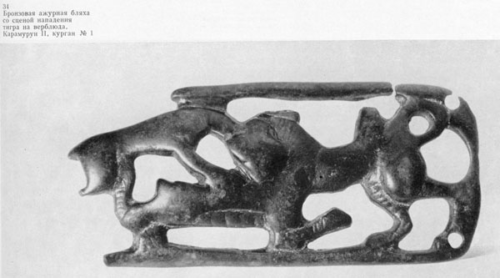
Photo after M.I. Artamonov
Also https://www.academia.edu/ and A.K. Akishev

After Francfort, H.-P.

After Francfort, H.-P.

Photo source

Rimming of a vessel, Filippovka, 4th century BCE
The Silkroad in the History of the Ancient Period/Die Seidenstraße in der Geschichte der Antike, [in:] Die Krim. Goldene Insel im Schwarzen Meer. Begleitbuch zur Ausstellung in Bonn, Darmstadt 2013: 67-87. Marek Jan Olbrycht
https://www.academia.edu

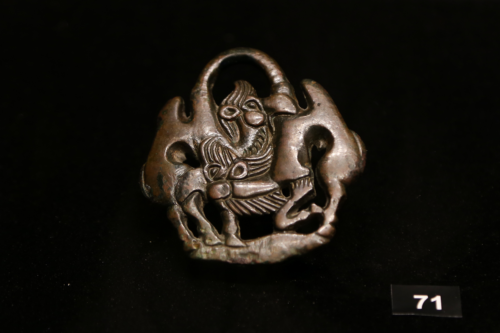
Bronze plaques with a scene of struggle between two-humped camels.
Besoba burial ground, Martok district, Kazakhstan. 6th-5th century BCE.
Excavations of M.K. Kadyrbayev in the 70s of the 20th century. Collection of the Aktobe regional museum
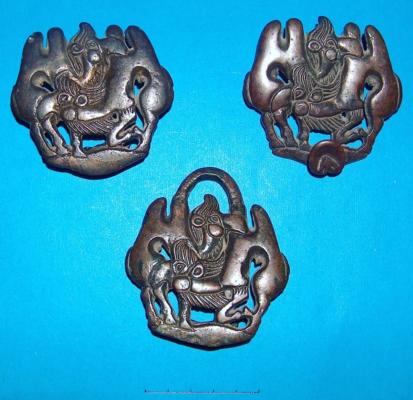
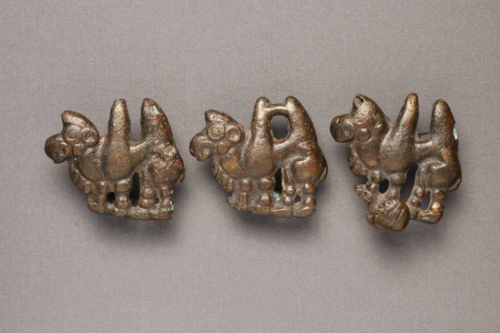
Photo source https://kazpravda.kz/n/tayny-drevnih-kurganov-ah/
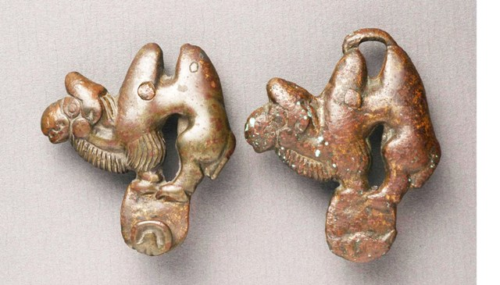
https://aqtobegazeti.kz

[read more]

Inlaid gold plaque depicting a figure driving a camel; 1.9 x 1.6 cm. From Takht-i Sangin, the Oxus Temple [Tajikistan]

“4th century BC-1st century AD. A bronze belt plate with openwork seated camel with hatching on the body to represent fur; border of plate decorated with wave pattern; to the front is hook in the shape of a bird head, small lug to the rear. From a London, UK, collection; acquired 1970s. 31 grams, 73mm (3″). Fair condition. Rare.”

Plate in the shape of a lying Bactrian camel. Black patina. Ordos, 3rd-1st century BCE 4.2 x 3.8 cm
Bibliography EC Bunker, Thaw Collections, op. cit. : n ° 92.An Ordos bronze belt plaque in the form of a reclining Bactrian camel. 3rd-1st century BC
Auction house BOISGIRARD – ANTONINI PARIS
- Francfort, H.-P., 2020, “Les vestiges et les représentations du Camelus bactrianus en Asie centrale entre le IIIe et le Ier millénaire av. J.‑C.”, in: , Lyon, MOM éditions, p. 27-54. https://www.academia.edu/resource/work/44417969
- The Silkroad in the History of the Ancient Period/Die Seidenstraße in der Geschichte der Antike, [in:] Die Krim. Goldene Insel im Schwarzen Meer. Begleitbuch zur Ausstellung in Bonn, Darmstadt 2013: 67-87. Marek Jan Olbrycht https://www.academia.edu
- M. Treister, „Imports“ from Central Asia and Siberia in the Burials of Asian Sarmatia of the 2nd–1st Centuries BC https://www.academia.edu
- Mordvintseva V. I., Polychrome Animal Style
[Мордвинцева В. И. Полихромный звериный стиль, Симферополь: «Универсум».] 2003 - Cheremisin D.V., On the Semantics of the Image of the Beak-Headed Deer in Pazyryk Art.
[Д.В. Черемисин, К семантике образа клювоголового оленя в пазырыкском искусстве. // Кемерово: «Кузбассвузиздат».] 2008 http://www.kronk.spb.ru/library/cheremisin-dv-2008a.htm - Религии Центральной Азии и Азербайджана. Том I. Традиционные верования и шаманизм, Самарканд – 2016
- Константин Окороков THE 2013 FINDS IN THE CONTEXT OF THE ANIMAL STYLE OF THE KURGAN 1 OF THE NECROPOLIS FILIPPOVKA 1 https://www.academia.edu
- https://journal.richt.ir/mbp/article-1-1234-en.pdf
- R.S. Minasyan, Metalworking in ancient times and the Middle Ages // St. Petersburg: State Hermitage Museum Publishing House. 2014. 472 p. ISBN 978-5-93572-578-5 [Р.С. Минасян, Металлообработка в древности и Средневековье]
- M.I. Artamonov “Treasures of the Sakas” [М.И. Артамонов «Сокровища саков»]
- A.K. Akishev, New artistic bronze items from the Saka period. [А.К. Акишев, Новые художественные бронзовые изделия сакского времени. // Прошлое Казахстана по археологическим источникам. Алма-Ата: 1976] http://kronk.spb.ru/library/akishev-ak-1976.htm
Related posts:
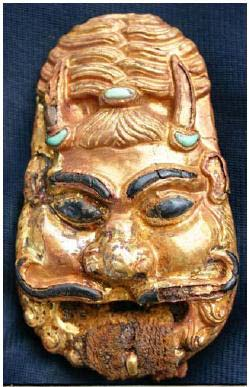 Gilded mask-shaped buckle with turquoise inlays; Tsaraam cemetery in Buryatia, Xiongnu Royal burial [d/b]
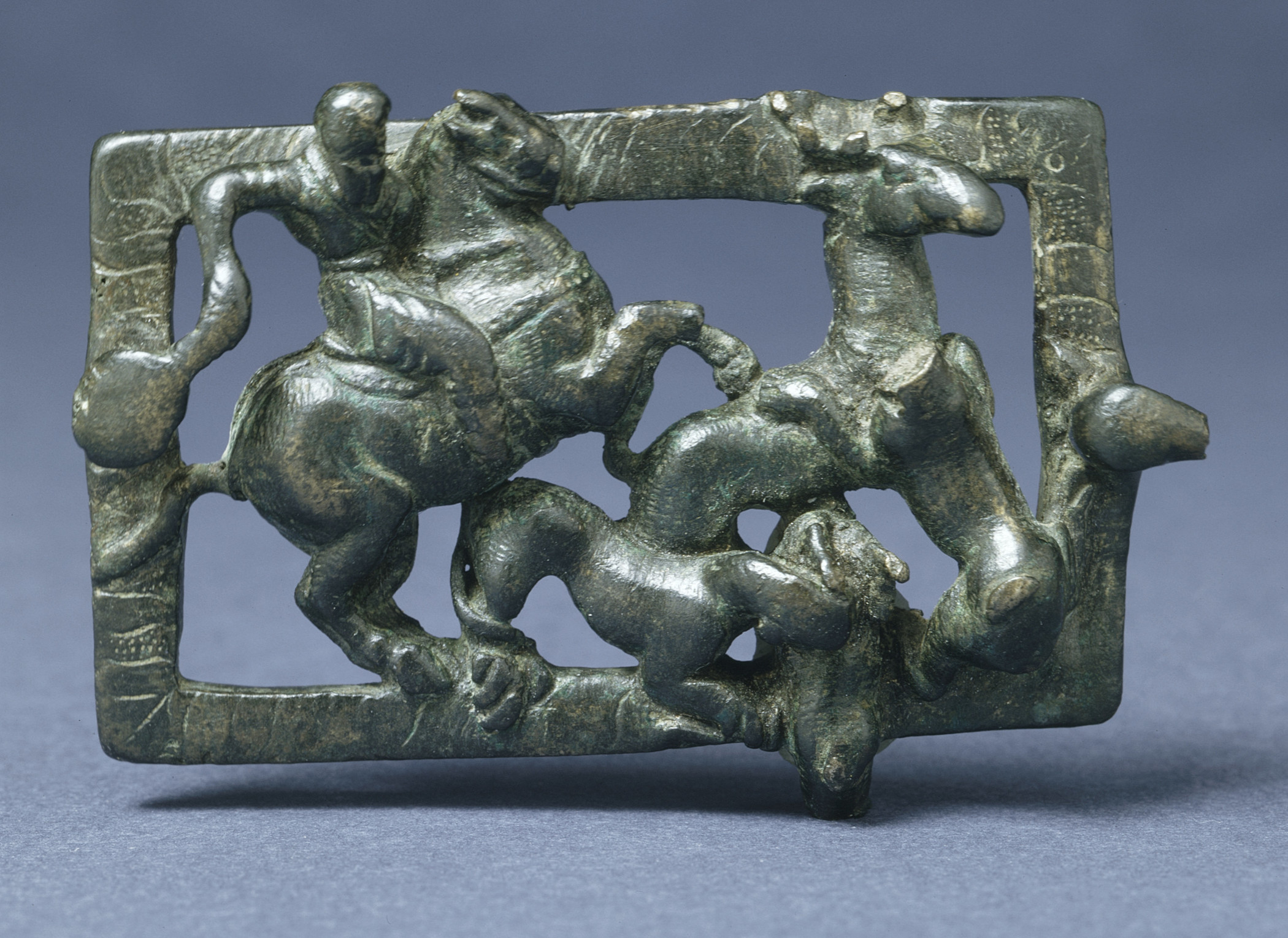 Belt buckles in high relief – notes
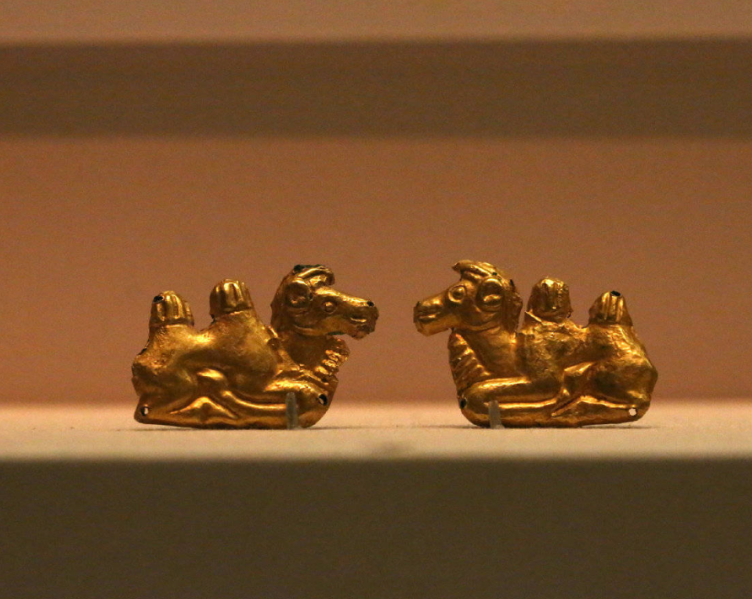 Gold ornaments, Bactrian camels, Western Han Dynasty period (206 BCE–9 CE) [d/b]
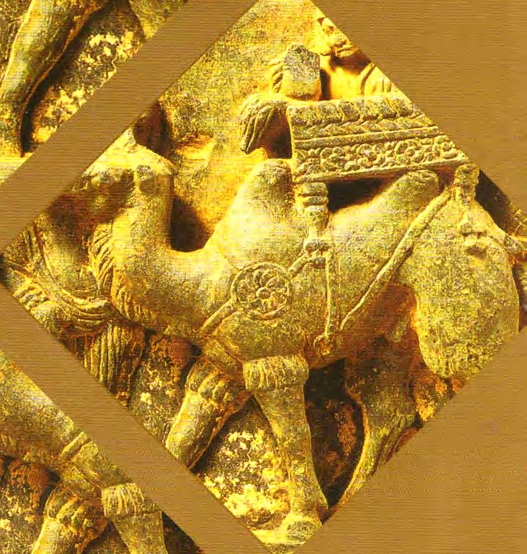 Relief with a Bactrian camel, 2nd-4th C [d/b]
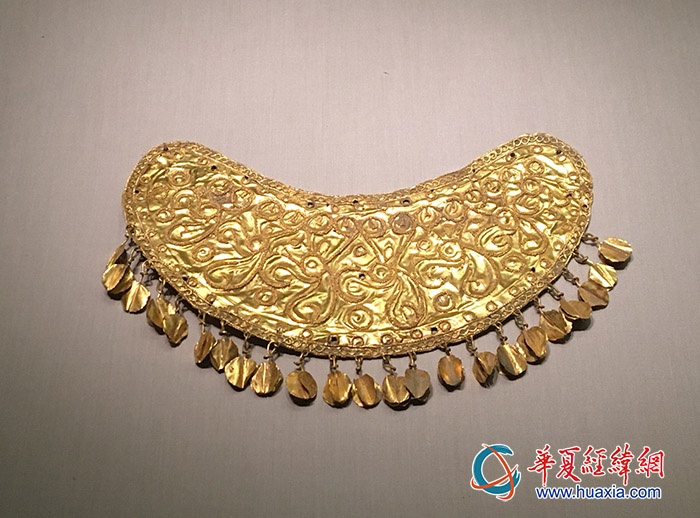 Pectoral, Eastern Han Dynasty (25-220 CE) [d/b]
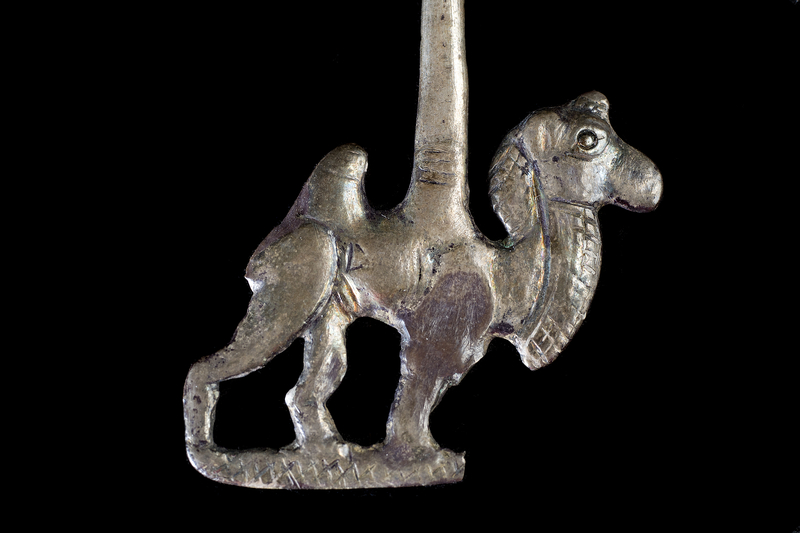 Camel silver pin, Gonur Depe, Margiana (Bactria), 18th-15th C BCE [d/b]
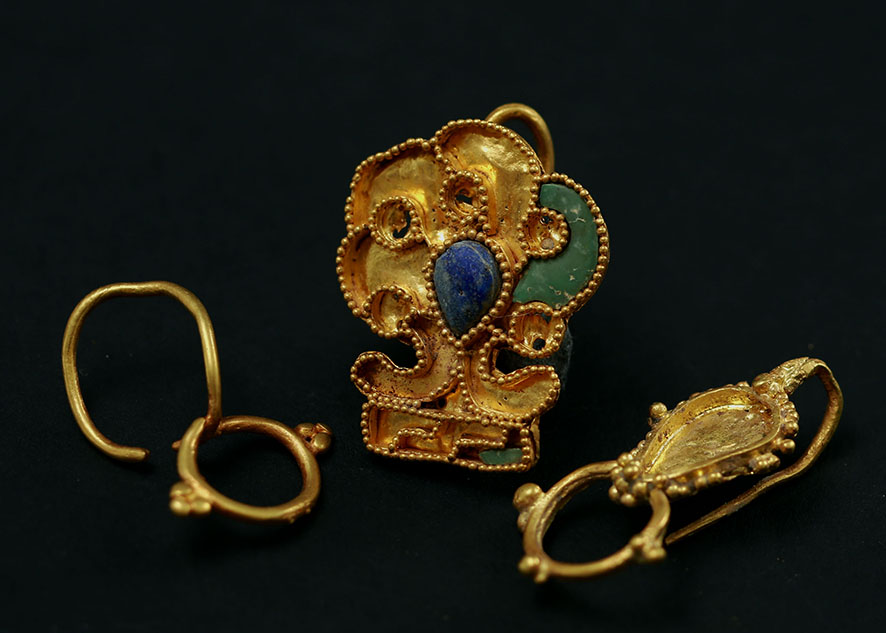 Xiongnu earrings from the TUH [Tamirin ulaan hushuu] cemetery, Mongolia
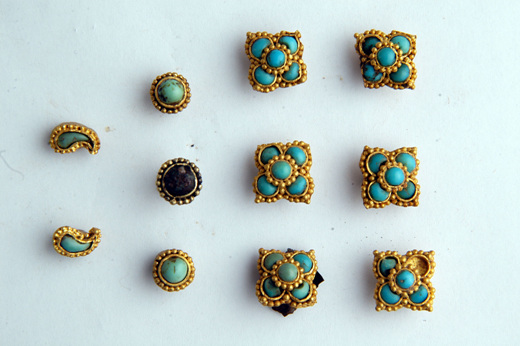 Gold and turquoise small ornaments from Mongolia and the comparanda.
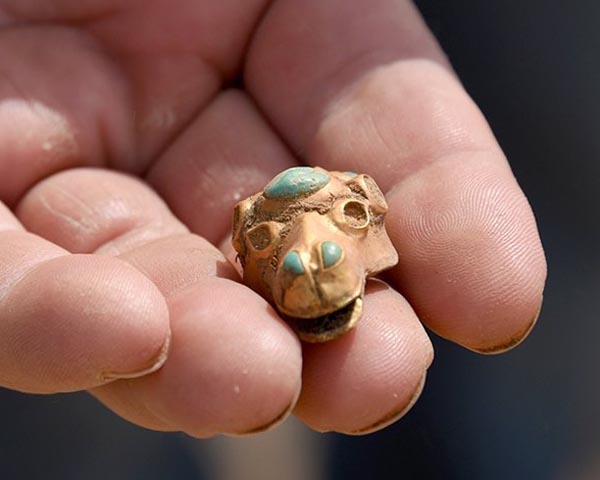 Sarmatian burial; the Astrakhan region
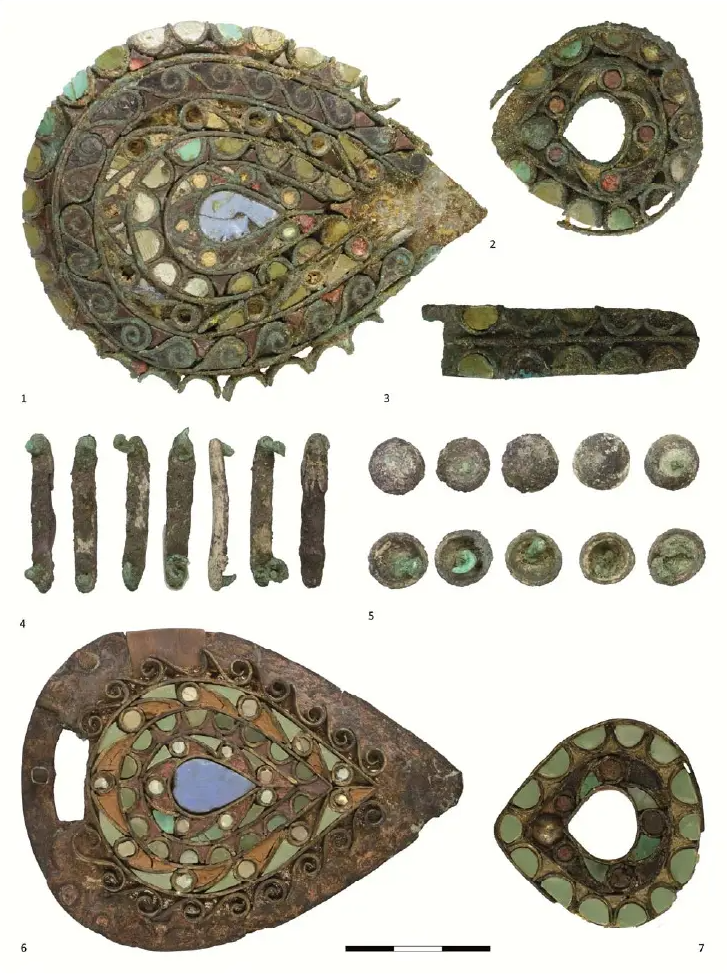 Inlaid silver belt, 1st century CE
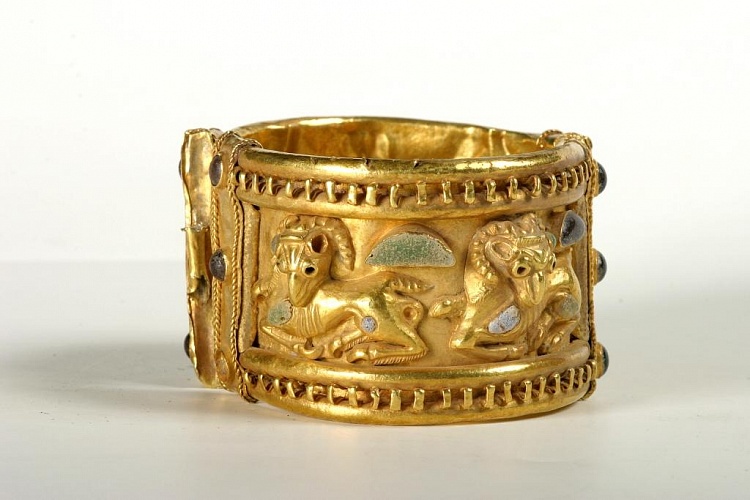 Scythian / Sarmatian cuff bracelets [d/b]
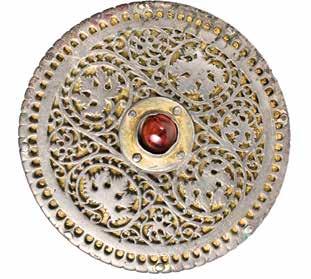 Roman phaleras / belt plaques from Xanten, 3rd C [d/b]