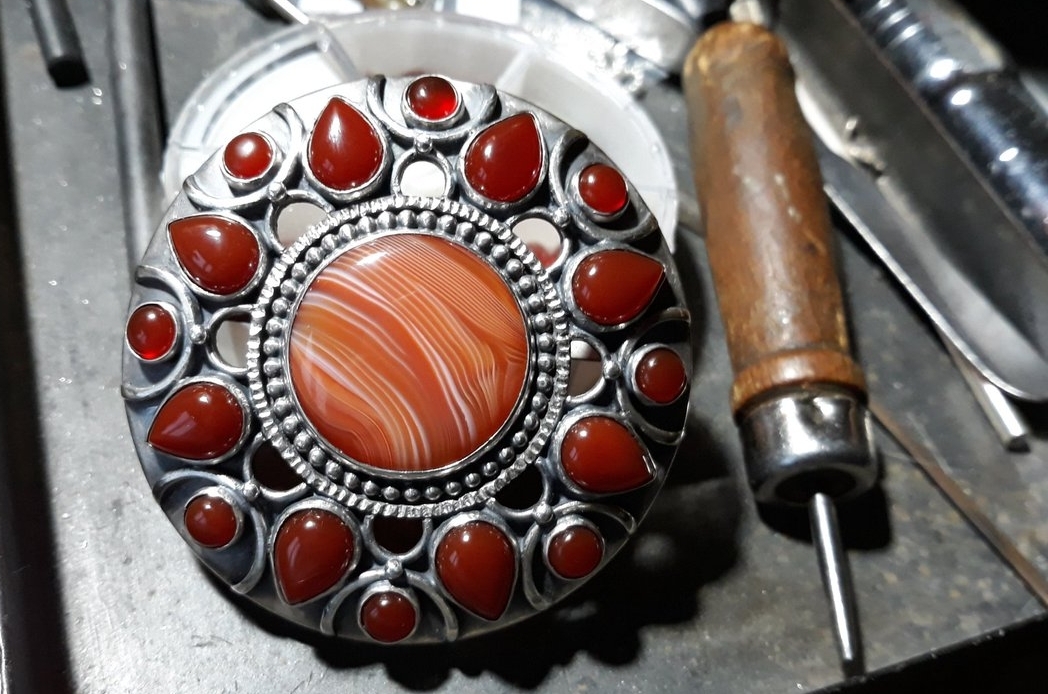
A unique elite burial of the Alanian culture was discovered in Chechnya during excavations at the cultural heritage site “Alkhan-Kalinsky Kurgans”. Preliminarily dated to the second and third quarter of the 4th century.
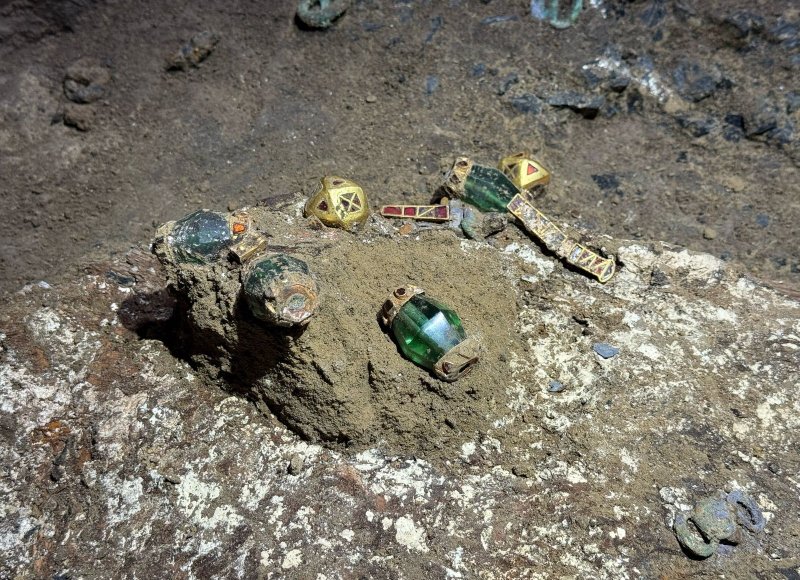
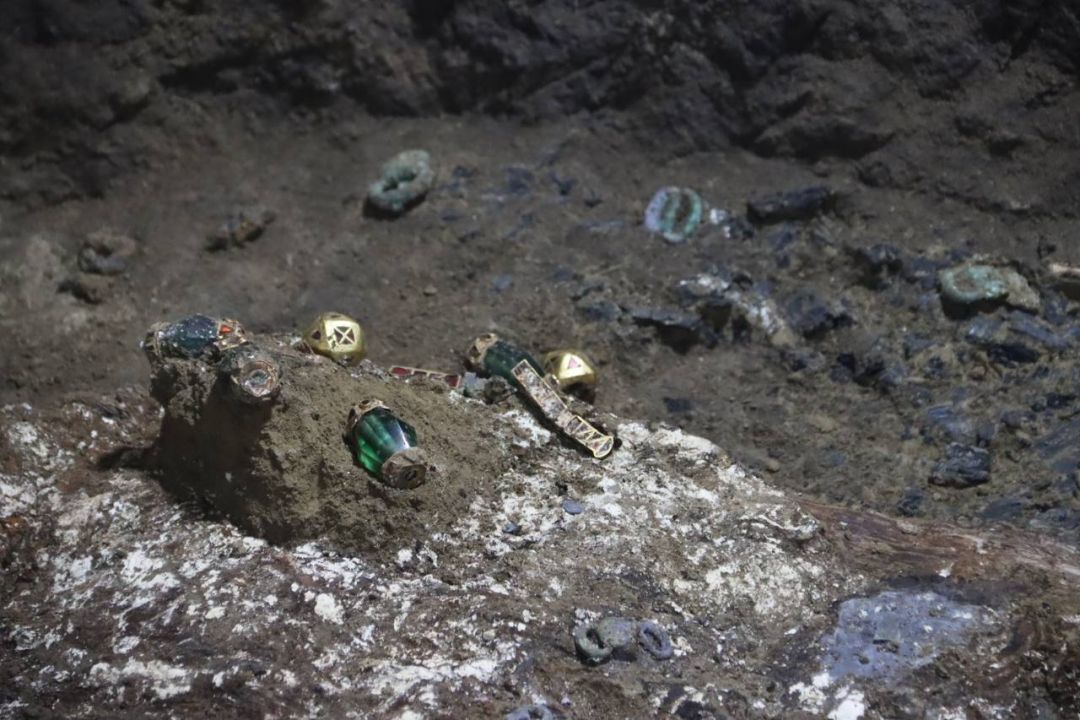
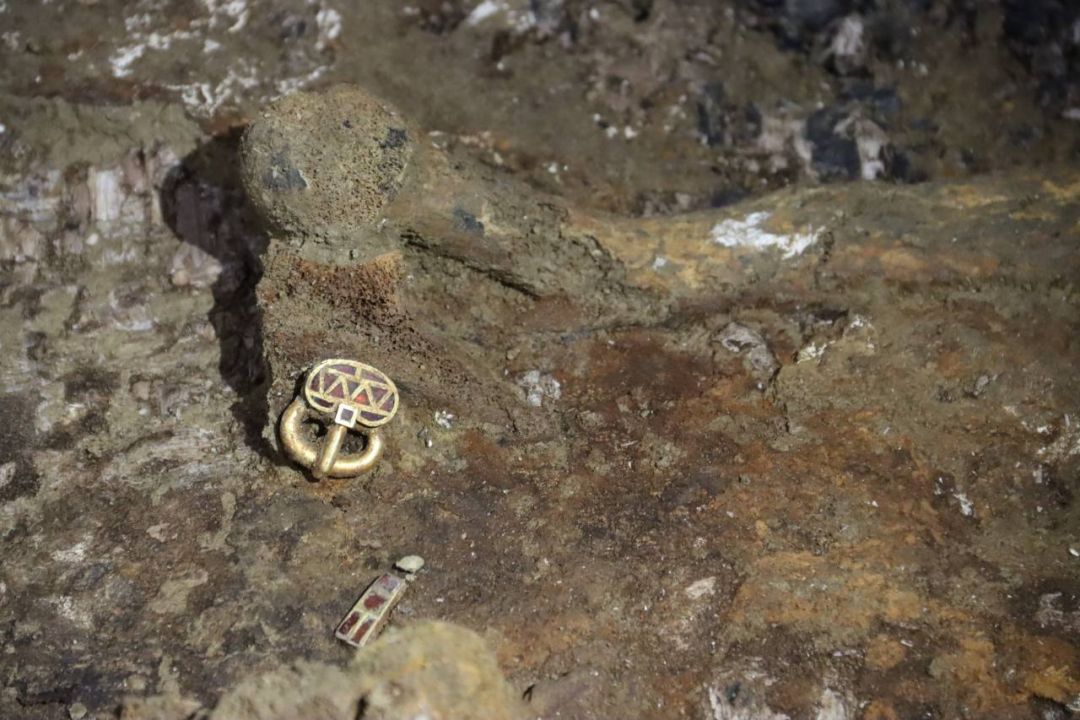
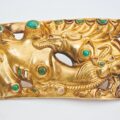
The deceased was buried with a collection of ornate horse harnesses along with a bridle, three bladed weapons, and imported metal vessels. The most spectacular are decorations of the harness, made of gold with garnet inserts and the tourmaline beads.
In a recent study led by Azamat Akhmarov of the Academy of Sciences of the Chechen Republic, archaeologists uncovered an undisturbed burial mound at the necropolis, containing an elite grave dating back to the early phase of the Alanian culture.
The Alani were an Iranic-speaking, nomadic pastoralist people who migrated westward into the North Caucasus, across Europe, and even into parts of Africa. Emerging as a dominant force among the Sarmatian tribes of the Pontic–Caspian steppe, the Alani first appear in Roman historical records and Vologases inscriptions during the 1st century CE.
—————
The burial is undisturbed, Vladimir Malashev, a senior researcher at the Institute of Archaeology of the Russian Academy of Sciences, told TASS.
“We are present at the excavation of an elite burial of the Alanian culture of the early stage, which, based on the finds of temporary sets, is preliminarily dated to the second and third quarter of the 4th century. The abundance of finds in this burial emphasizes the high social status of this male burial. This is a unique complex, which we have not had in the territory of the North Caucasus before,” he said.
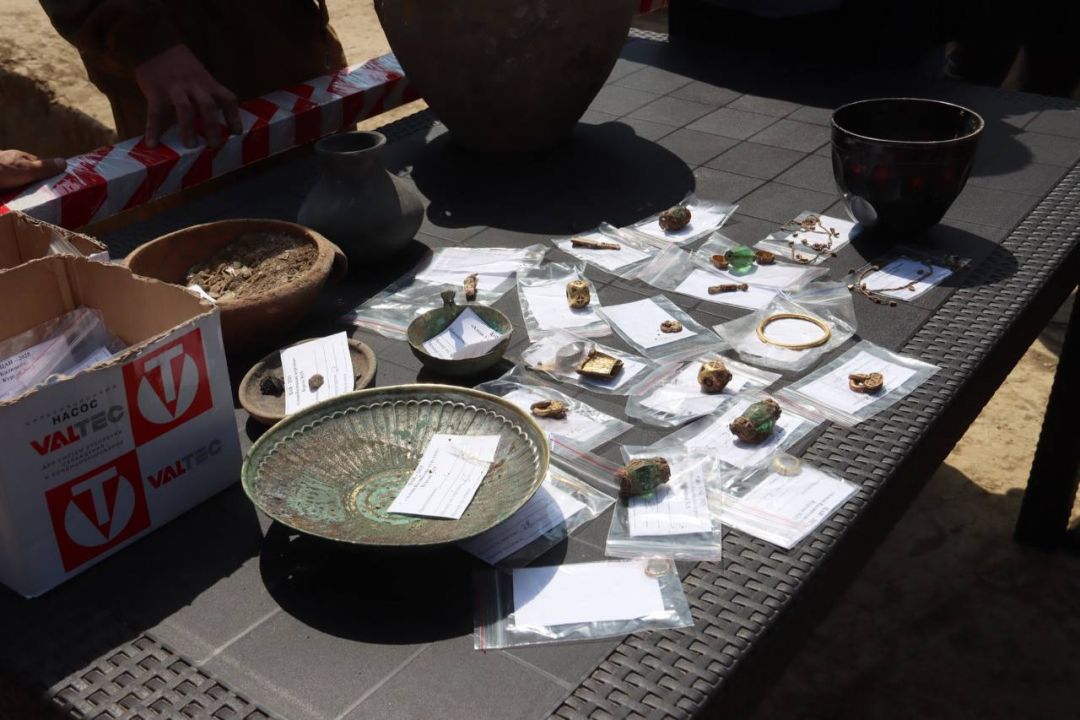
Among the items found were horse harnesses with decorations made of tourmalines, with gold trimming on the ends and garnet inserts, as well as a bridle, three bladed weapons and imported metal vessels. According to Malashev, the quality and richness of the finds are unparalleled.
“In addition to the scientific aspect, these excavations had a protective and rescue nature, since the burial mound was located on the territory of the development. The objects will be removed, and then restoration and conservation work will be carried out on them,” he noted, adding that after that they will be prepared for publication and exhibition in the new building of the national museum of the region.
As the head of the expedition, Azamat Akhmarov, told TASS, no one expected to discover such a rich, and most importantly, undisturbed burial during the excavations.
“This is a great success for all science, for Chechen and Russian archeology. The study of monuments of this type dates back to the tsarist era, when the chairman of the imperial archeological commission, Count Alexei Bobrinsky, studied a group of burial mounds on the territory of the Chechen Republic. All the burial mounds that he studied were plundered,” he said.
©TASS
https://news.rambler.ua/tech/54545793-obnaruzheno-nepotrevozhennoe-pogrebenie-rannego-etapa-alanskoy-kultury/
Vladimir Malashev, a senior researcher at the Institute of Archaeology of the Russian Academy of Sciences, said that the burial is preliminarily dated to the second and third quarters of the 4th century. The finds indicate the high social status of the buried man. According to the researcher, such a complex has not been previously found in the North Caucasus.
The discovered artifacts include horse harnesses with tourmaline and gold decorations, a bridle inlaid with garnets, three bladed weapons, and imported metal vessels. V. Malashev emphasized that the quality and richness of the finds are unparalleled.
The excavations were of a protective and rescue nature, since the burial mound was located in a development zone. After removal, all items will undergo restoration and conservation, and then will be presented in the new building of the National Museum of the Chechen Republic.
The head of the expedition, Azamat Akhmarov, noted that the scientists did not expect to find such a rich and untouched burial. He called the discovery a great success for science, recalling that the first studies of the burial mounds in this region were conducted in the tsarist era by Count Alexei Bobrinsky, but all the burials he studied were plundered. https://vesti095.ru/2025/04/v-chechenskoj-respublike-obnaruzheno-unikalnoe-alanskoe-zahoronenie-iv-veka/
————————————-
https://chechnyatoday.com/news/384729
Among the discovered items are horse harnesses with decorations made of tourmalines, with gold trimming on the ends and garnet inserts, as well as a bridle, three bladed weapons and imported metal vessels. According to the expert, the quality and richness of the finds are unparalleled. He also told the story of how these finds were discovered.
Having descended to a depth of 9 meters, one can notice a large and a small vessel at once, at the entrance to the burial chamber itself there was a large stone, also here, according to the head of the expedition Azamat Akhmarov, two unique saddle bows were found. In the conversation, he noted that no one expected to find such a rich, and most importantly, undisturbed burial during the excavations. – One of the signs of the status of a person of the early stage of the Alan culture is the depth, since here the depth is 9 meters, we can understand that the burial is quite elite. Here are presented objects that were most likely donated or these are his personal belongings of the buried . For example, there is a gray clay two-handed vessel with zamorphic handles. Also found here, as it seems to us, two saddle bows, because until now no analogues have been found so that we could conduct a comparative analysis. According to our impressions, these are the front and back saddle bows, very well decorated, with silver small nails and a feline predator. At the entrance to the burial chamber itself there was a large stone, which served as a door. In front of this stone was the skeleton of a horse, which we removed for zoological research, – said Akhmarov.
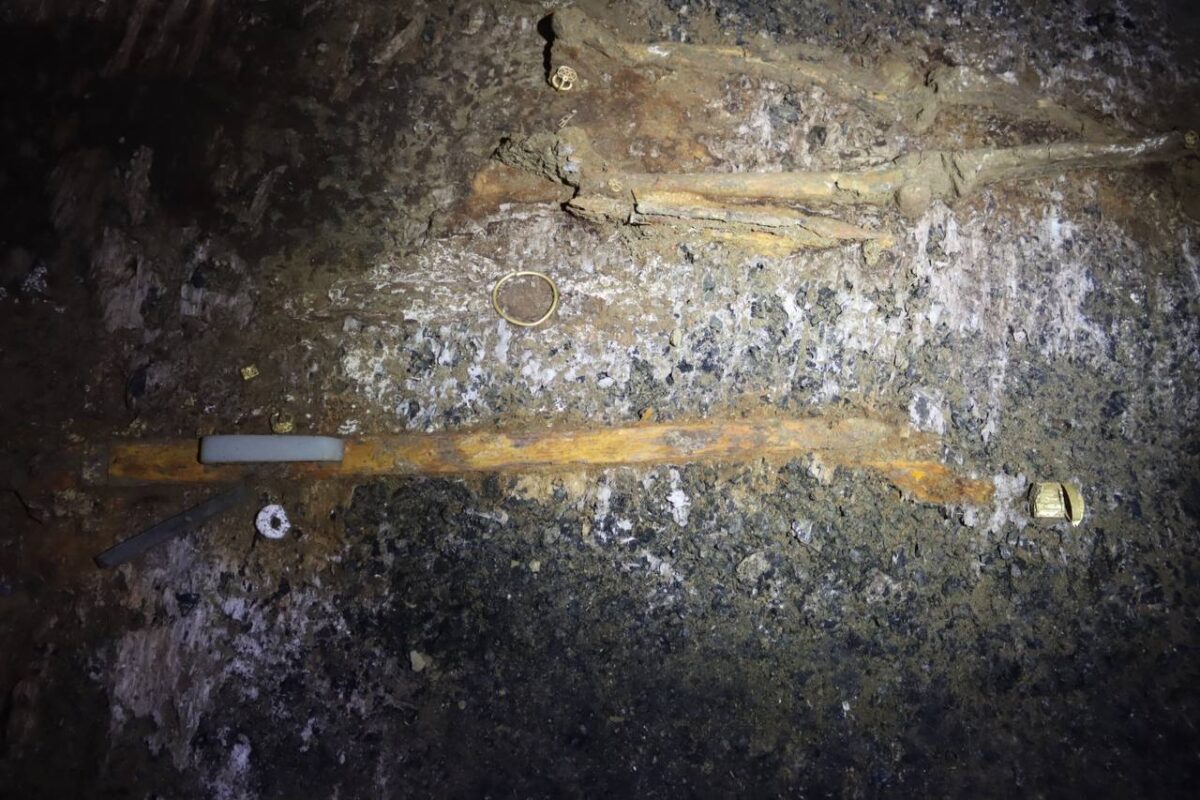
Next, a low passage awaited with the burial chamber itself, inside which lay preserved human bones, as well as the jewelry itself. Azamat Akhmarov conducted a detailed analysis of the findings.– In the burial chamber itself there is a buried person, there are preserved leg bones. To the right of the leg there is a belt dagger, also presented is a sword richly decorated with gold buckles. On the right hand of the buried person you can see the preserved decay of the right hand. Also here is a gold bracelet. On the belt we can also see gold buckles, most likely inlaid with garnet. In the eastern part of the chamber, most likely there was a long table, we can pay attention to the table leg, and on this table there is an element of horse equipment. We will still disassemble and study all these items after restoration and work with specialists. We will conduct additional comparative analysis. The uniqueness of this complex is that previously, undisturbed by ancient robbers, for hundreds of years of studying the Alanian culture, starting with A.A. Bobrinsky in 1888, has not yet been found in the entire Caucasus, not only in the Chechen Republic. Therefore, the set is truly very unique, very rich and will become the pearl of our soon-to-open Museum of the Chechen Republic, – said the head of the expedition.
Source: IA Chechnya Segodnya
Related posts:
 Necklace with cameo from Tillya Tepe and its comparanda from the Black Sea region
 Pectoral inlaid with jade, Tomb 2 at Fangshen, 3rd/4th C [d/b]
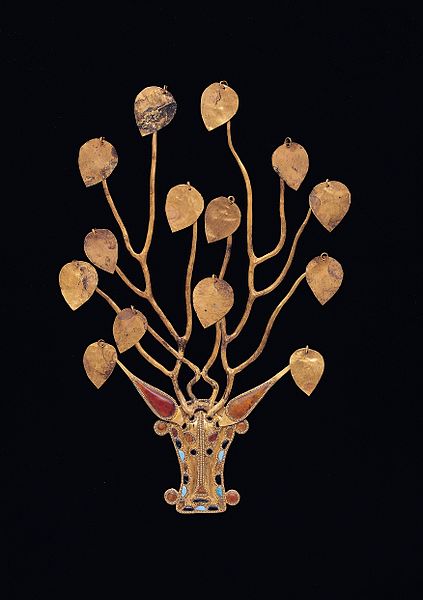 Head ornaments from China. Overview
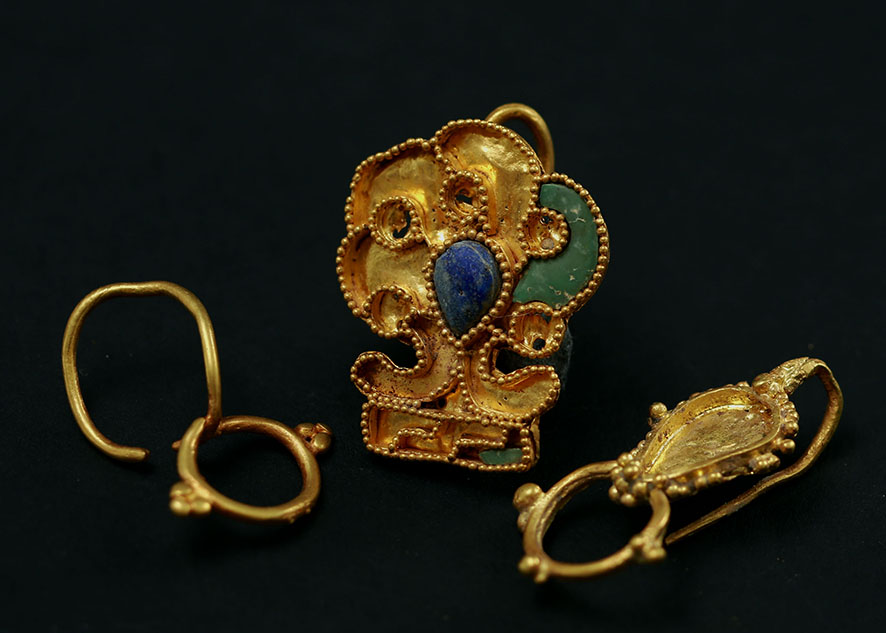 Xiongnu earrings from the TUH [Tamirin ulaan hushuu] cemetery, Mongolia
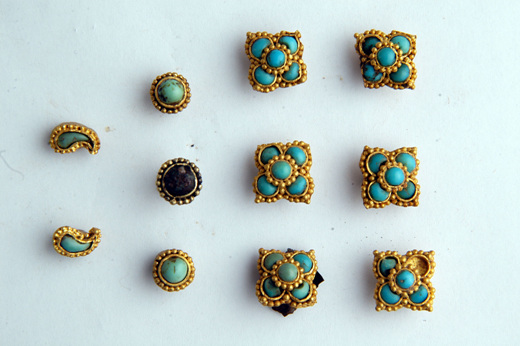 Gold and turquoise small ornaments from Mongolia and the comparanda.
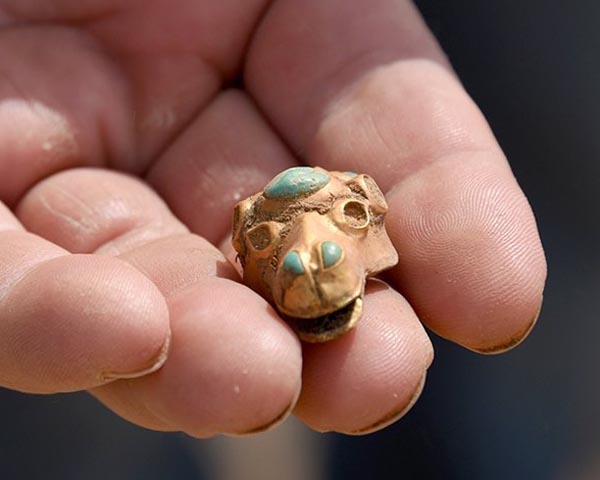 Sarmatian burial; the Astrakhan region
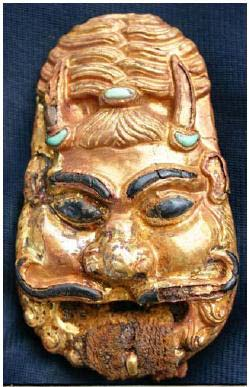 Gilded mask-shaped buckle with turquoise inlays; Tsaraam cemetery in Buryatia, Xiongnu Royal burial [d/b]
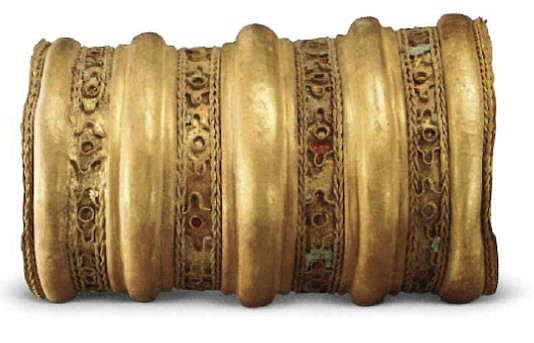 Wide cuffs, arm bracelets, and bracers of the steppe peoples.
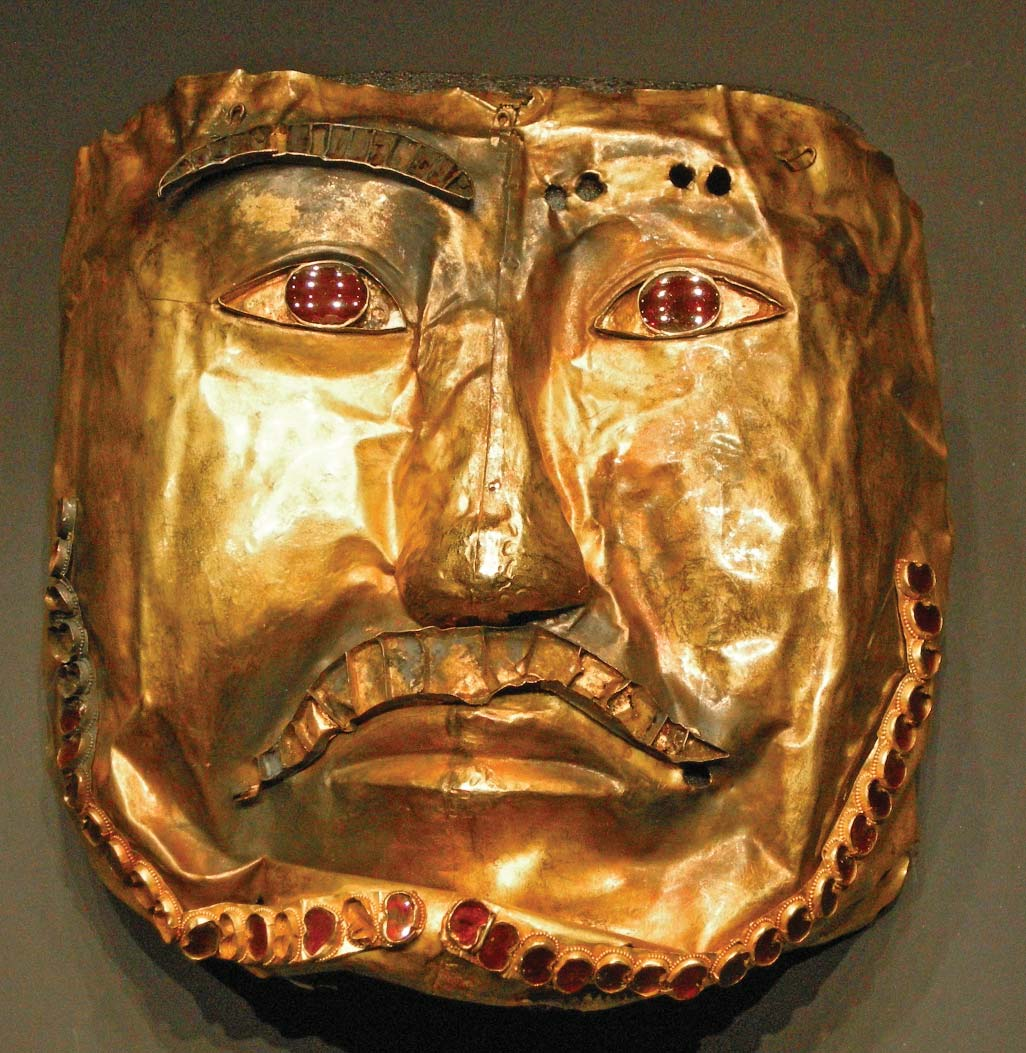 Gold mask from Boma
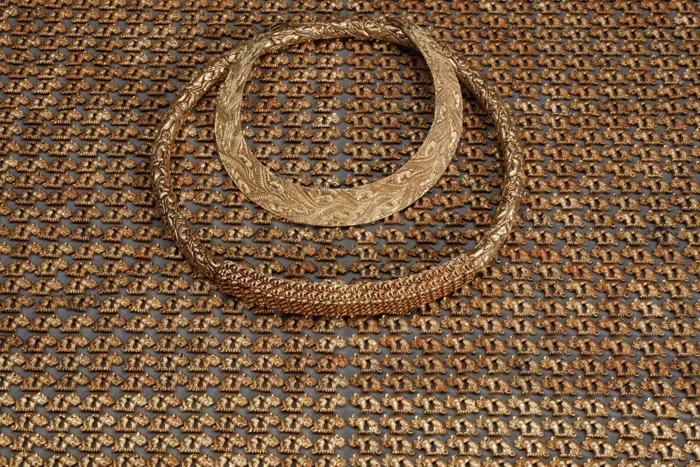 Tuva burials
 Belt buckles, plaques and ornaments with camels
 Ornaments of a bridle, 1st century, Dachi burial ground, Rostov region [d/b]