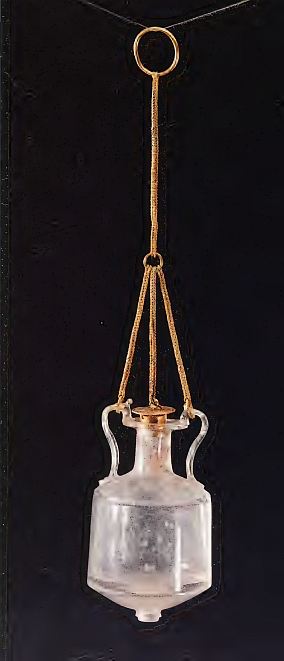
Rock crystal alabastron in a gold mount.
H.: 7.5 cm, D.: 4.5 cm, total weight: 55.9 grams
Said to be from a grave near Apamea, Syria
Early Roman imperial, c. 30 BC – 20 AD
Altes Museum Berlin Inv. 1981.17. Acquired on the art market in 1981
“This unguent vessel made from rock crystal has survived from antiquity in an almost undamaged state, complete with its gold suspension chain. Perhaps the delicate flask served to hold the perfume of a wealthy Roman woman. From a single block of transparent rock crystal the stone-cutter succeeded in making a thin-walled and fragile vessel with high neck and a broad body; the delicate handles, which curve upwards from the shoulders to the rim, have at their highest point a small spur to hold the gold rings of the mount in place. Two gold “double-loop-in-loop” chains lead from these to a further ring, from which a similar chain hangs down for the golden lid, and which is attached to a larger gold ring by means of a further length of chain, indicating that the piece of jewellery could be worn. The cylindrical plug with the lid fits firmly into the neck of the alabastron; at the point at which its lower edge stops, there is a light brown soil discoloration inside the vessel. The small projection beneath is frosted; perhaps it had been recut on account of a broken foot. — A second intact amphoriskos of rock crystal (H.: 9 cm, D.: 4.9 cm), today in the Abegg-Stiftung in Riggisberg/Switzerland [see photo below], is said to come from the same context. Here too, the complete gold mount with lid and suspension chain is preserved. Its cylindrical body stands on a flat foot, on the angular handles the loops for the gold rim-cap as well as the rings for the suspension chain are fastened.” [Source: Ancient Gold Jewellery: Altes Museum; a Selection From the Permanent Exhibition; Staatliche Museen (Berlin) 2002]
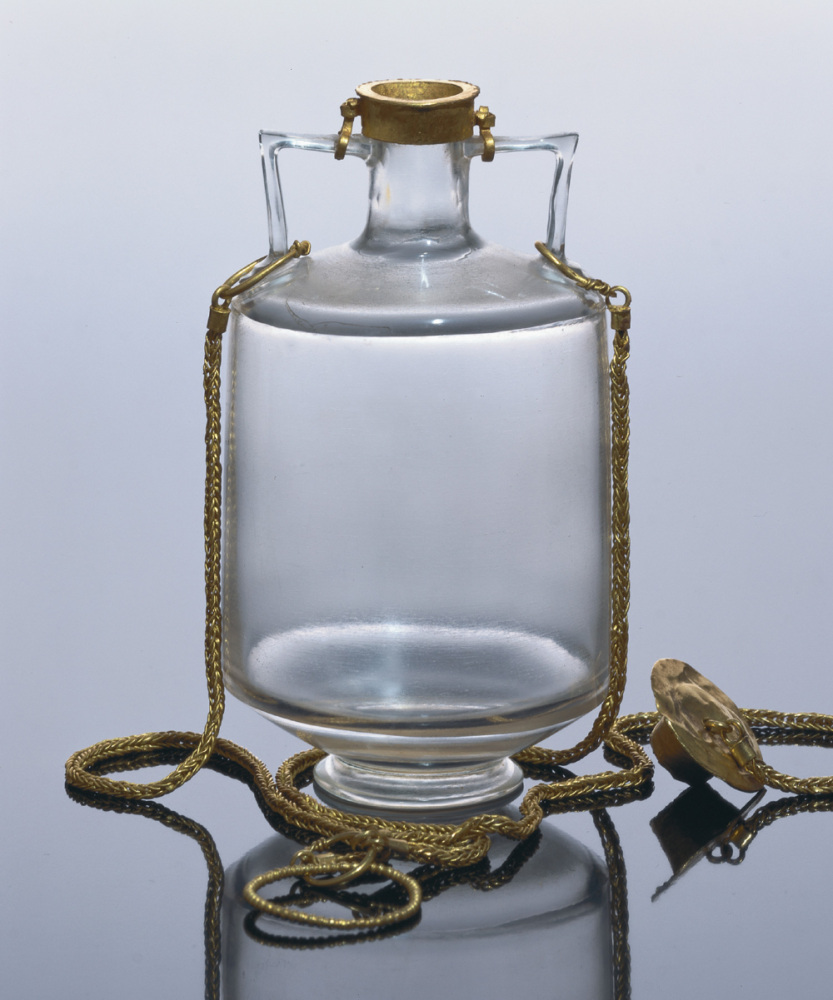
“Ointment jar
This small, thin-walled jar is cylindrical in shape with a flat foot, narrow neck and fine, angled handles. It was ground out of a block of transparent rock crystal and is fitted with a gold cap and a finely braided gold chain to allow it to be hung up. A costly vessel, it may well have belonged to a wealthy Roman lady originally and was probably made to hold fragrant ointments and essences.”
Eastern Mediterranean, 1st half of the 1st century CE
H.: 9 cm, D.: 4.9 cm
Related posts:
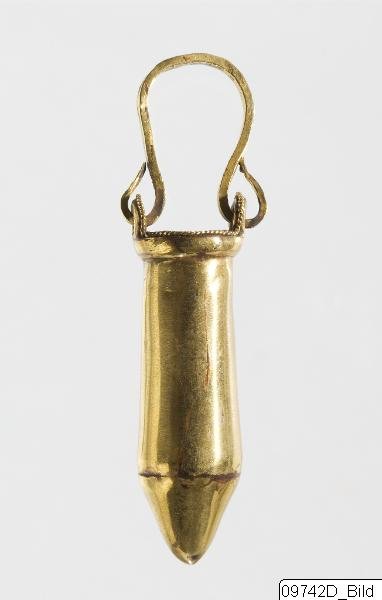 Gold pendant in the shape of situla, Syria, Late Hellenistic [d/b]
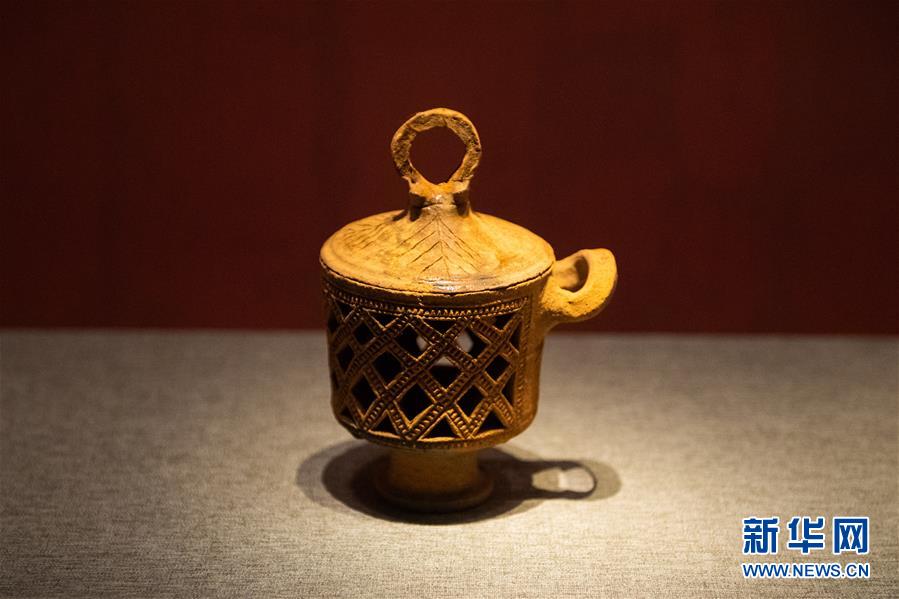 Pottery lamp, Syria, 100 CE, Damascus Museum [d/b]
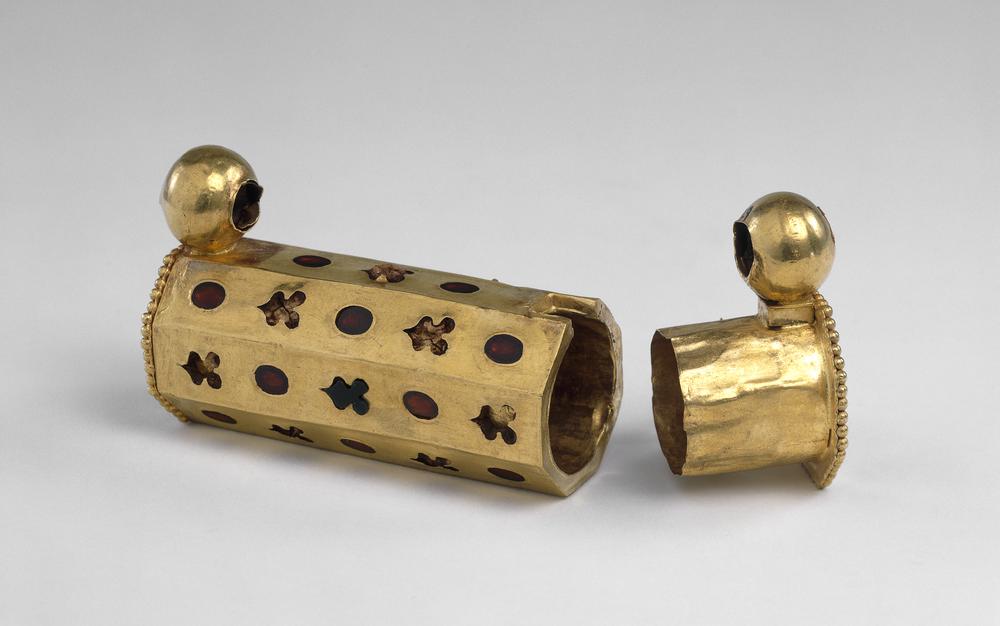 Cylindrical amulet containers – an overview
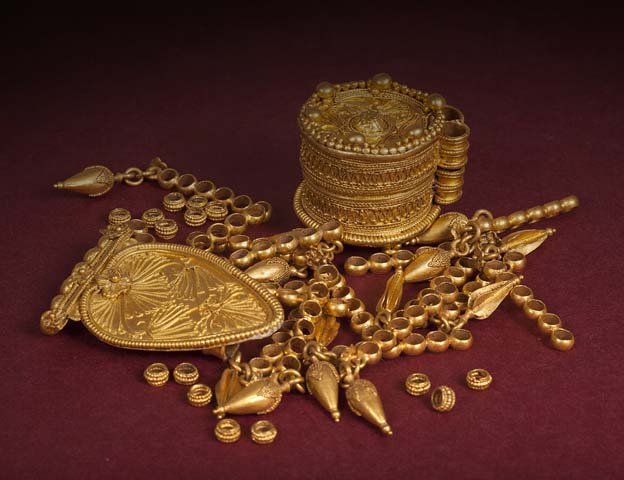 Archaeological Museum of Republic of North Macedonia. Hellenistic jewelry
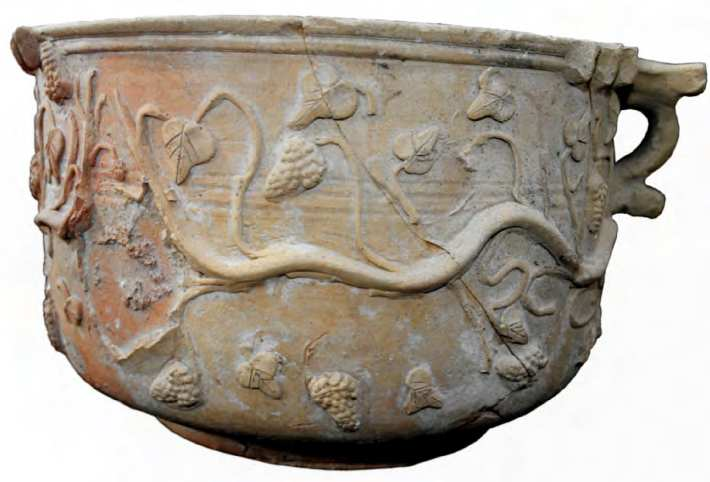 Terracotta scyphus / skyphos from the Mithraeum at Hawarte [d/b]
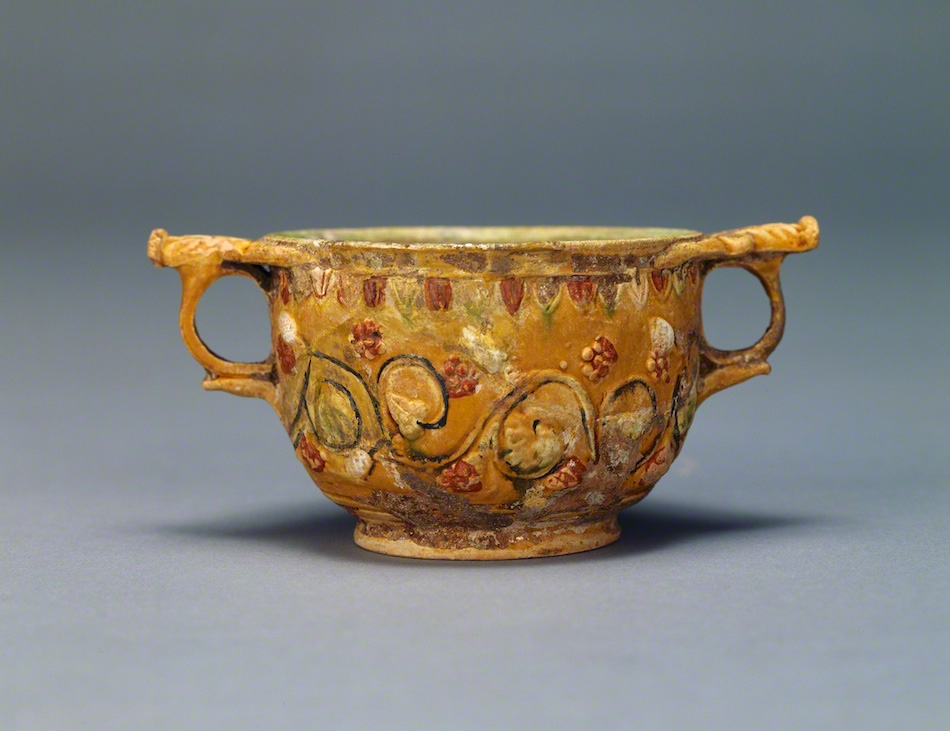 Skyphos from Syria [d/b]
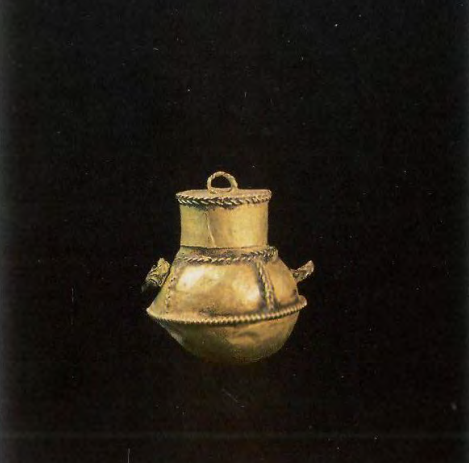 Scent bottle 8 – Batyr Lake, Kazakhstan, 3rd century [d/b]
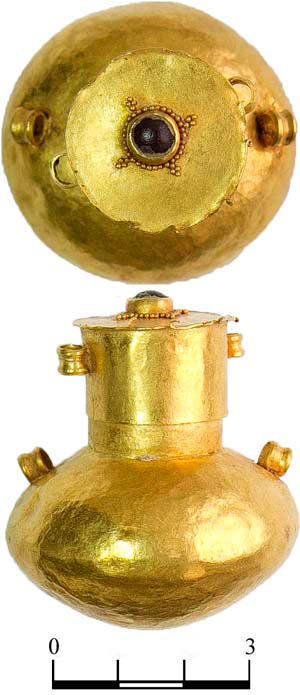 Scent bottle 12 – Chebotarev V, Rostov region; 1st century CE [d/b]
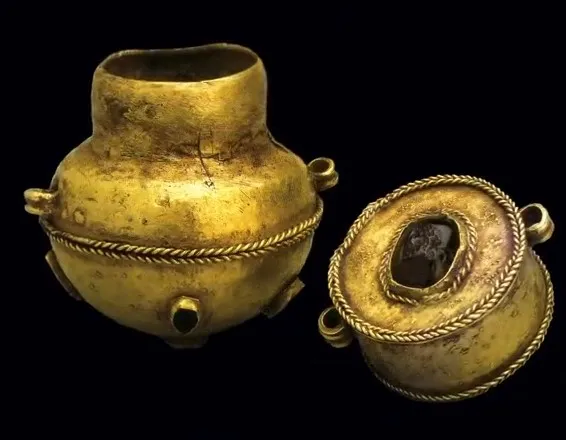 Scent bottle 14 – Kuban region, Ust-Labinskaya st., 1st-2nd century. Gold, garnet [d/b]
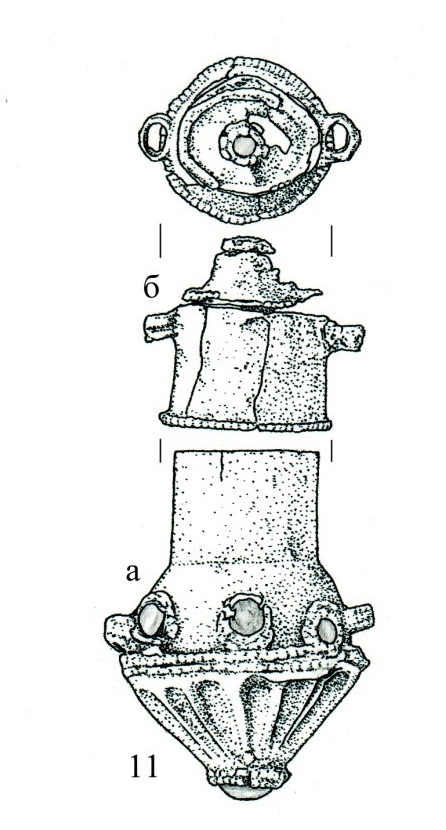 Scent bottle 16 – Rostov region, Kamyshevskiy village, 2nd/3rd century. Silver, glass [d/b]
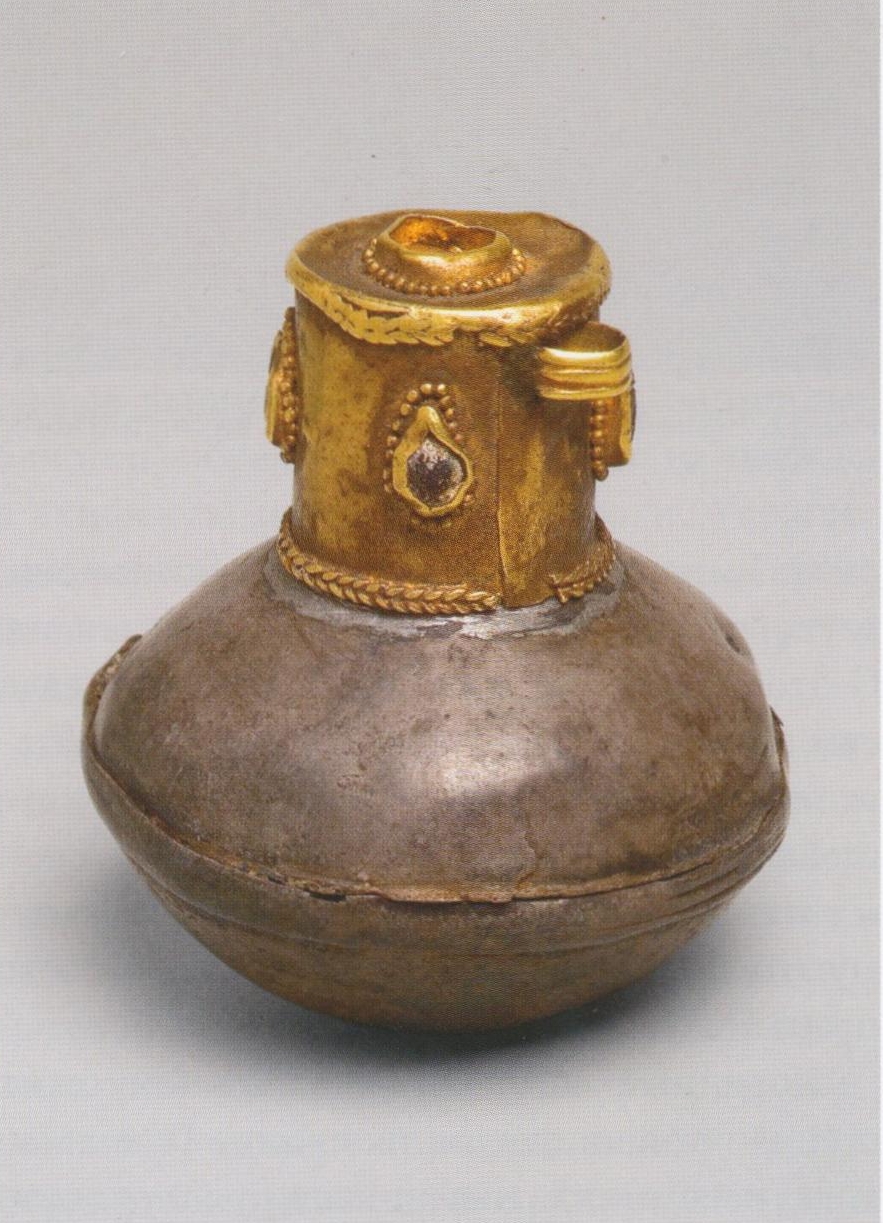 Scent bottle 20 – Kotovo; 2nd-4th C; gold and silver [d/b]
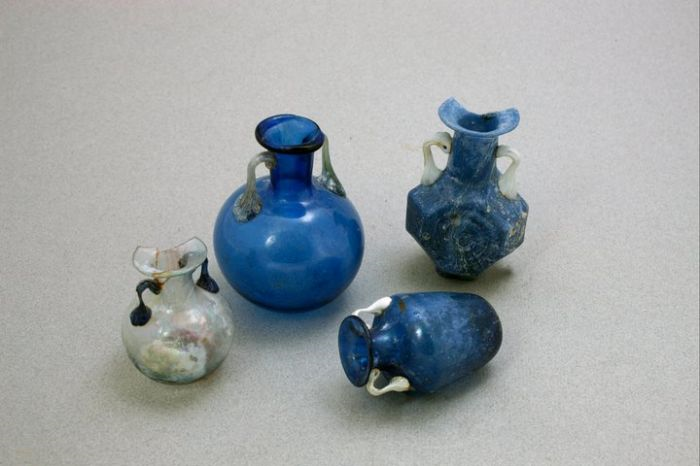 Syrian glass found in Georgia, 1st-2nd century