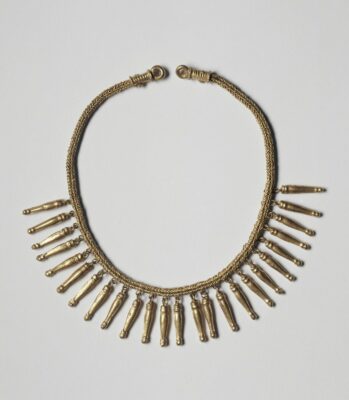
Musée du Louvre, Département des Antiquités grecques, étrusques et romaines, Bj 519 – https://collections.louvre.fr/ark:/53355/cl010256967
“During the Hellenistic period, Greek goldsmiths often adorned necklaces and earrings with numerous pendants: florets, fruits, miniature vases, and animal heads. The original gold necklace comes from the Kerch region of Crimea. Other similar pieces of jewelry with the same type of pendants are known from the same region. The Louvre necklace testifies to the abundant jewelry fashioned in the Greek colonial cities along the Black Sea coast, whose location brought them into contact with both Athens and the eastern worlds, first Scythian and then Sarmatian.
The question arises as to whether this type of necklace is an import from Greece itself, a local imitation, or a creation of the goldsmiths’ workshops operating in the wealthy cities of the Greek periphery.” https://boutique.louvre.fr/fr/product/24110-collier-grec-pendeloques-dore.html
Lit.
Ю.Ю.Шевченко, ЧЕРНИГОВСКАЯ ЗОЛОТАЯ ЦЕПЬ: ПОЯС «В МЕРУ ГРОБА ГОСПОДНЯ» (РЕЛИКВИЯ ИЗ ВЕЛИЧАЙШЕЙ ПЕЩЕРНОЙ СВЯТЫНИ ХРИСТИАНСКОГО МИРА) http://www.rusarch.ru/shevchenko3.htm
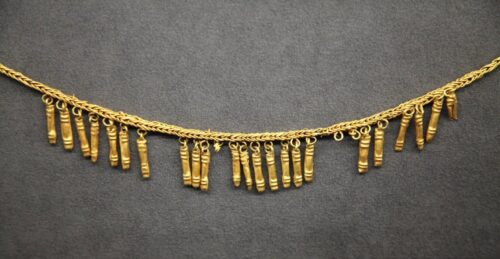
23 of 27 hollow pendants have been preserved.
Vesely VI, kurhan 1, grave 1, male burial. [Mordvintseva]
https://vokm134.ru/virtualnye-ekskursii/vystavka-zolotaya-kladovaya-sokrovishcha-drevnikh-stepej.html
Мордвинцева В., Хабарова Н. Древнее золото Поволжья. Симферополь 2006 [Valentina Mordvintseva, Ancient gold of the Volga region from the collections of the Volgograd Regional Museum of Local History] https://www.academia.edu
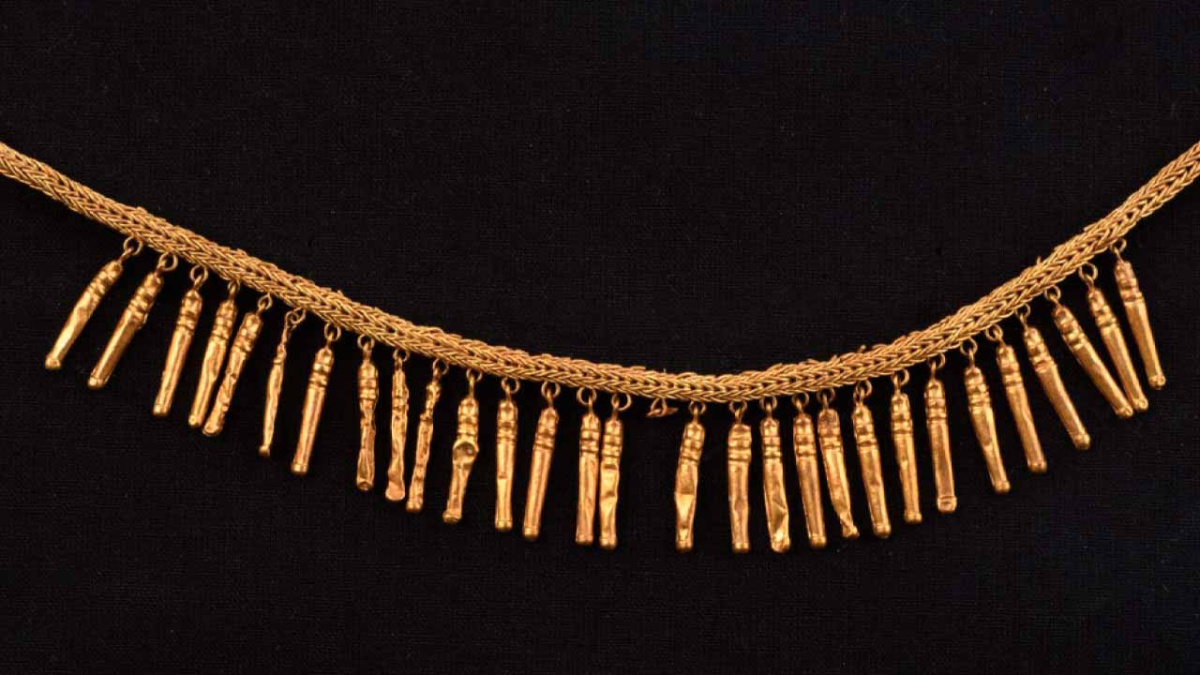
Gold necklace with pendants in the shape of holow tubes
https://life.fakty.com.ua/ua/showbiz/namystyny-dyvnyh-form-i-amulety-pidvisky-shho-nosyly-skify-ta-yihni-nashhadky/
Related posts:
 Necklaces Greek / Hellenistic, and Roman time. Overview
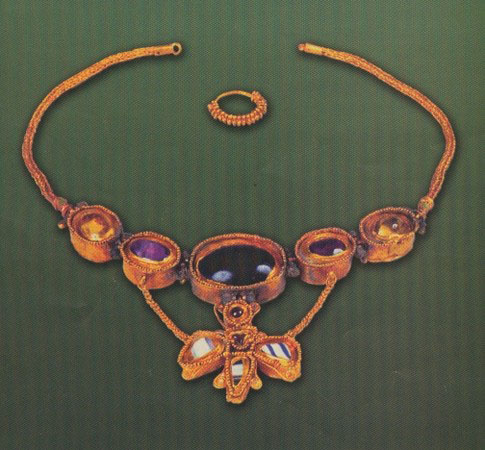 Jewelry from a rich Sarmatian burial, village Mikhailovka, Odessa region, Ukraine
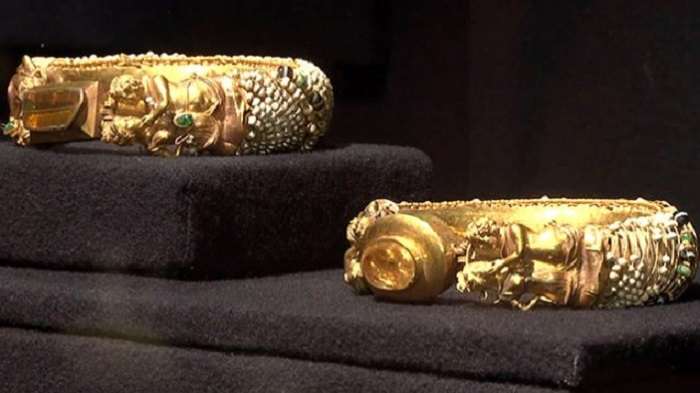 Bracelets from Nogaichik barrow, Sarmatian grave from Crimea [d/b]
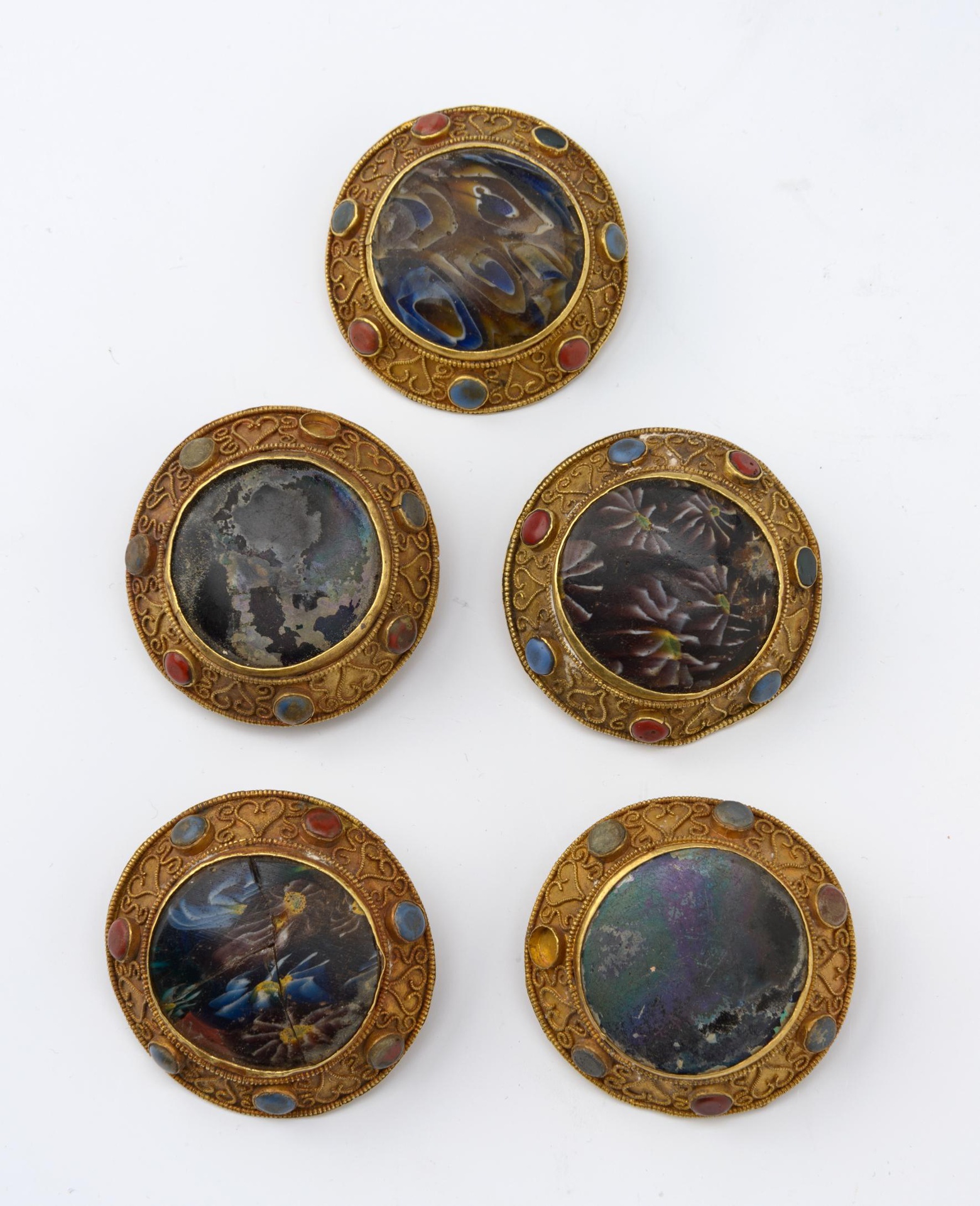 Belt plaques, Sarmatian, Kuban, 1st C BCE /1st C CE [d/b]
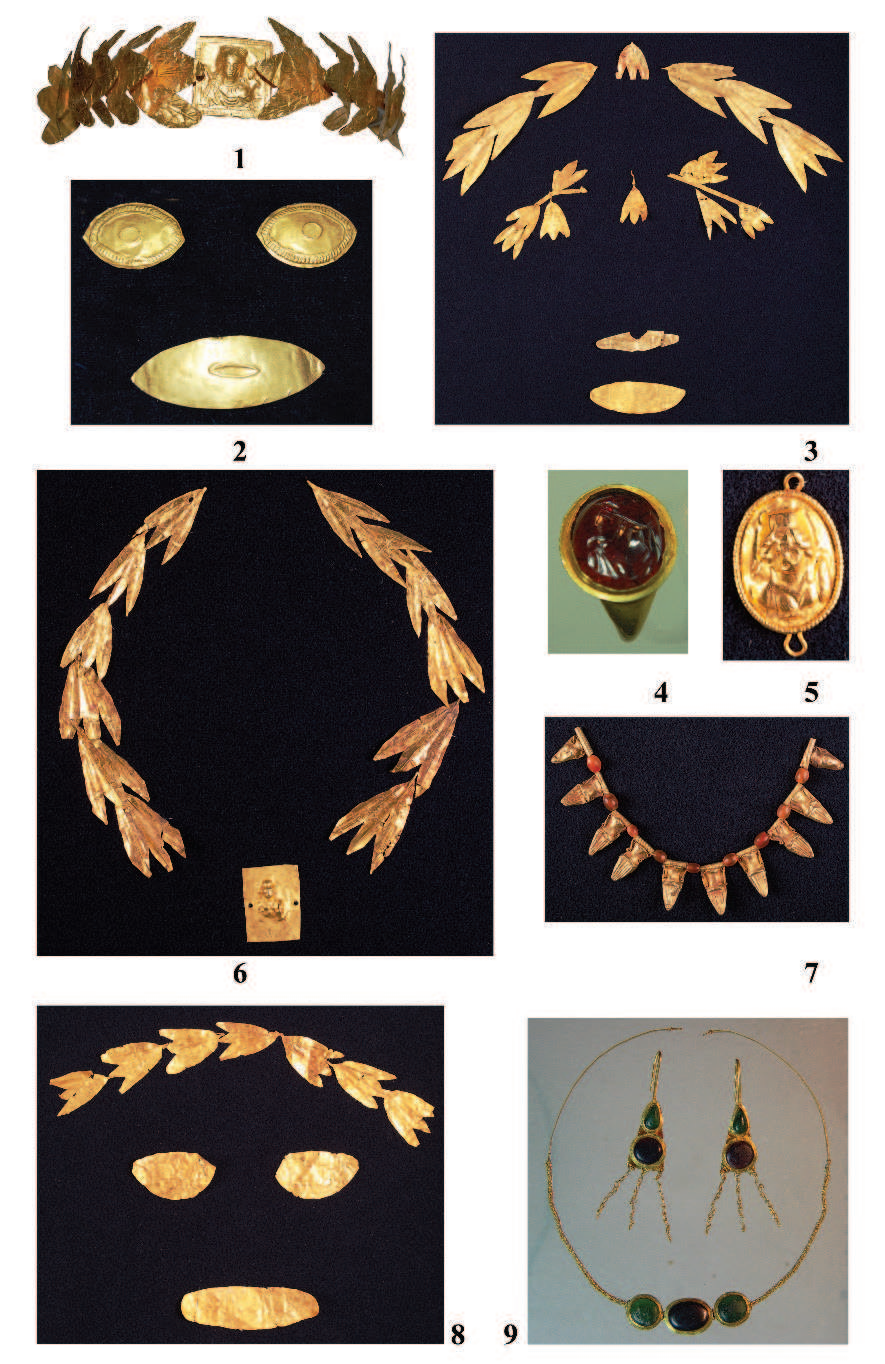 Female burials, the Ust’-Alma Necropolis, Crimea
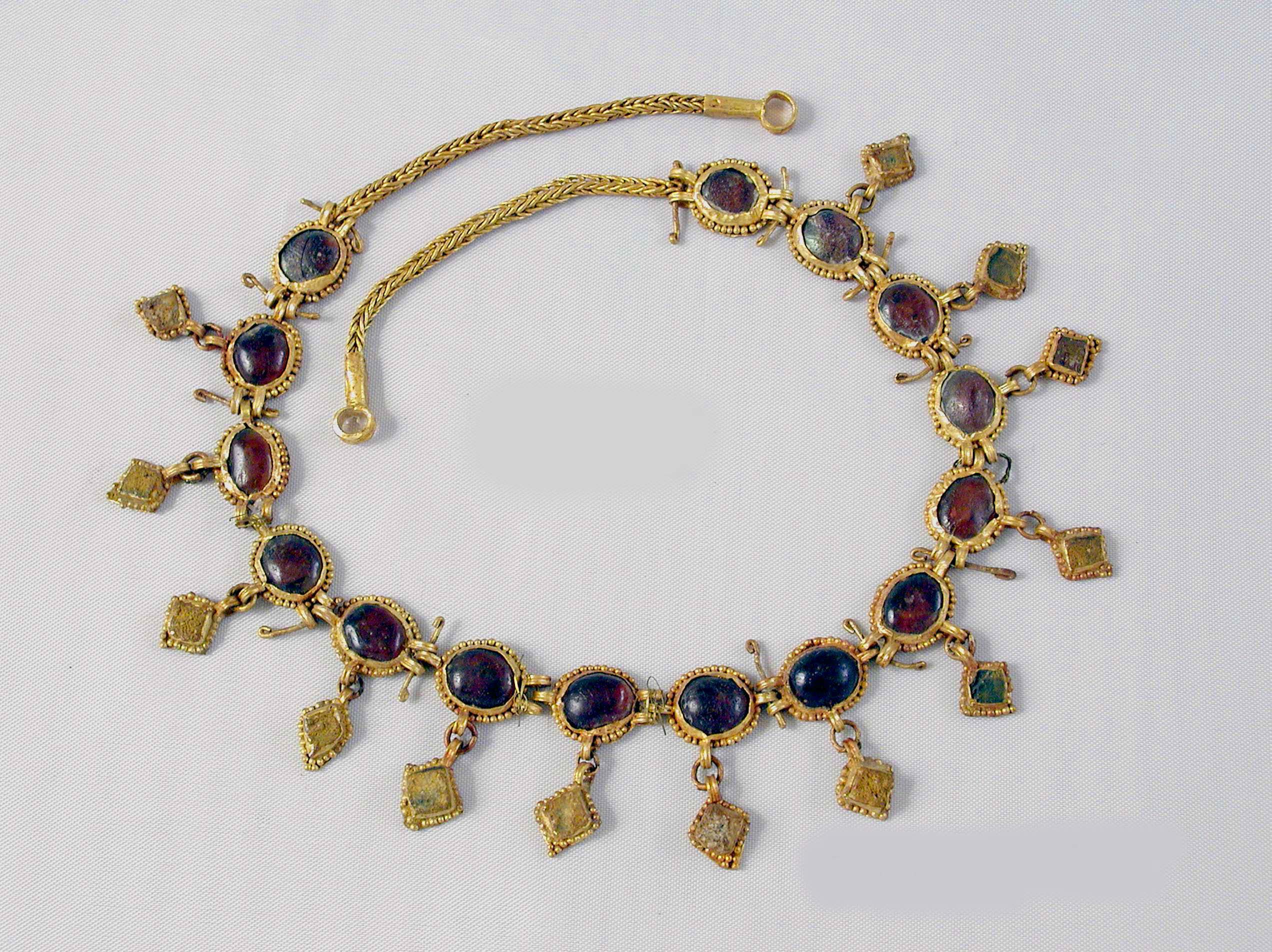 Staritsa burial mound, the Astrakhan region. Female burial, Sarmatian, 2nd century
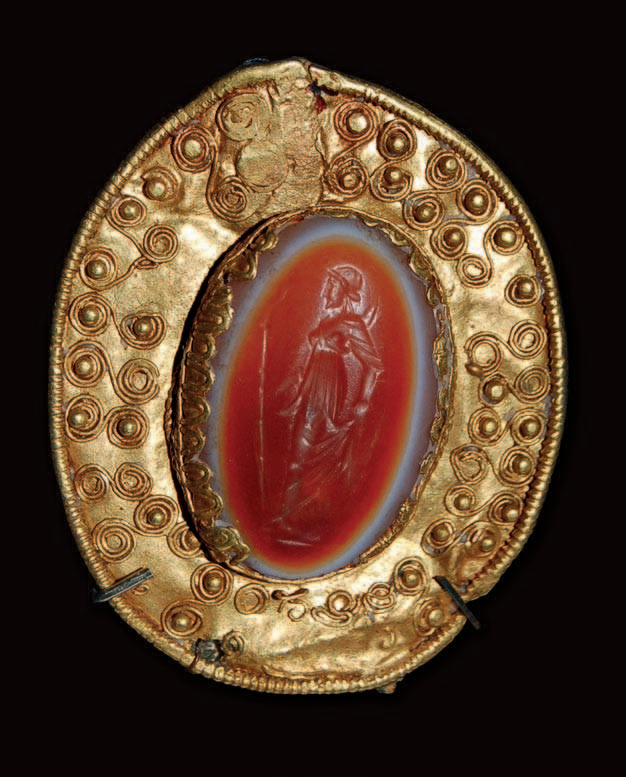 Sarmatian brooch, 1st C BCE [d/b]
 Ornaments of a bridle, 1st century, Dachi burial ground, Rostov region [d/b]
 Necklace with medallions, 4th century BCE, Greece [d/b]
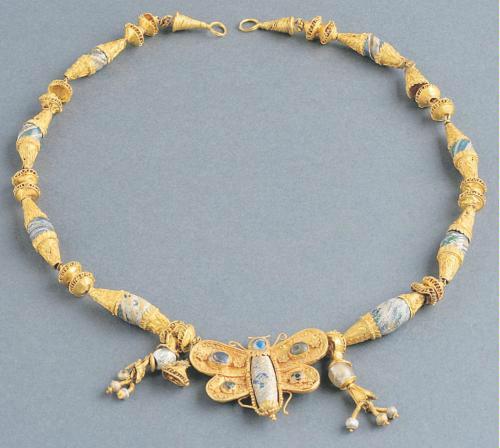 Naszyjnik z motylem, Muzeum w Odessie, Ukraina [d/b]
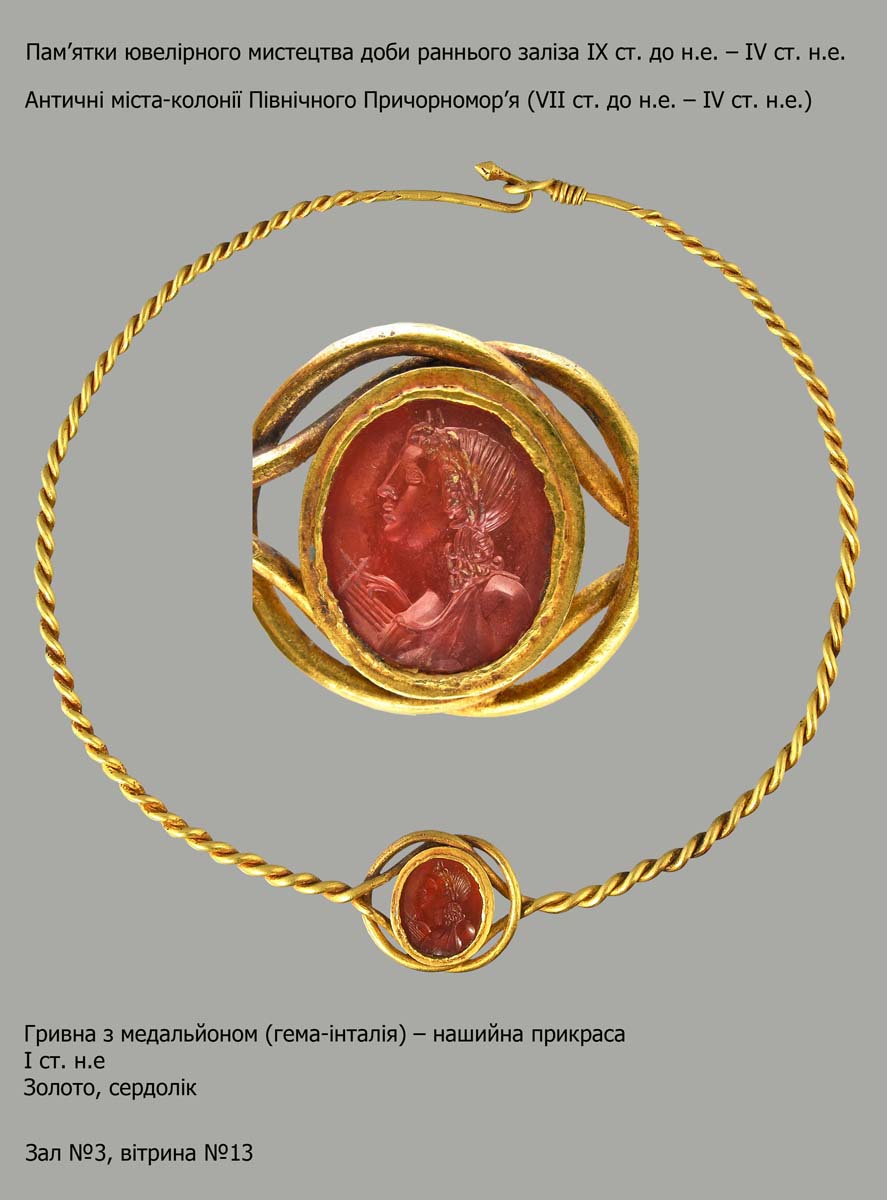 Gold necklace with carnelian cameo, Kerch, 1st century [d/b]
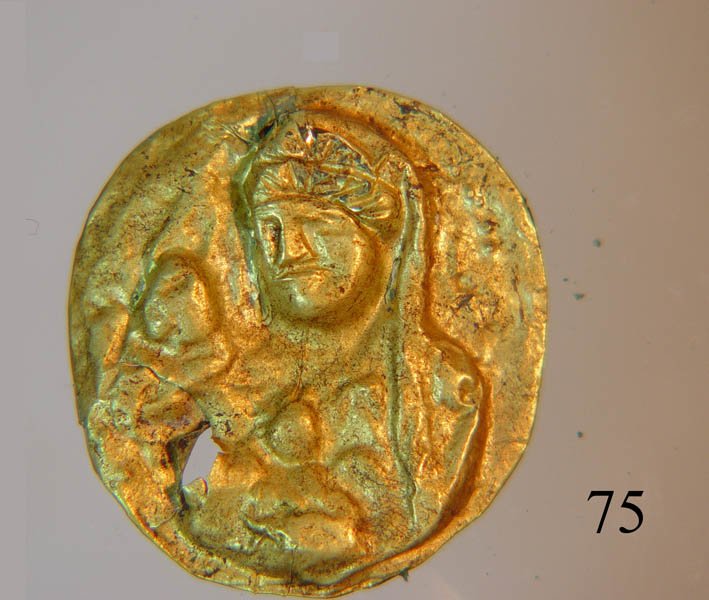 Gold medallion with Aphrodite [d/b]