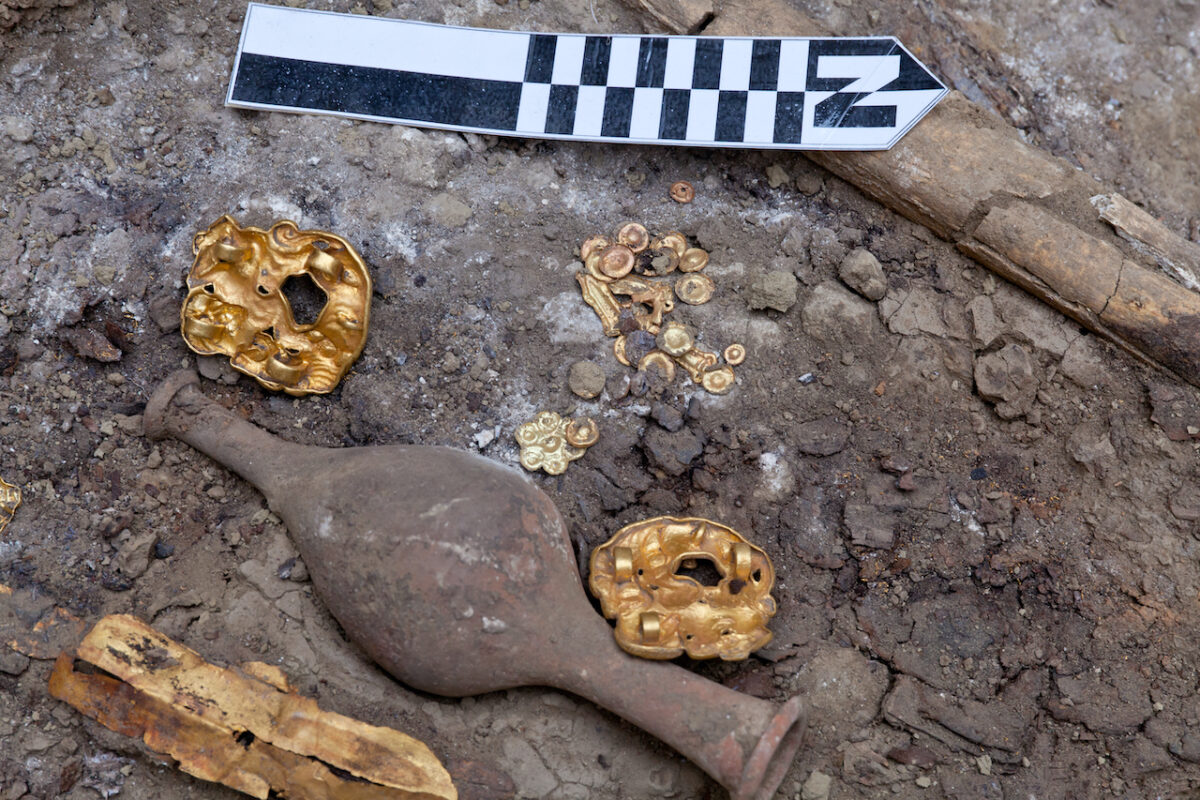
Novozavedennoye-V burial ground, burial mound 1 of a Sarmatian warrior. According to preliminary estimates, dates to the late 2nd to mid-1st century BC. It was located in a large catacomb (underground chamber).
“The burial contained rich funeral offerings. Among the items found here were:
- elements of weaponry, including an iron sword and two sets of quivers of the Sarmatian circle, as well as a bronze helmet of the Celtic circle (the “Montefortino” type, used in the Roman army);
- horse equipment, including iron bits and silver phalerae (chest and side decorations of a horse) with plot images;
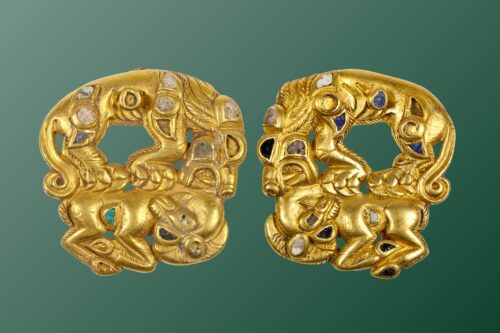
- elements of costume made of leather and precious metal, including gold cast belt buckles, made in an animal style and inlaid with colored inserts (toreutics from the circle of the Siberian collection of Peter I), belt overlays of the Ordos type (ornamented in the animal style of the circle of Xiongnu art), a variety of miniature embossed gold sewn-on plaques that decorated a bedspread, which probably had a fringe of gold threads;
- a large bronze cauldron and situla (ritual bucket) of the Celtic circle, bronze and ceramic vessels of ancient, Meotian (Kuban) and Central Caucasian production;
- an iron scepter and an iron ritual tripod with tops in the form of deer heads.”
“the artifact complex of this burial is unique in that it combines elements of the nomadic Sarmatian culture with works of North Caucasian (Kuban, Central Caucasian) craft traditions, as well as with objects created both within the framework of Western European craft schools and in the context of the jewelry traditions of ancient China and its surroundings.”
Related posts:
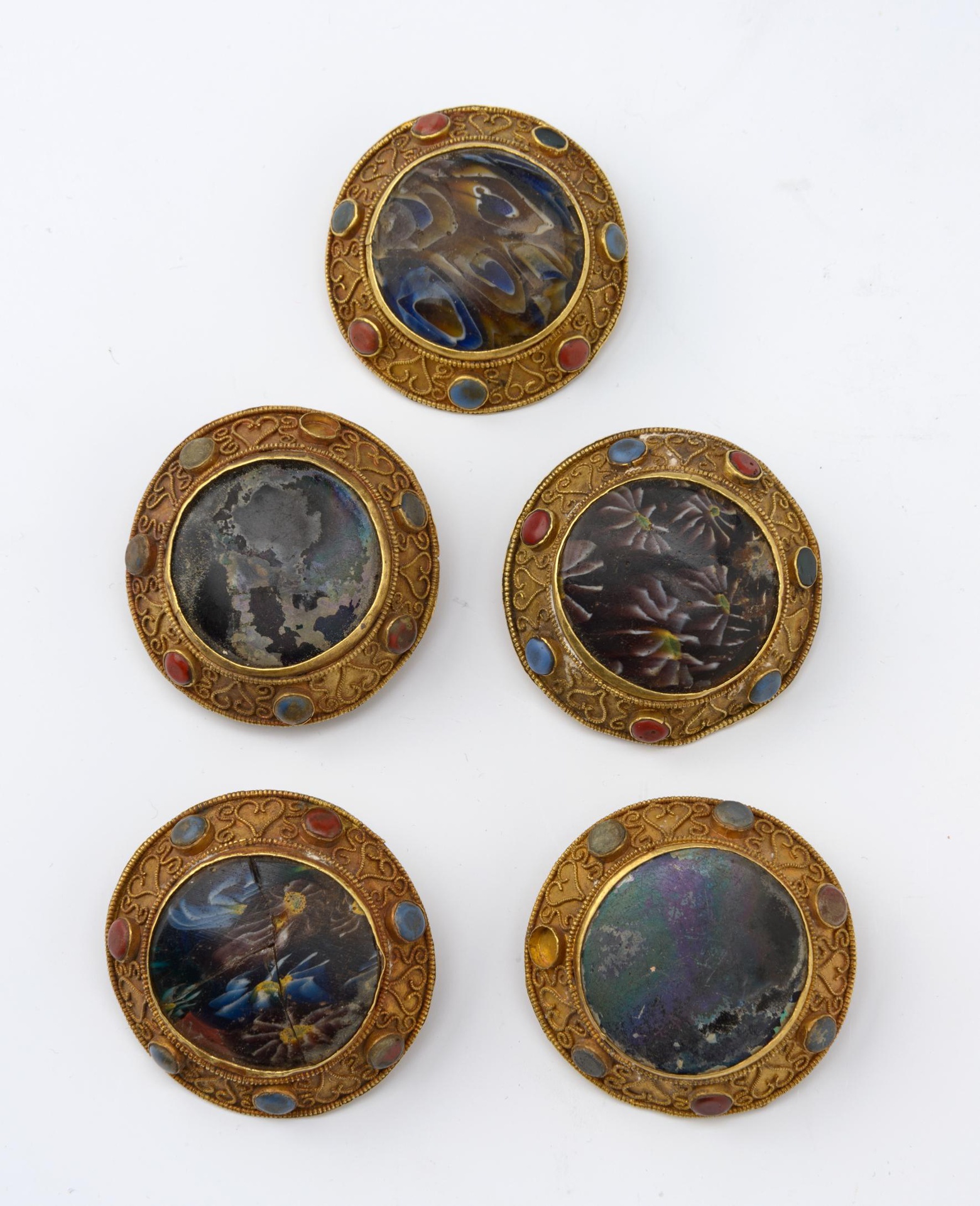 Belt plaques, Sarmatian, Kuban, 1st C BCE /1st C CE [d/b]
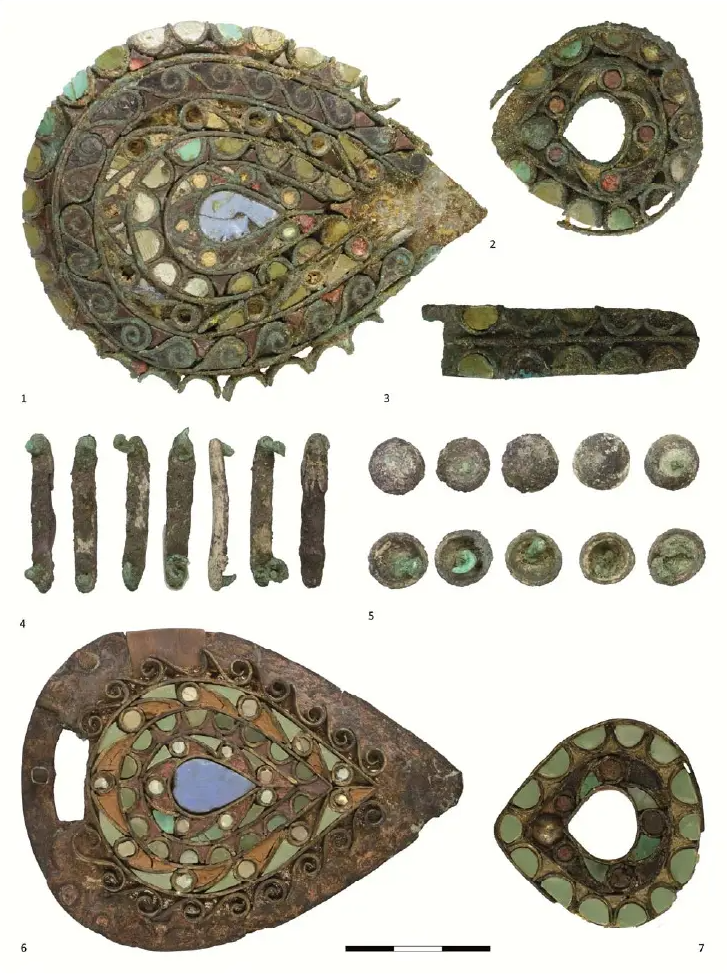 Inlaid silver belt, 1st century CE
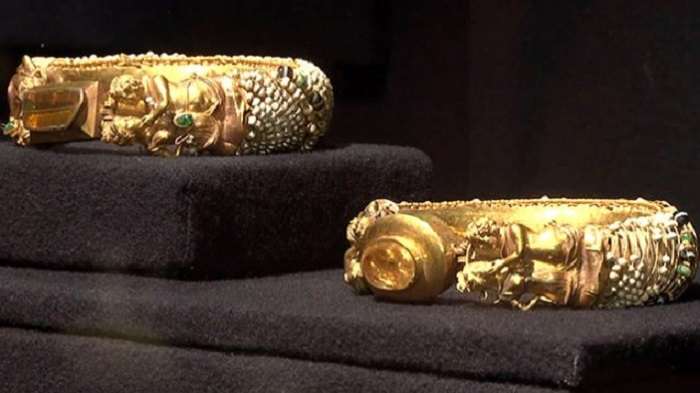 Bracelets from Nogaichik barrow, Sarmatian grave from Crimea [d/b]
 Buckle with the Gods Hariti and Pancika, 4th century, Taxila [d/b]
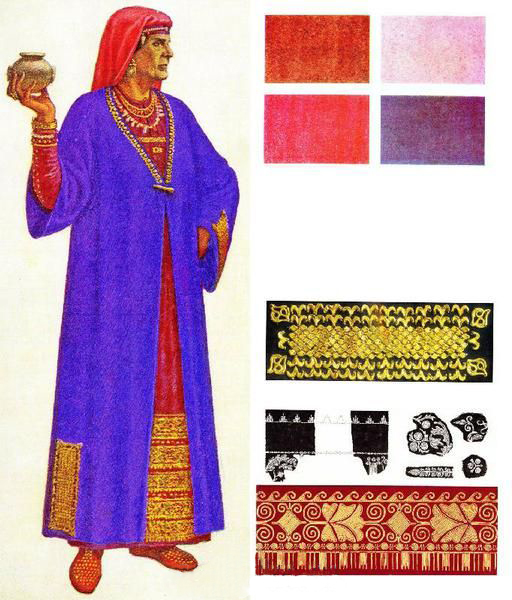 Sokolova Mogila, the 1st century burial of Sarmatian priestess
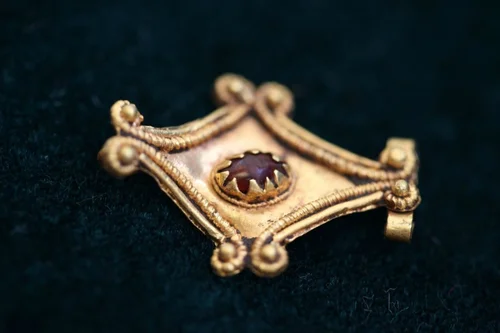 Psenafa [Псенафа] archaeological complex. Hellenistic Sarmatian-Meotian burial
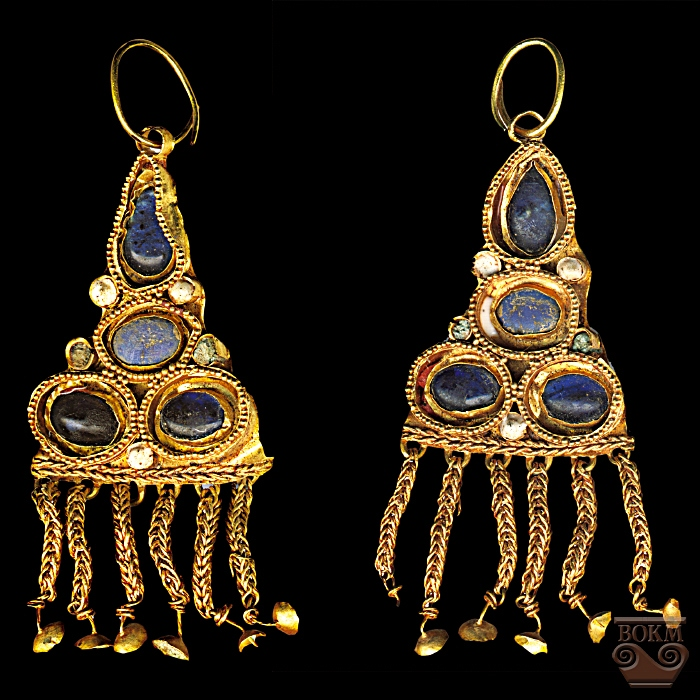 Sarmatian triangular earrings – an overview
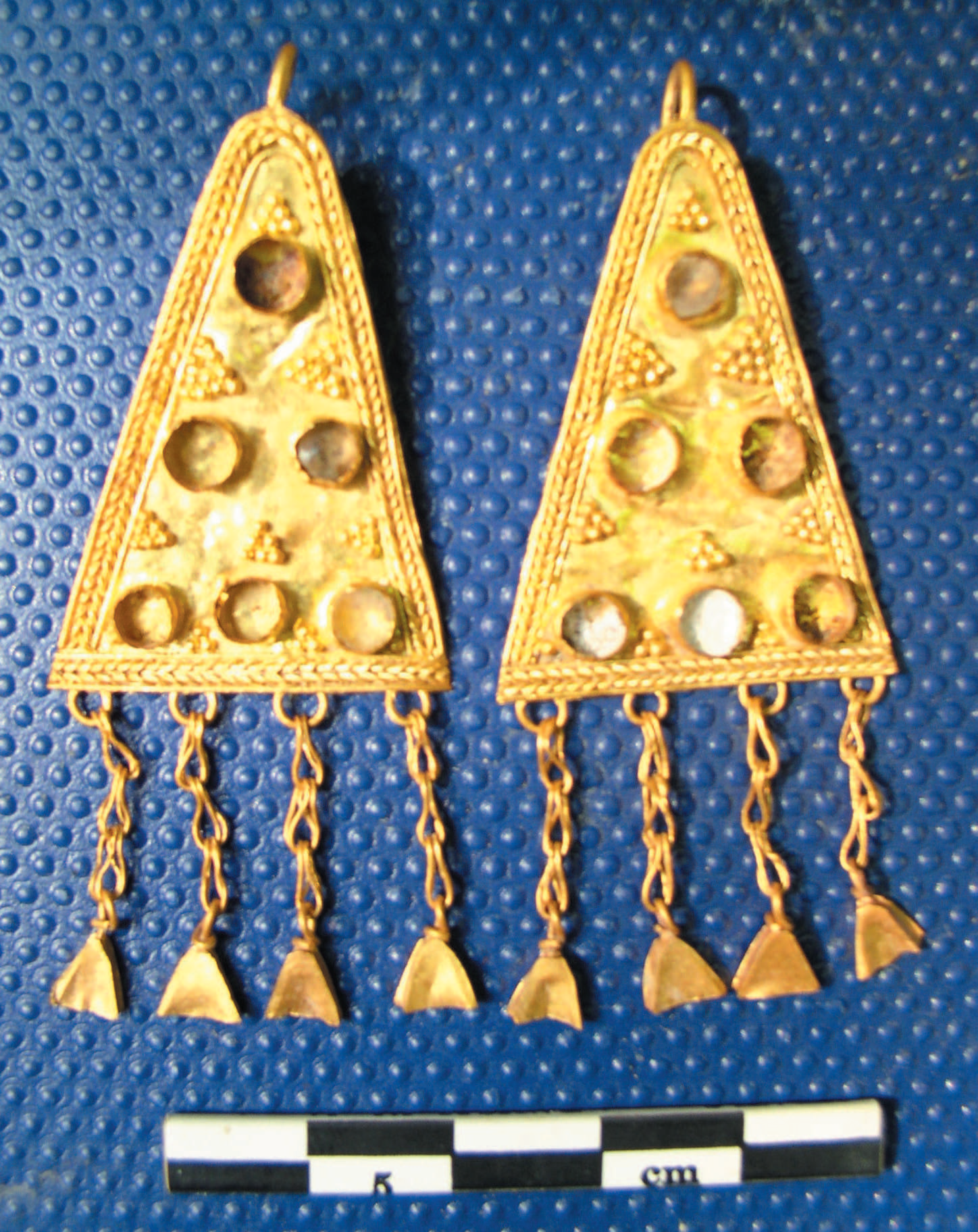 Cemetery of Nyzats, Crimea. Female burial, Sarmatian earrings
 Kichiginsky burial mounds. Female burial, 4th century BCE
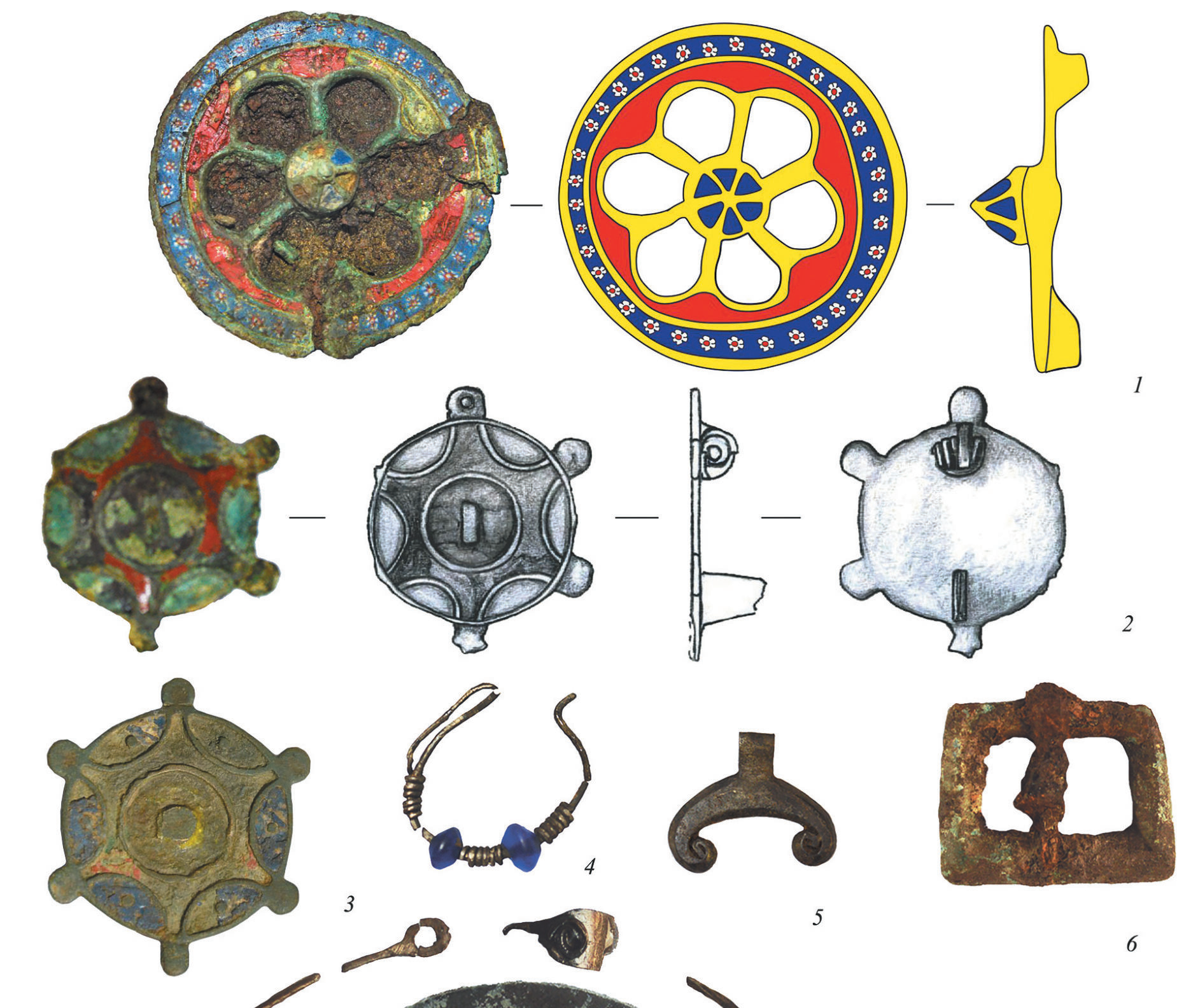 Enameled wheel-shaped brooches from Sarmatian burials
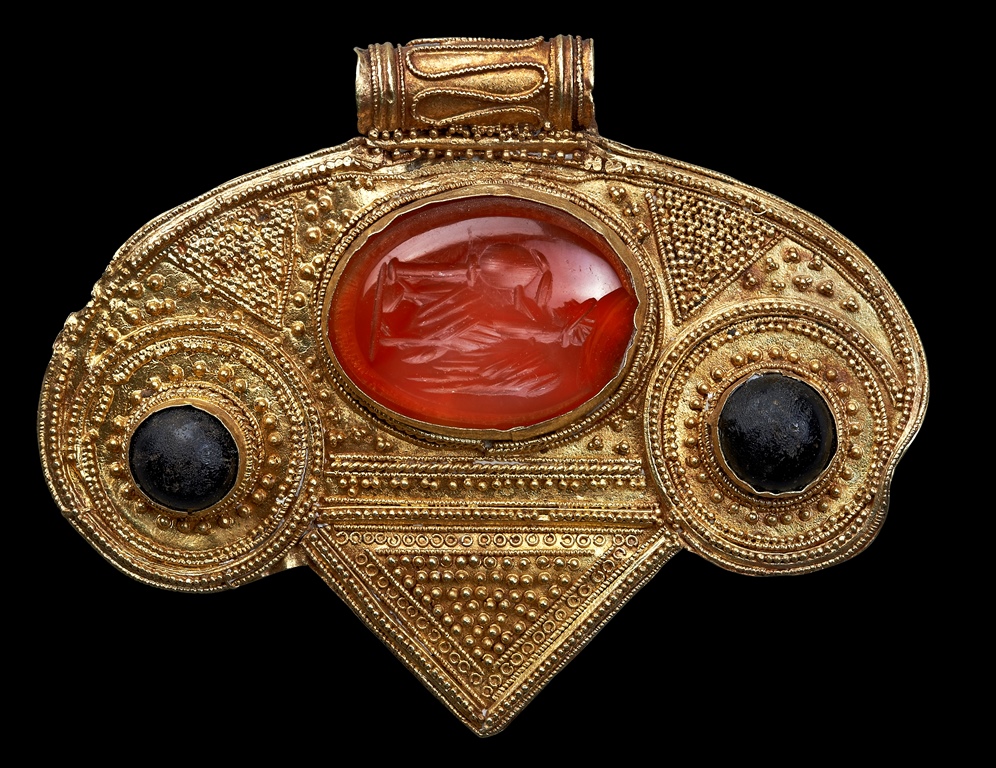 Sarmatian era pelta-shaped pendants, Hungary and Moldova [d/b]
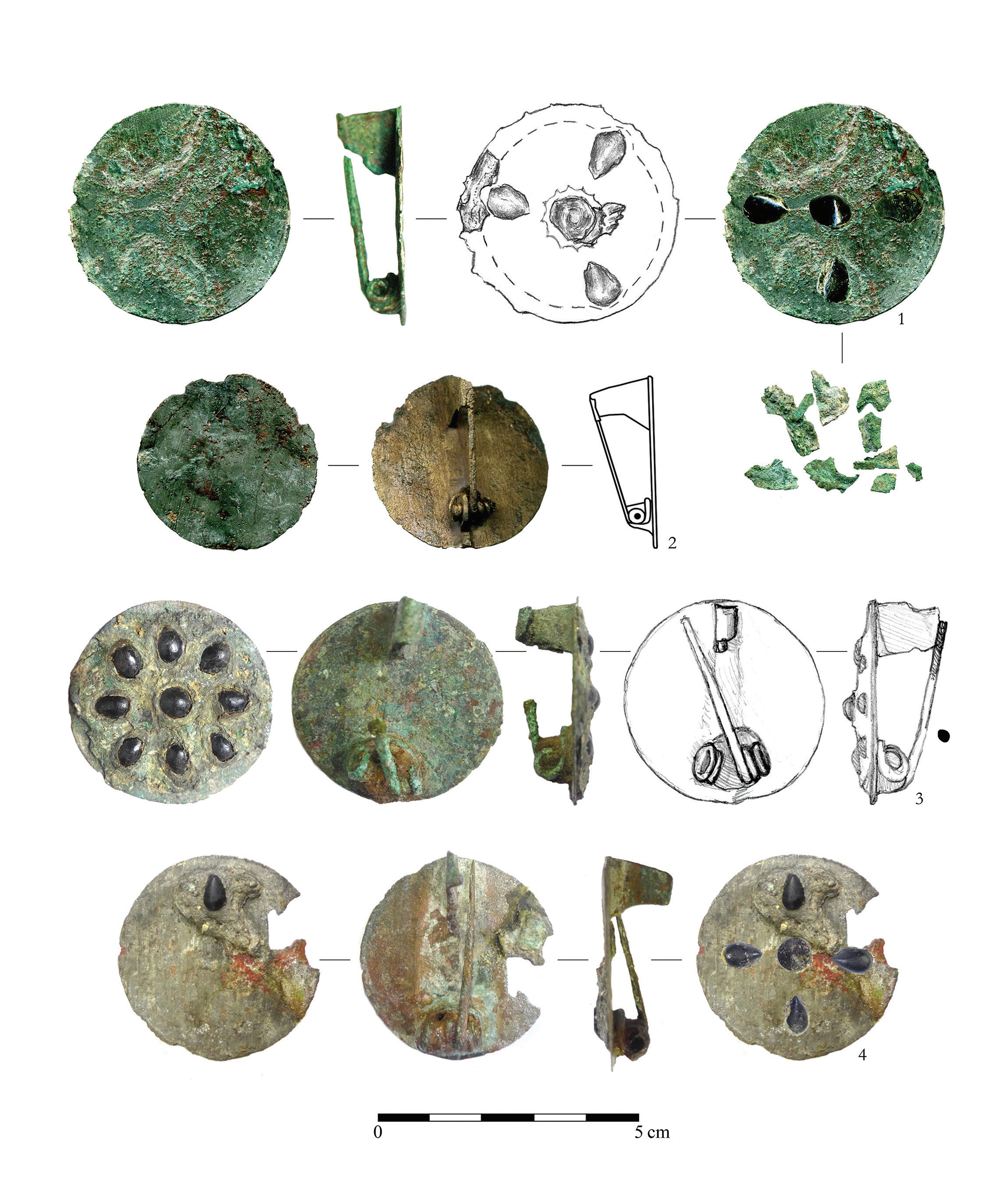 Sarmatian round brooches of the 2nd-3rd century of the Great Hungarian Plain