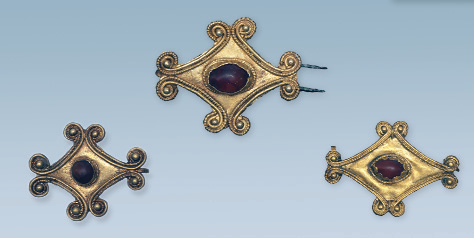
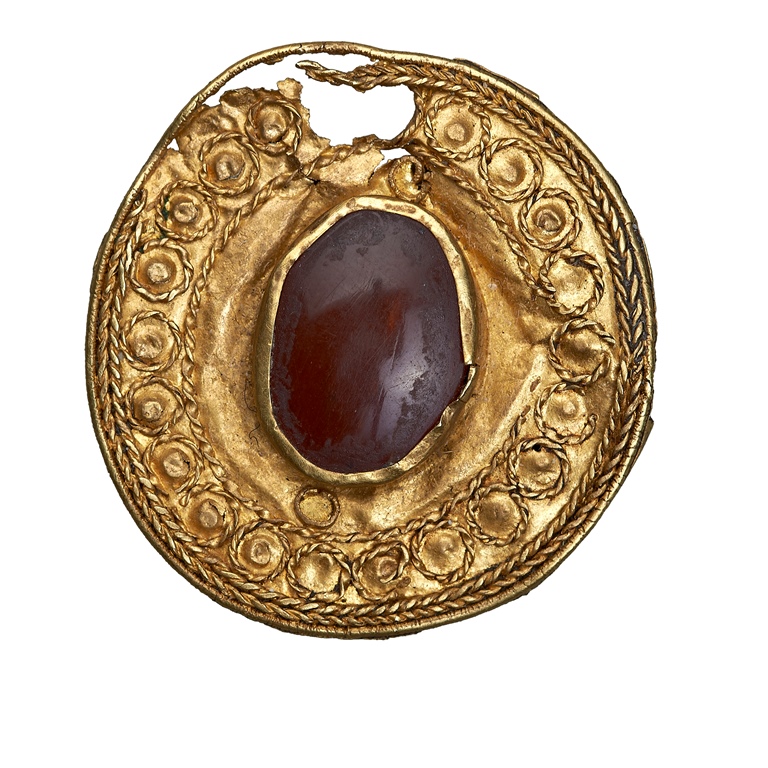
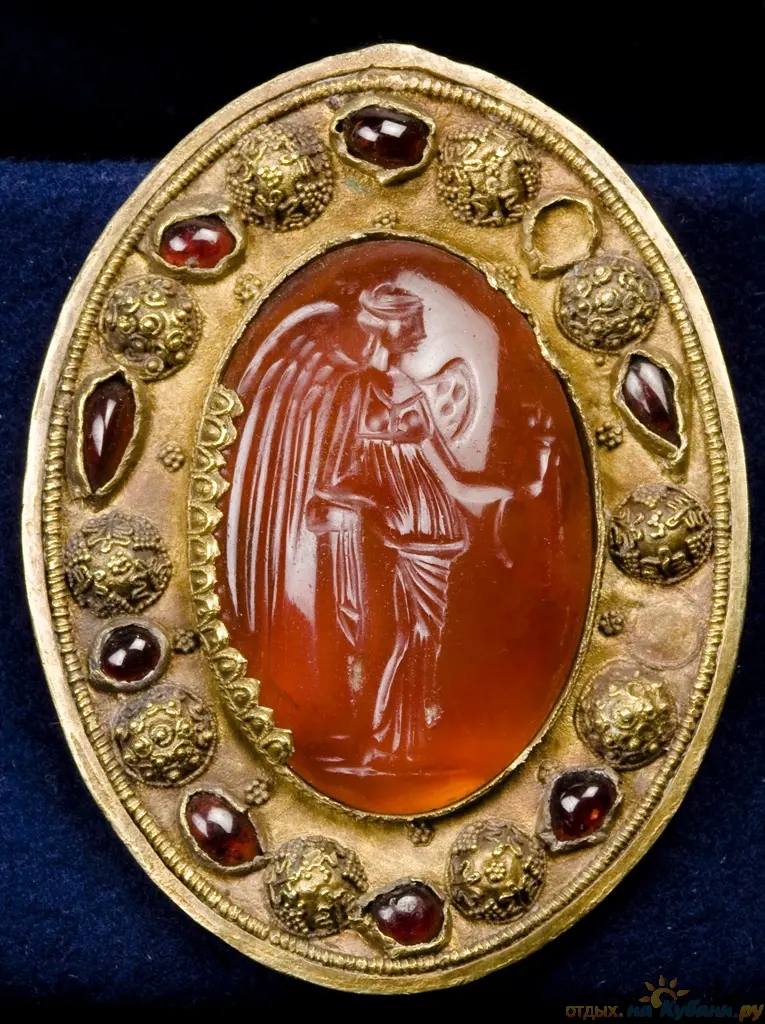
Meotian / Sarmatian brooches of the Krasnodar Territory, Hellenistic period [2nd-1st century BCE]. Made of gold, inlaid with carnelian mostly.
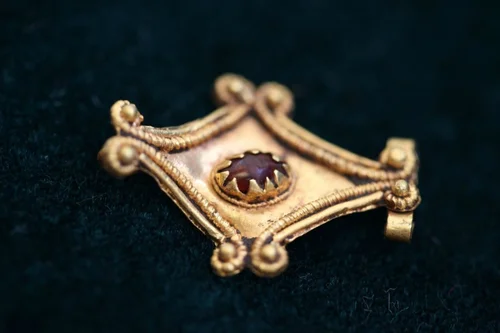
Lozenge-shaped, diamond-shaped brooch
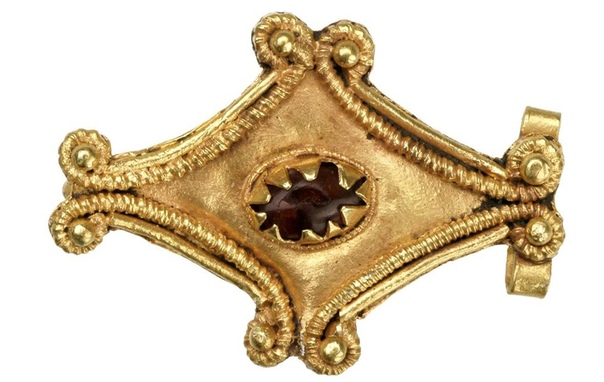
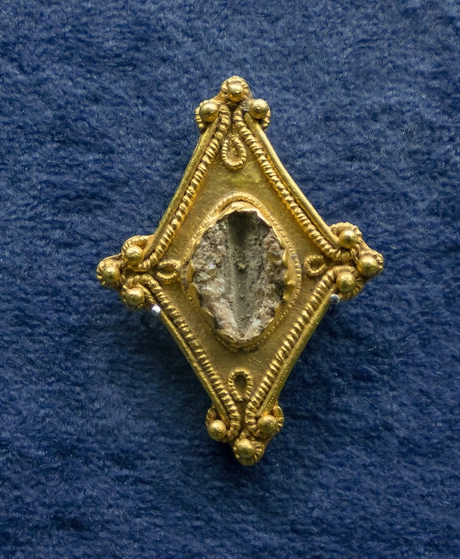
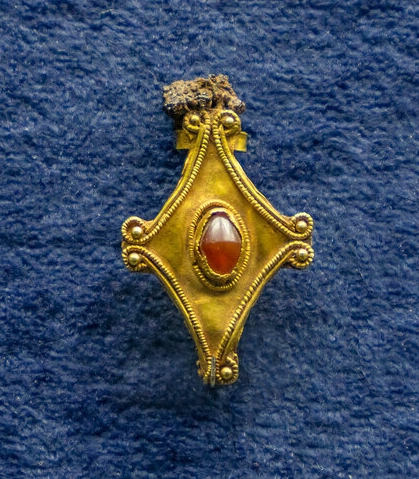
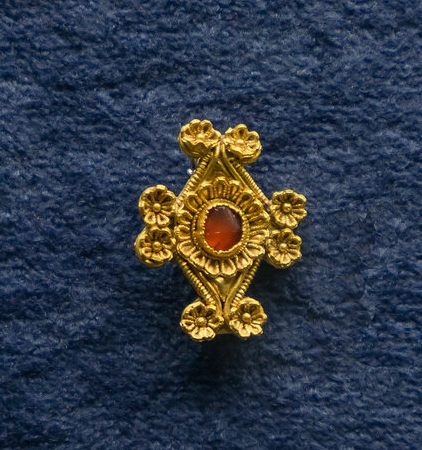
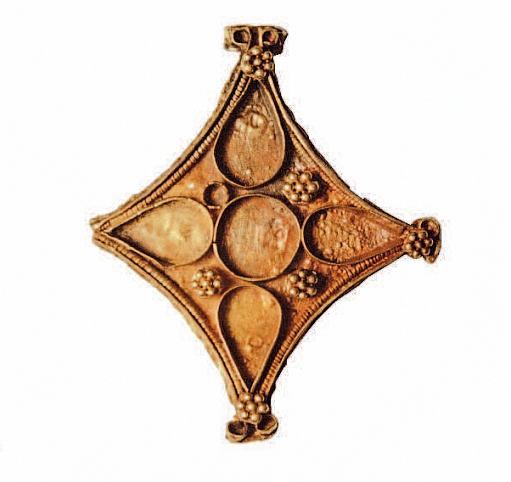
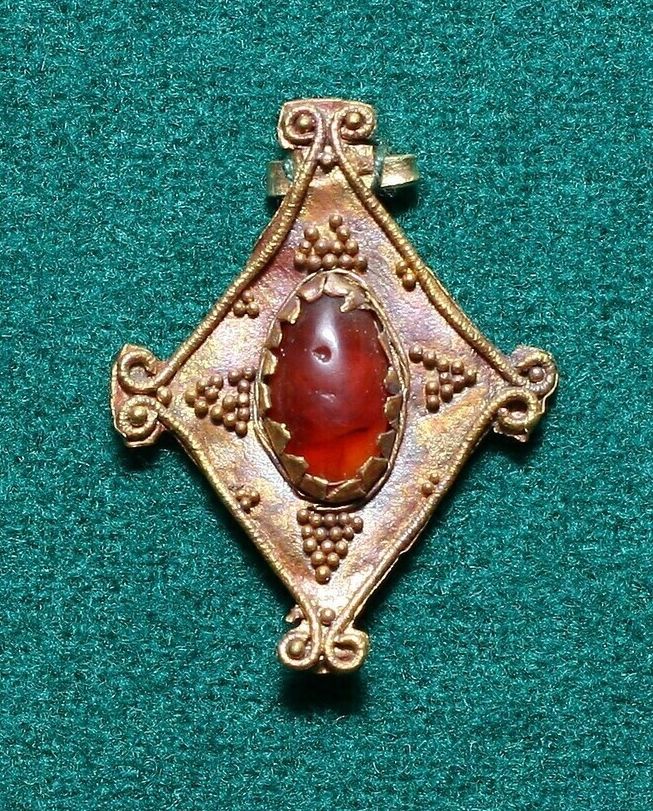
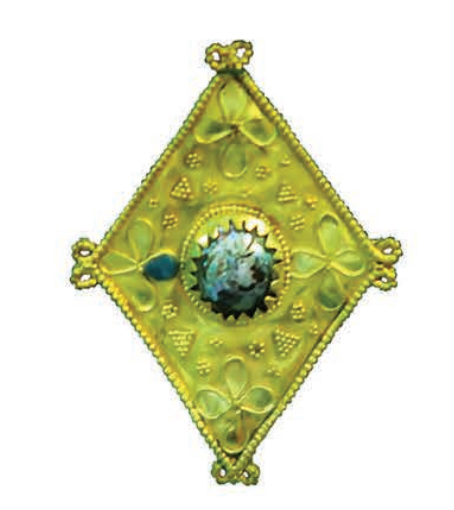
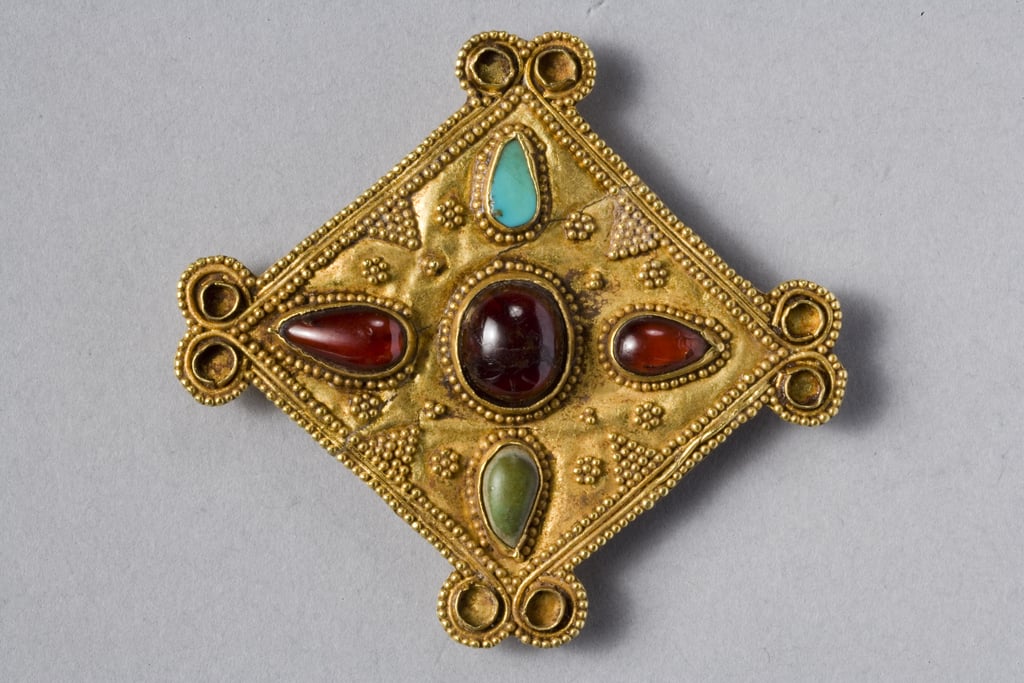
Brooches with carnelian inlays
Krasnodar Krai, Tenginsky burial ground.
First half of the 2nd century BCE
gold, carnelian
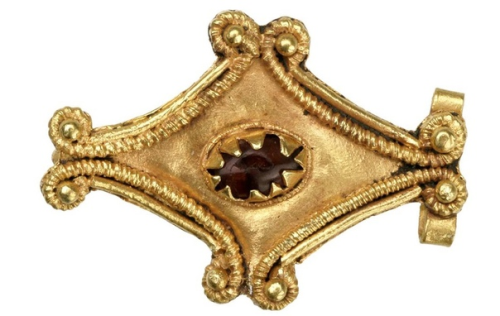
A gold fibula-brooch in the shape of a rhombus with a carnelian insert in the center. 2,85 х 2,2 cm
Meotian burial. Maikop region, Psenatha [Псенафа] archaeological complex.
From a rich collective burial No. 62 dated to 2nd-1st century BCE
Read more https://colorsandstones.eu/2023/04/28/psenatha-псенафа-archaeological-complex/
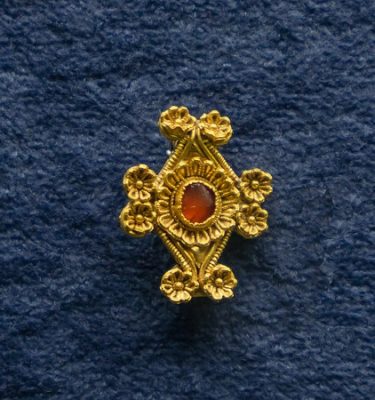
2nd-1st century BCE, Krasnodar Krai [Краснодарский край] / Kuban.
Photo ©Vladimir d’Ar
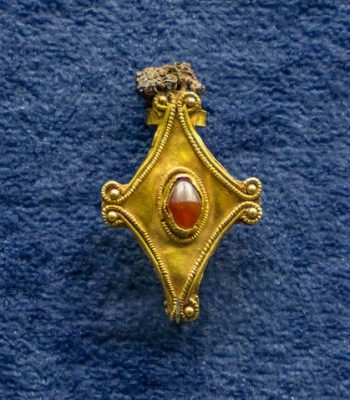
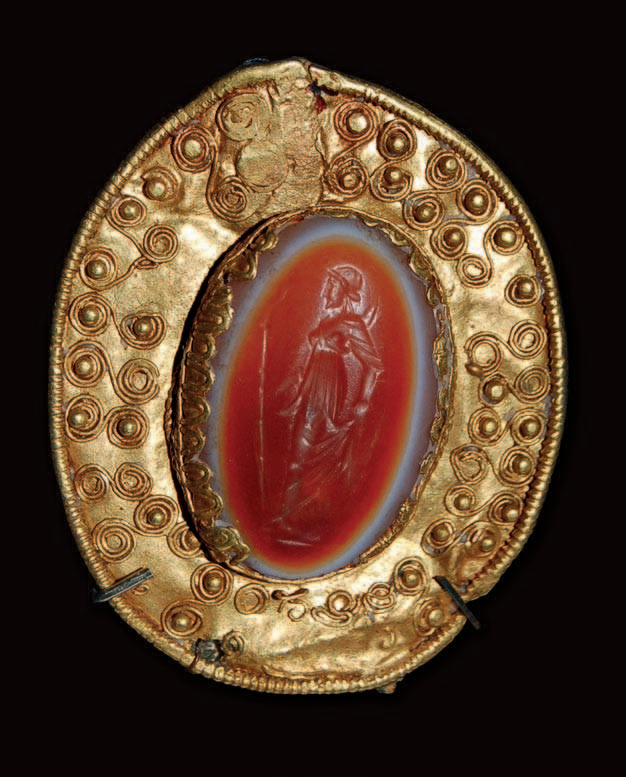
3.9 x 2.2 cm
2nd century BCE
Verkhniy Barrow [Хутор Верхний], kurgan 14, Krasnodar Krai / Kuban
Photo ©Vladimir d’Ar
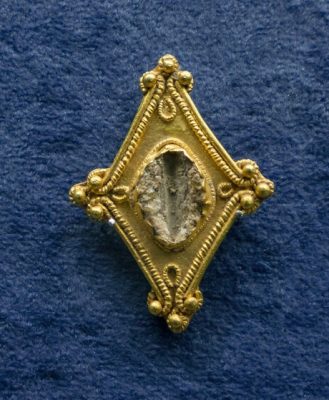
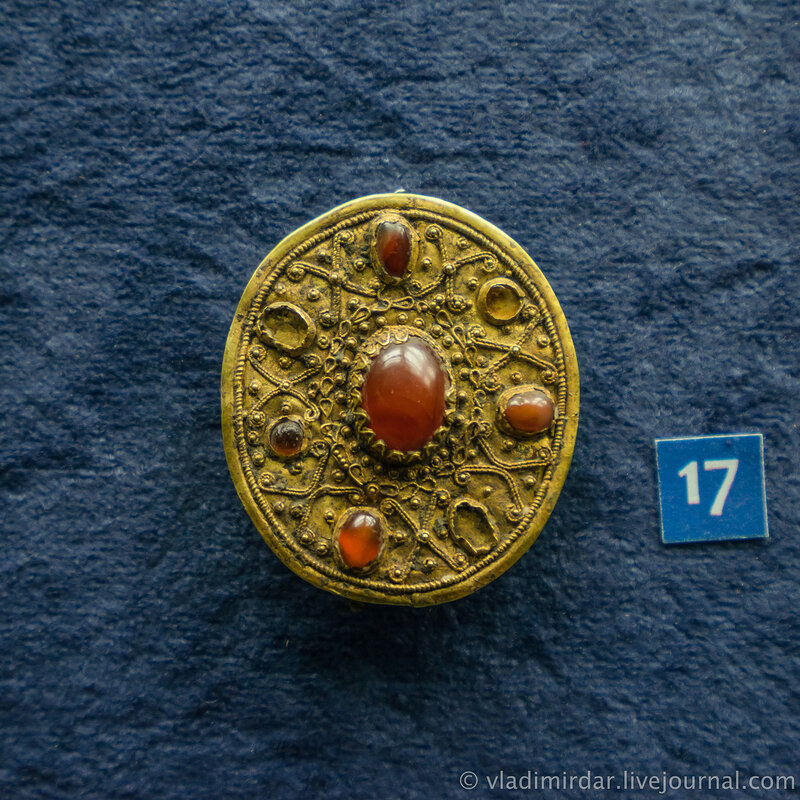
4.9 x 3.5 cm
First half of the 2nd century BCE. Stanitsa Razdolnaya [Станица Раздольная], Krasnodar Krai / Kuban
Photo ©Vladimir d’Ar
Read more https://colorsandstones.eu/2021/06/11/kuban-krasnodar-territory/
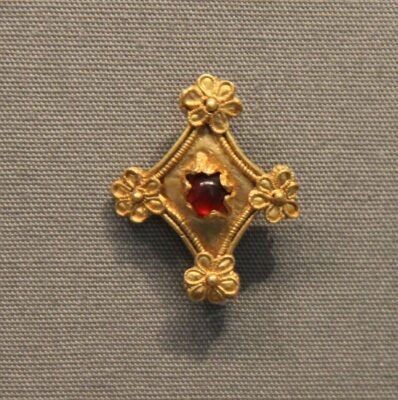
©Gary Todd Hellenistic_Gold_Jewelry
.jpg)
Gold fibula-brooch. Scythian Naples [Neapolis Scythica, Crimea], from the stone tomb of the Mausoleum of Skiluros. 2nd century BCE.
The burial was most likely a male. A gold brooch was found on the deceased’s sacrum. [Yuriy Zaytsev 2004]
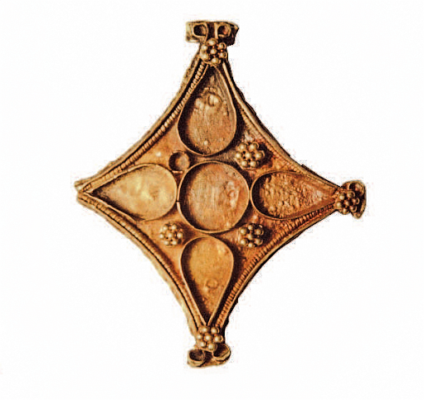
“Three fibula brooches with double-needle devices were found in the mausoleum near the central fortress gate. The gold example with a diamond-shaped shield is a high-quality Greek piece of jewelry.” [Hellenistic brooches]
The filling of a four-petal rosette, the edges of which are formed by soldered plates, was possibly made of colored paste. At the corners of the diamond and in the center between the petals are rosettes of pseudogranules. [Н.Н. Погребова]
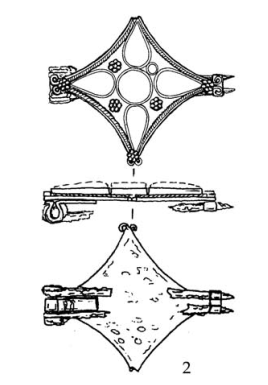
continuation of the pattern
Krasnodar territory, gold with carnelian and/or glass
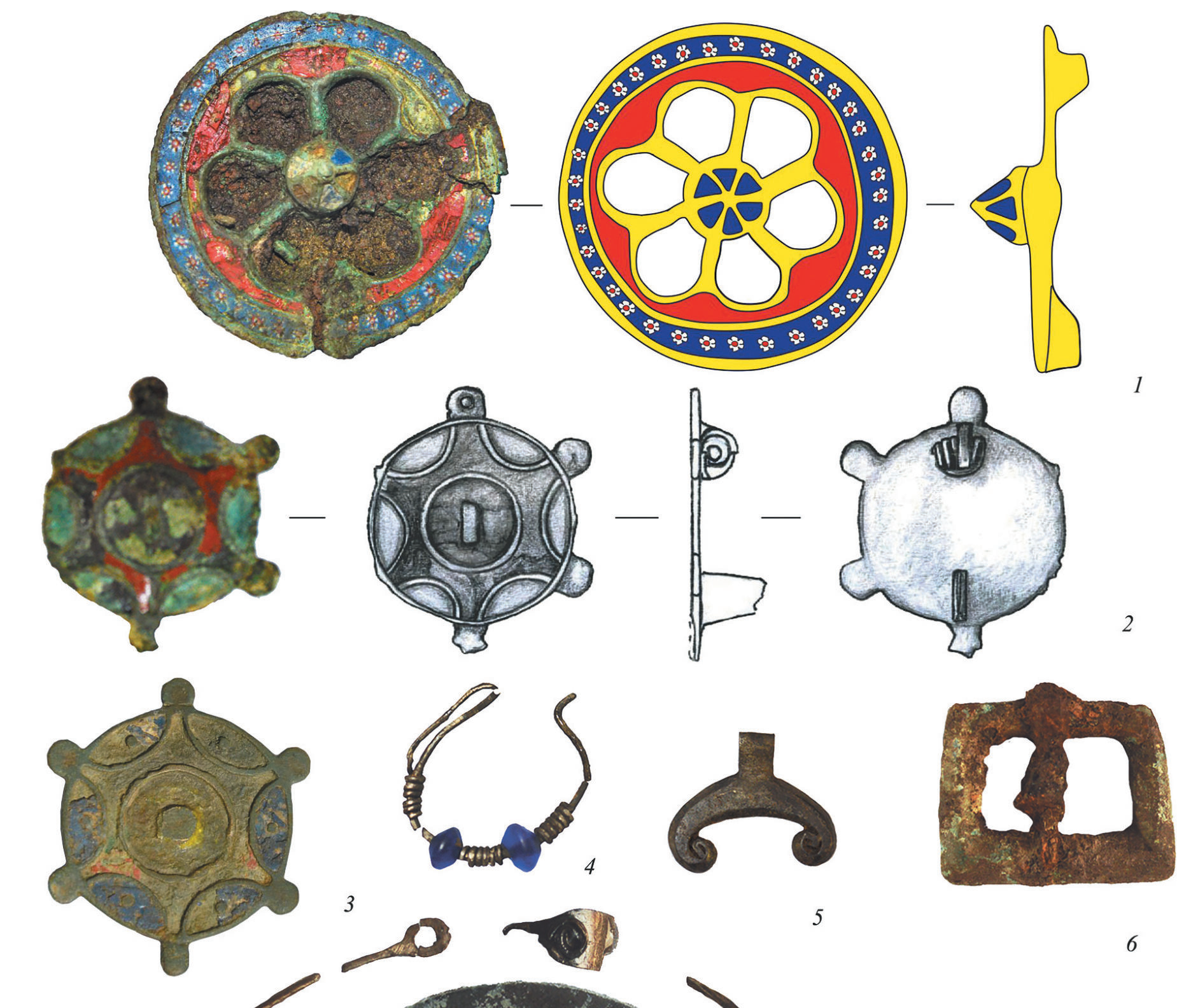
Gold fibula-brooch inlaid with glass [red in the center, green as a leaf], first half of the 2nd century CE. Myskhak necropolis [Мысхако / Мысхакский некрополь], male burial [no. 22].
The burial inventory of the necropolis is kept in the collections of the Novorossiysk Historical Museum-Reserve. [Новороссийский исторический музей-заповедник]
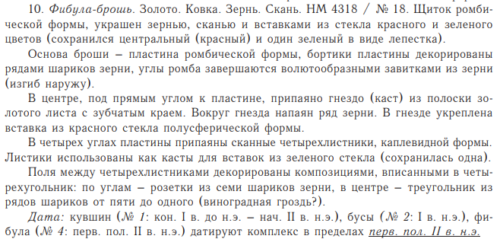
https://archaeolog.ru/media/series/nekropoli_chermorya/myskhako_2020.pdf
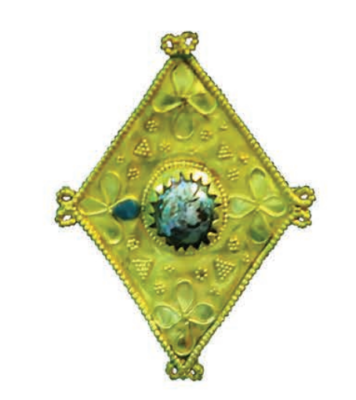
After Малышев, А.А. 2020
Tsemdolina necropolis, 1st-3rd century, male burial.
Scholars associate this necropolis with the Aspurgians — horse-riding warriors in the service of the Bosporan kings. Explored in 1991 by A.A. Malyshev
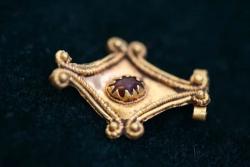
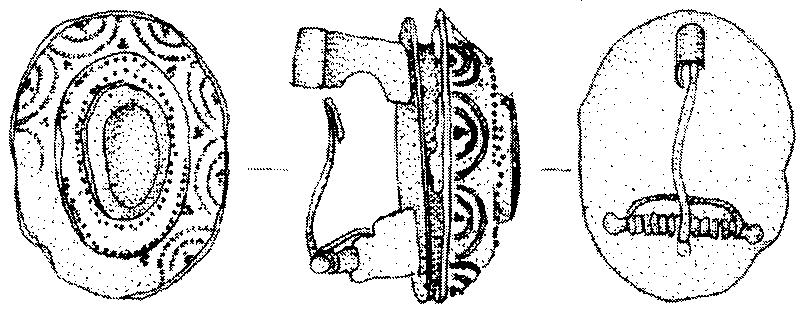
Fibula. Gold, carnelian. Forged, soldered, filigree, granulated. Diamond-shaped shield, dimensions 2.5 x 3.1 cm. The central inset is an oval carnelian. The filigree ornamentation runs along the perimeter, with radiating swirls at the corners. The granulation forms large triangles on all four sides of the inset, small triangles on the sides of the diamond, and individual spheres are present in the corners and within the filigree swirls.
Iron needle not preserved.
Found in the burial of a 29-30-year-old man.
The burial inventory of the necropolis is kept in the collections of the Novorossiysk Historical Museum-Reserve.
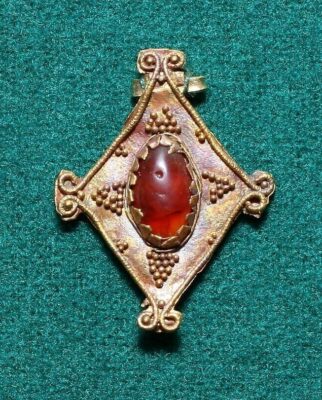
Tsemdolina necropolis, 1st-3rd century CE
Photo ©Novorossiysk Historical Museum-Reserve
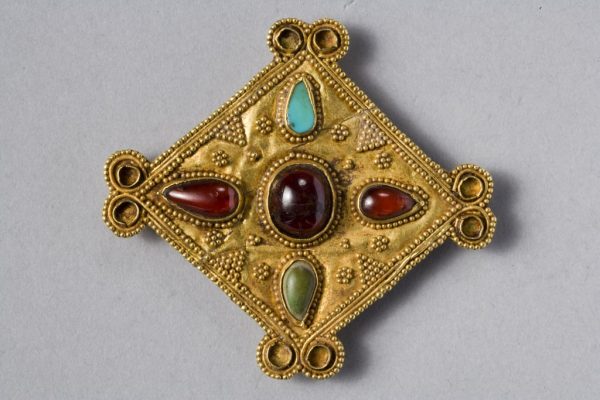
source https://www.meisterdrucke.uk
- E.A. Beglova, T.A. Gabuev, I.V. Ksenofontova, L.M. Noskova
Archaeology of the Northern Caucasus
https://library.orientmuseum.ru/images/pdf/Archeologia_Sev_Kav_2014.pdf - Art Treasures of Ancient Kuban / Шедевры древнего искусства Кубани https://library.orientmuseum.ru/images/pdf/KubanShedevry_1987.pdf
- Малышев, А.А. 2020: Погребальный инвентарь Мысхакского некрополя in MYSKHAK NECROPOLIS. EXCAVATIONS 1978-1979. Black Sea Necropolises series, volume 5
https://archaeolog.ru/media/series/nekropoli_chermorya/myskhako_2020.pdf - АСПУРГИАНЕ НА ЮГО-ВОСТОКЕ АЗИАТСКОГО БОСПОРА: ПО МАТЕРИАЛАМ ЦЕМДОЛИНСКОГО НЕКРОПОЛЯ.— Гриф и К, 2008. http://gorgippia-antiqua.ru/book/Aspurgiane.pdf [Tsemdolina necropolis]
- Yuriy Zaytsev 2003, Scythian Naples, 2nd century BC – 3rd century AD [Неаполь Скифский II в. до н.э.-III в. н.э.] https://www.academia.edu
- Yuriy Zaytsev 2004, The Scythian Neapolis (2nd Century BC to 3rd century AD): Investigations into the Graeco–Barbarian City on the Northern Black Sea Coast
- Anton Dedyulkin and Yuriy Zaytsev, Hellenistic brooches. Эллинистические фибулы-броши. https://www.academia.edu
- Н.Н. Погребова, Мавзолей Неаполя Скифского https://arheologija.ru/pogrebova-mavzoley-neapolya-skifskogo/
- Е. А. Хачатурова 2015, Catalog of an exhibition: «Золото потомков Геракла». Народы Прикубанья в VI в. до н.э. – III в. н.э.
- Valentina Mordvintseva 2016, Barbarians of the North Pontic Region and Their Contacts with Centres of Antique Civilization from the 3rd Century BCE to the mid–3rd Century CE (According to the Research of the Elite Burials) https://www.academia.edu
Related posts:
 Gold brooch, Anapa, Krasnodar Krai, 2nd-1st century BCE [d/b]
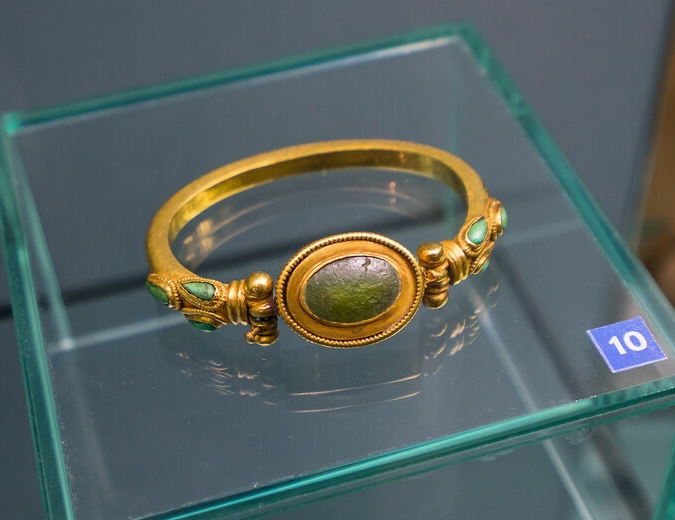 Kuban, Krasnodar territory. Jewelry catalog
 Psenafa [Псенафа] archaeological complex. Hellenistic Sarmatian-Meotian burial
 Sarmatian brooch, 1st C BCE [d/b]
 Sarmatian brooch, 2nd/1st century BCE, Kuban Region [d/b]
 Sarmatian disc brooches with pendants. Notes
 Enameled wheel-shaped brooches from Sarmatian burials
 Sarmatian brooch from a female burial, Hungary [d/b]
 Sarmatian brooches from Hungary
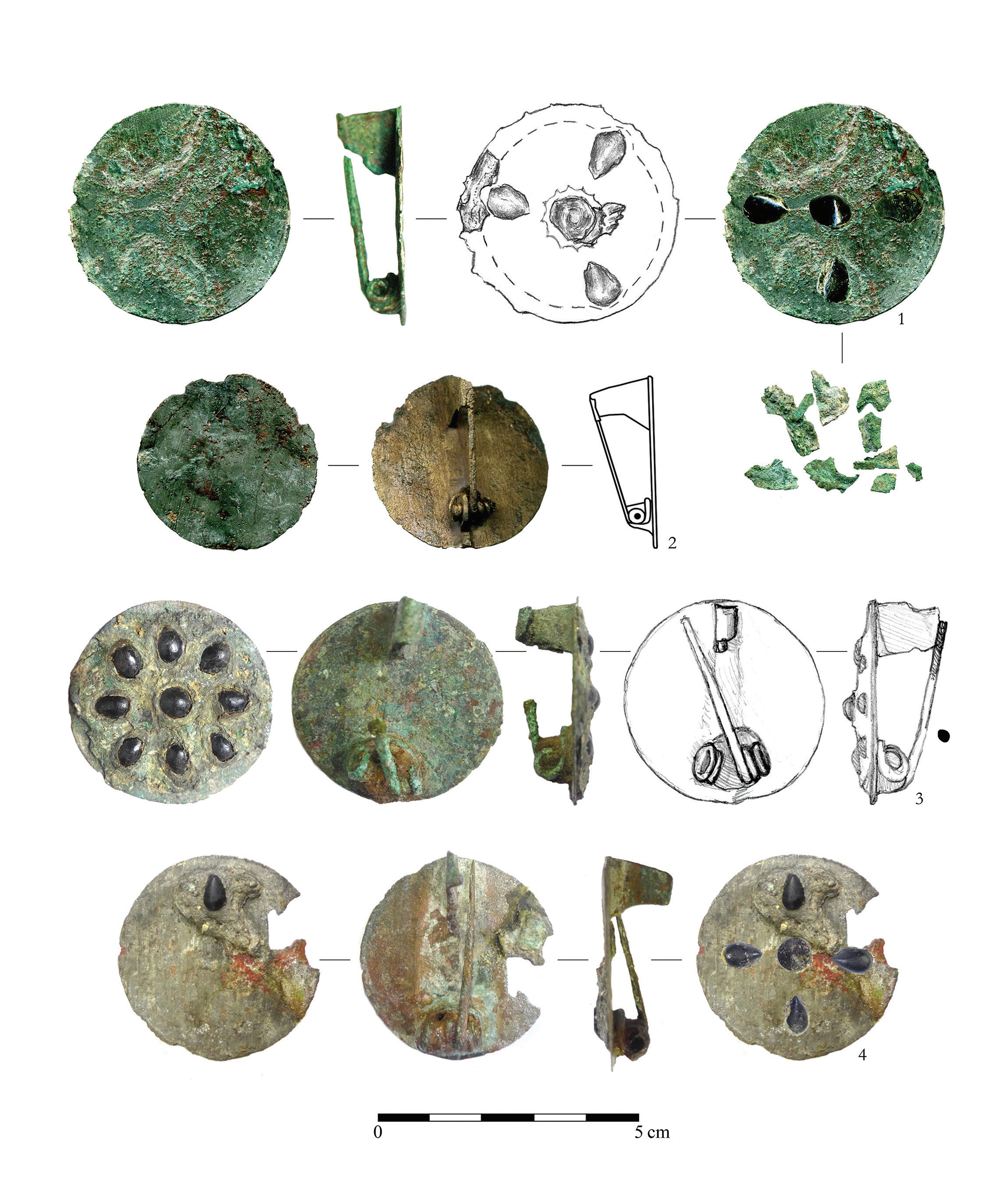 Sarmatian round brooches of the 2nd-3rd century of the Great Hungarian Plain
 Brooch from the Peschanyj Barrow, Sarmatian, 1st century BCE [d/b]
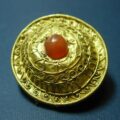 Sarmatian brooch, 2nd/1st century BCE, Kuban region [d/b]