“One tomb with two princesses was discovered in the village of Jubaji, located southeast of the city of Ramhormoz in the Khuzestan province of southwest Iran. The age of one is estimated to be 17 years old, the other will have been between 30 and 35 years old. (…)
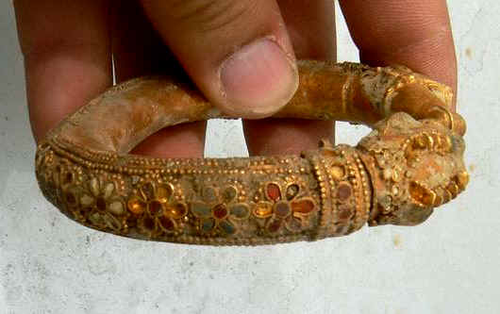
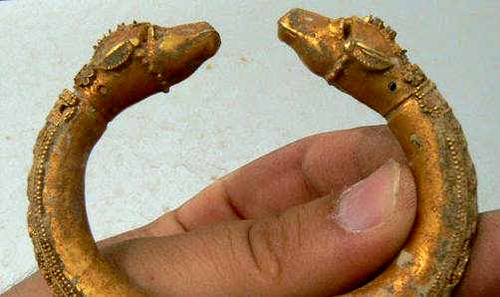
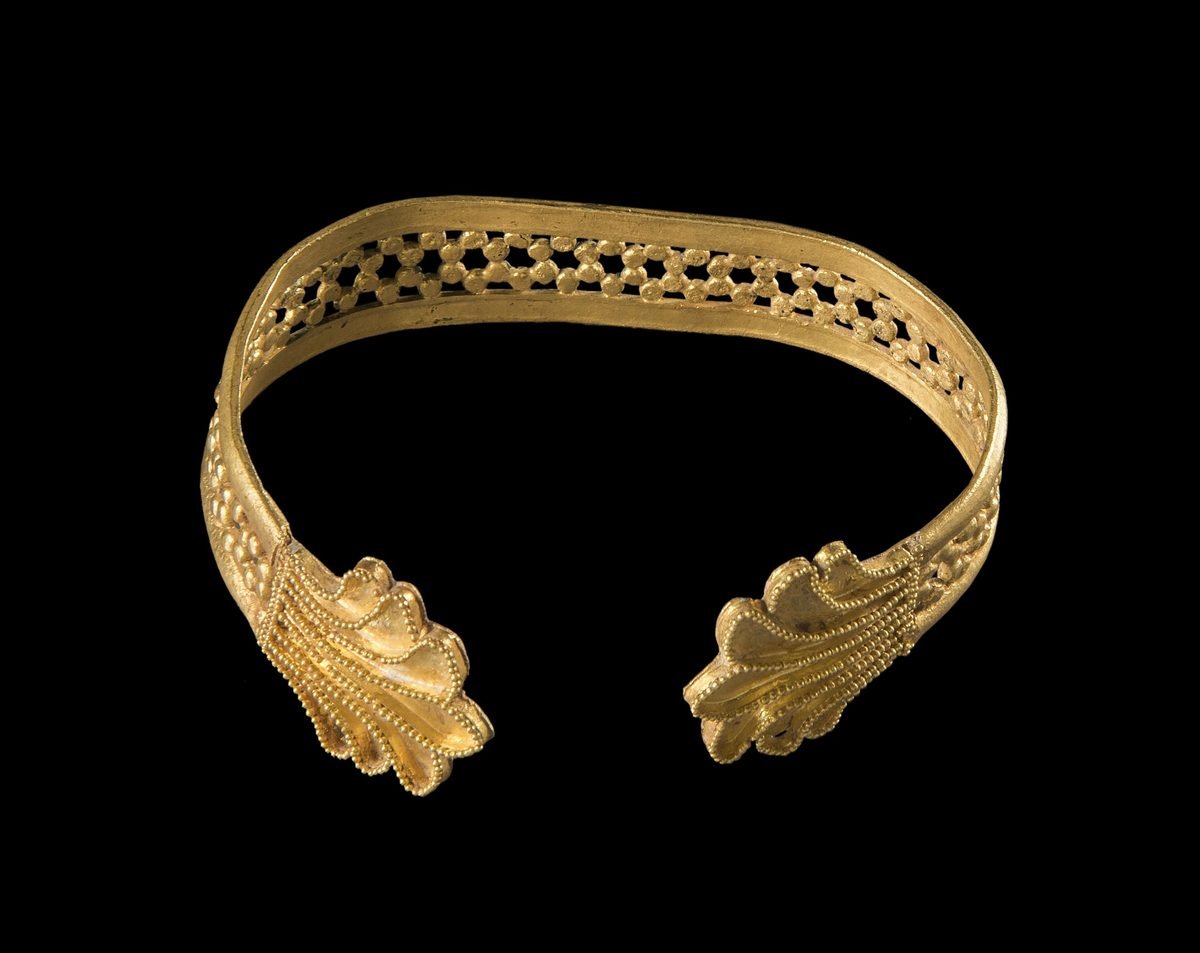
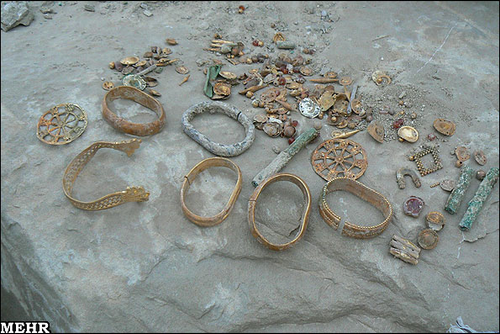
Both were found lying on their sides in two bronze sarcophagi, roughly the shape of a bathtub. Given the large number of luxurious grave goods that the deceased had received on their journey to the afterlife, they must have belonged to the elite of the time. For that reason they are also called princesses. The contents of the tomb indicate a date in the 7th or 6th century BC. The grave goods mainly consisted of precious jewelery with precious stones and luxurious crockery. The majority of the objects are made of gold, such as the aforementioned bracelets. In addition, the tomb in Jubaji contained objects made of silver, bronze, iron, stone and ivory.
Both princesses probably belong to the family of the local neo-Elamite king Shutur-Nahhunte, son of Indada.” [V.T. van Vilsteren]
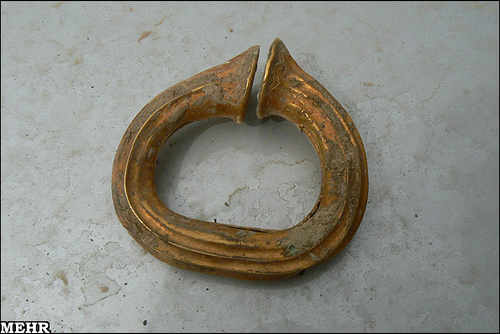
“treasure includes a ring called the “power ring” with cuneiform lines weighing 175 grams, a ring called the “power ring with reliefs weighing 105 grams, a power ring weighing 55 grams, a broken power ring with cuneiform lines weighing 55 grams, and a power ring with decorations weighing 55 grams.
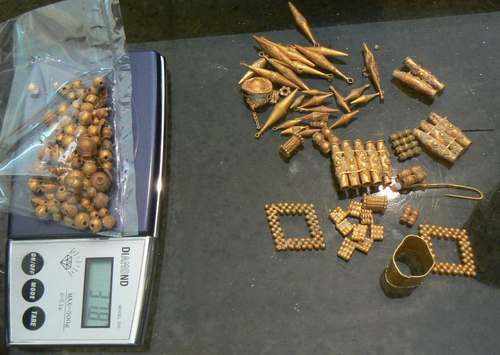
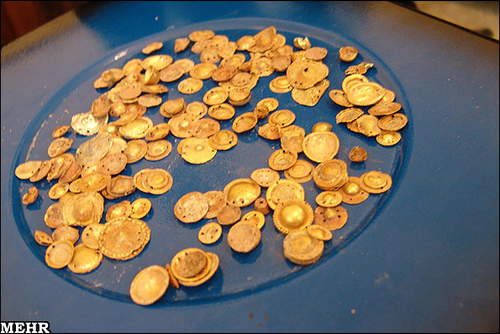
a gold bracelet with two-headed decorations in the shape of a deer and a flower with jewels weighing 85 grams, a gold bracelet with light two-headed flower decorations weighing 50 grams, two simple wristbands weighing 325 grams, a wristband with jewel decorations weighing 95 grams, a wristband with a jeweled deer pattern with flower decorations weighing 75 grams, a wristband weighing 100 grams (at this time, the material of some of the objects is unknown), 4 wristbands made of silica??? weighing 285 grams, a gold piece in the shape of a horse’s head with spiral decorations weighing 295 grams (experts believe it is the handle of a dagger), four pieces of gold metal, two of which are oval, one is broken and one is in the shape of narrow tubes with embossed decorations weighing 175 grams, three gold plaques in the shape of a grid weighing 15 grams, a gold necklace chain with jewels weighing 80 grams, 155 gold clothing buttons of different sizes weighing 25 grams, 99 large and small gold and plastic beads, a gold ring weighing 4 grams, gold necklace with pendants weighing 14.8 grams, 10 gold decorative objects with embossed motifs in 30 pieces weighing 113.2 grams, 10 gold decorative objects in 4 pieces glued together and in the form of small beads 800/31, 10 gold decorative objects in 18 pieces glued together, two gold pieces in the form of pins or earrings with gems weighing 4.8 grams, an iron metal bar with a riveted gold plaque weighing 7.8 grams, 48 beads made of agate in various sizes, a broken tooth discovered at the excavation site, a metal statue, most likely made of bronze, praying and riding a fish, and a bust statue, the upper part of which is broken and unknown, most likely made of bronze, are among the other objects found in the bronze coffin discovered in Ramhormuz.”
[Source: https://www.mehrnews.com/news]
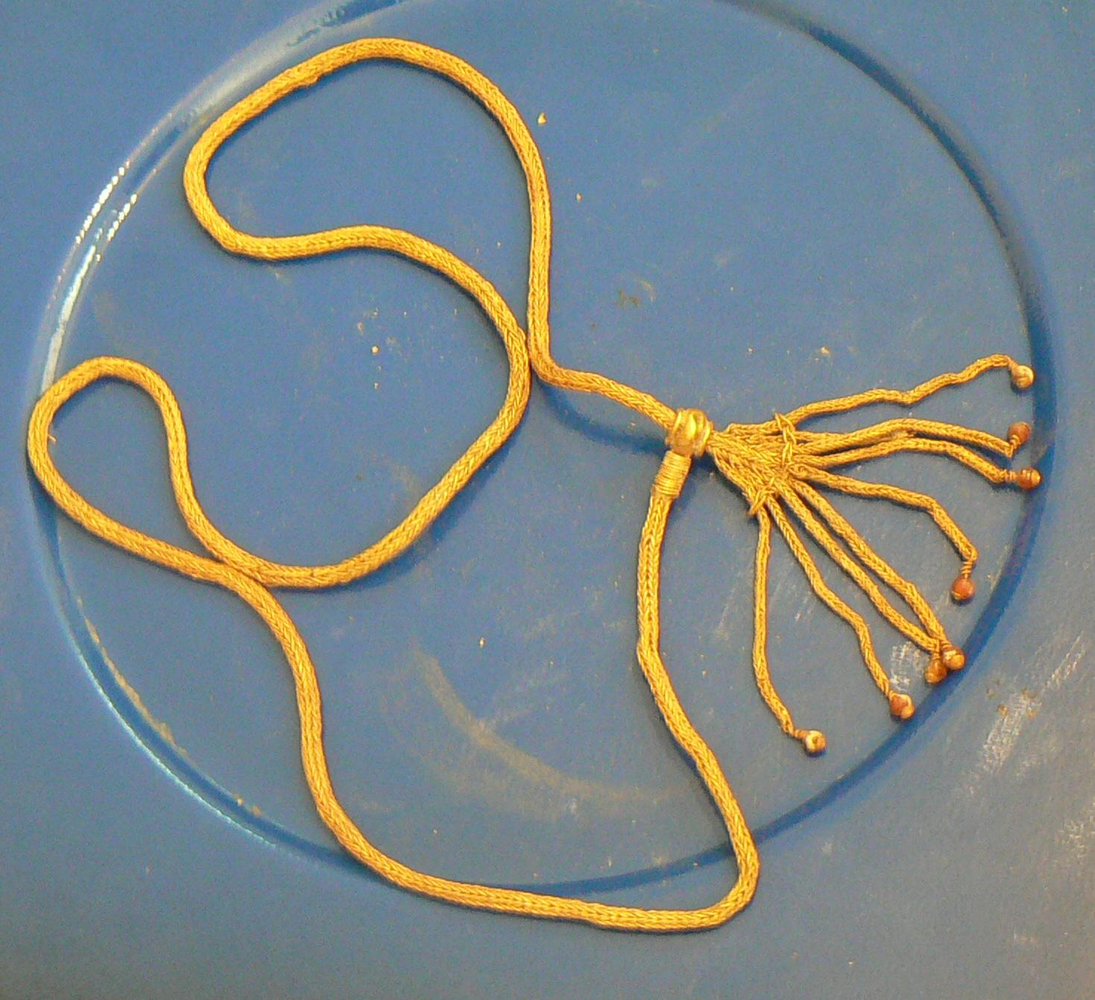
- V.T. van Vilsteren and J. Nokandeh (eds), Iran: Bakermat van de Beschaving [Iran – cradle of civilization]. Catalogue of exhibition at Drents Museum, Assen 2018 https://www.academia.edu
- Yasmina Wicks (2024). The Tomb of Two Priestesses? The Late Neo-Elamite Jubaji Tomb in a Religious-Royal Context. Asia Anteriore Antica. Journal of Ancient Near Eastern Cultures 6: 107-143.
- Yasmina Wicks (2017) “Late Neo-Elamite Ceremonial (?) “Rings”” https://www.academia.edu/34232505/_Late_Neo_Elamite_Ceremonial_Rings_2017_
- https://www.academia.edu/42039182/Female_Fish_and_Frying_Pan_An_Enigmatic_Funerary_Object_Unique_to_Elam_2023_
- https://www.mehrnews.com/news
- An article By Shapour Suren-Pahlav https://www.cais-soas.com/News/2010/august2010/25-08.htm
Related posts:
 Relief from Djebel Chaar, near Palmyra [d/b]
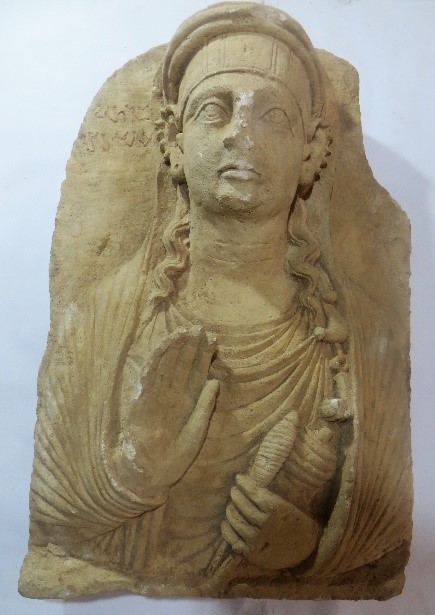 Relief of Berretâ, the hypogeum of Artaban, Palmyra, 100-130 CE [d/b]
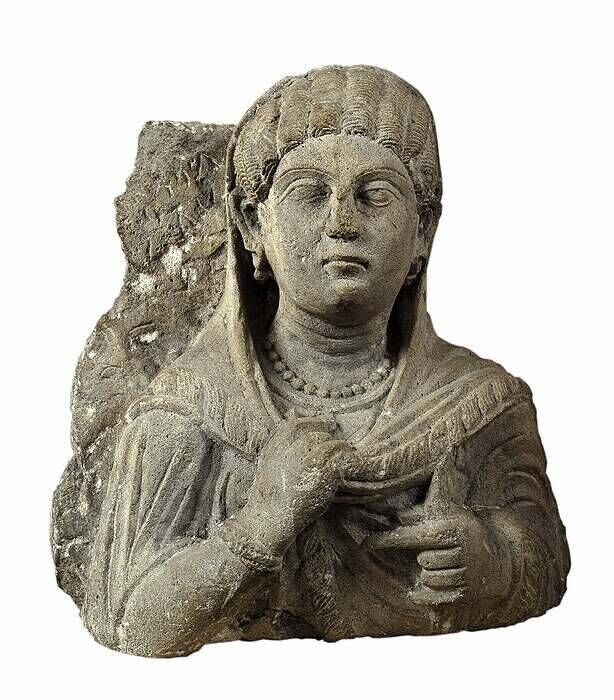 Relief of a woman, Palmyra 3rd C [Musée Mariemont] [d/b]
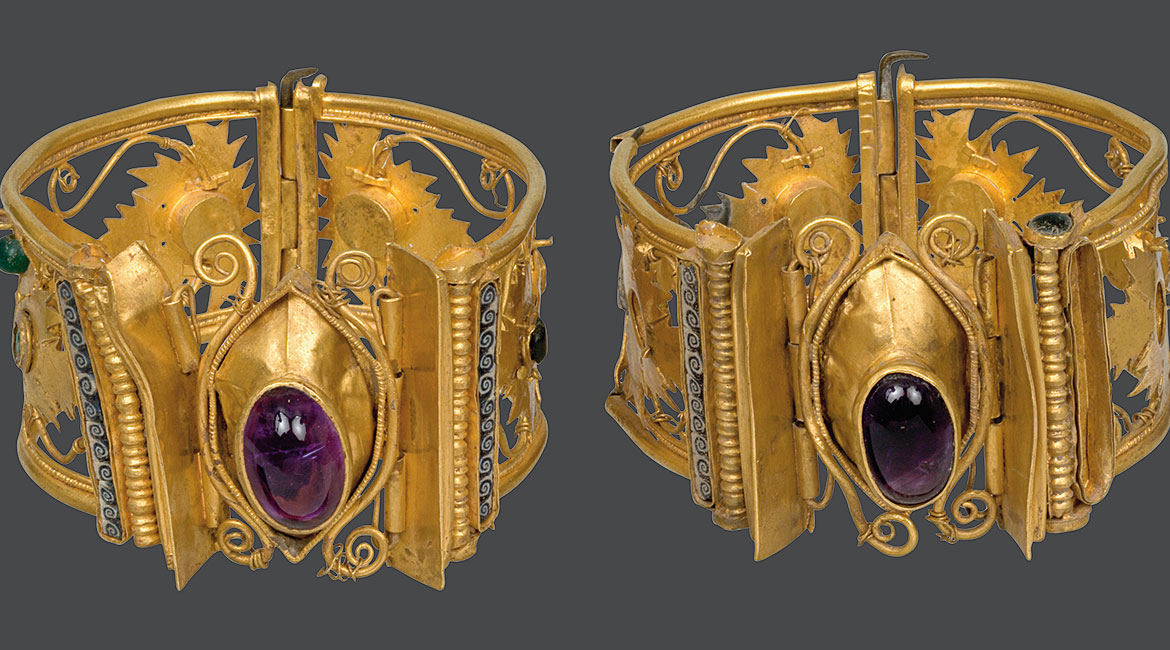 Bracelets with amethyst, 1st C BCE; NAM Athens [d/b]
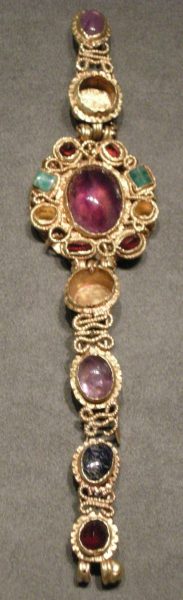 Segmented bracelet, 3rd-5th century [d/b]
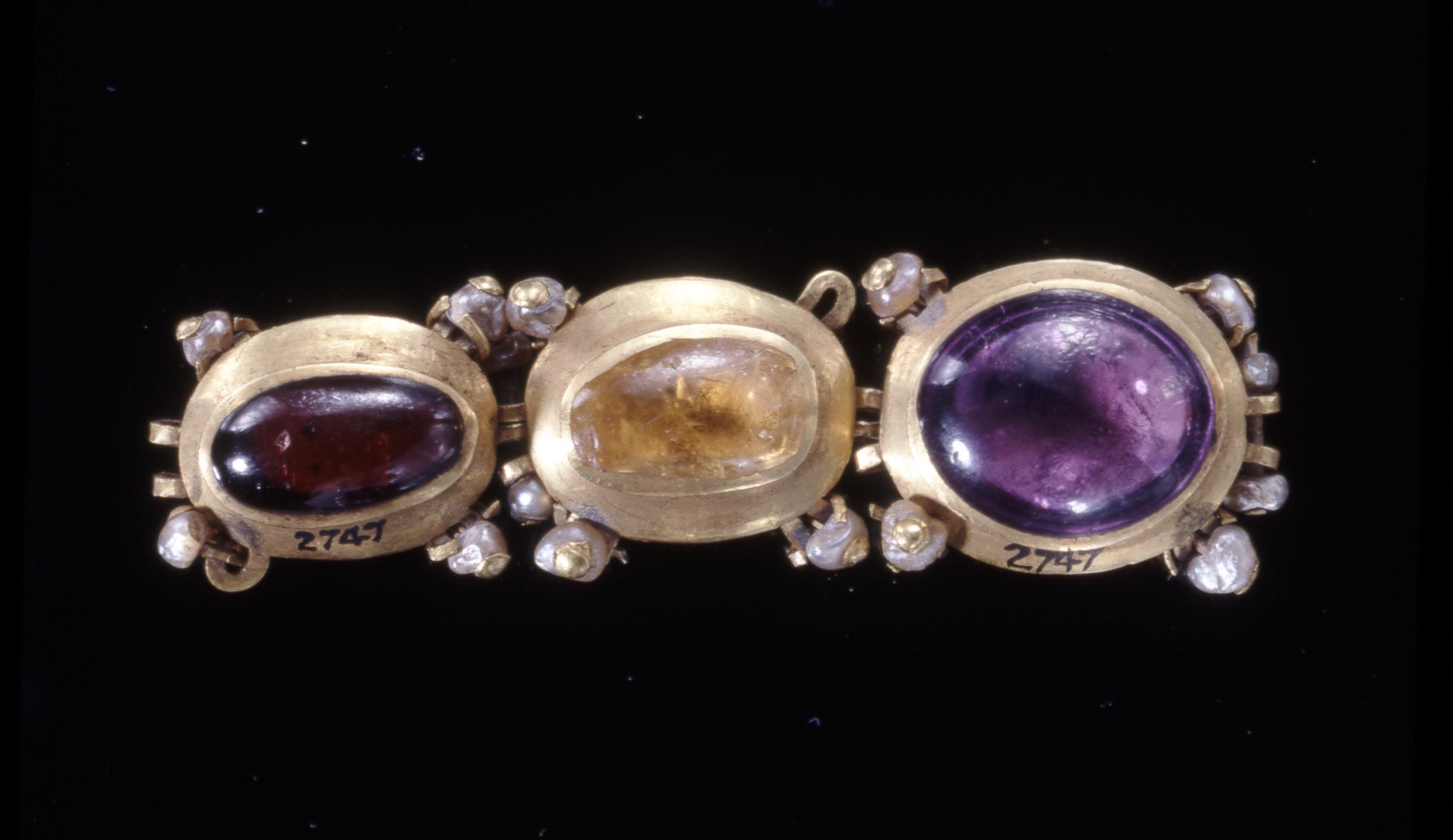 Segmented jewelry. Necklace or a diadem? Segmented necklaces with larger centerpiece. From Greece to China
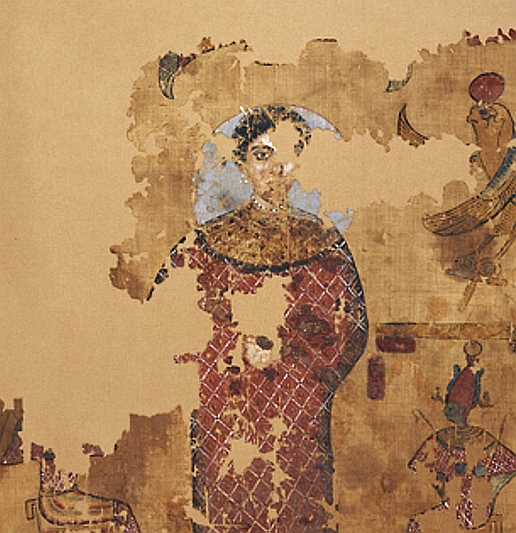 Mummy shroud, Akhmim, 2nd C [d/b]
 Fabia, Isis priestess, Bari, Italy, 100 CE [d/b]
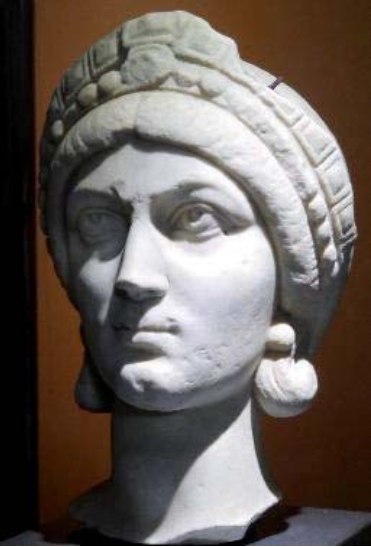 Diademed bust, an empress Licinia Eudoxia [d/b]
 Sarcophagus, Etruscan, 250 BCE [d/b]
 Czeczenia, Inguszetia – szybkie notatki
 Elamite silver vessel [d/b]
The discrepancy in their estimated ages suggests a potential difference in their status within the royal lineage. This variance might reflect specific social roles for each princess.