Lit.: Казанский М.М., Мастыкова А.В., Боспор Кммерийский и Иберия в позднеримское время. https://www.academia.edu
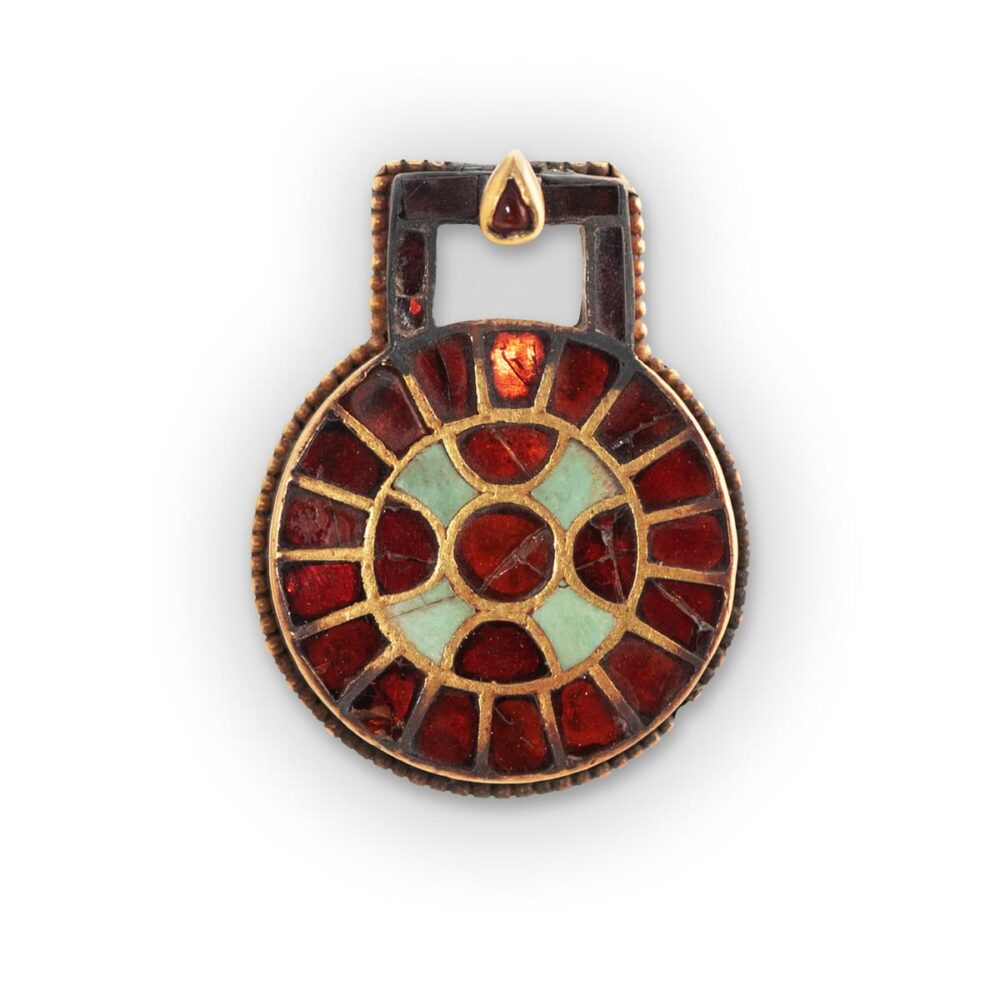
Rostov Regional Museum of Local History

Cloisonné inlay buckle, gold, garnet, light-green glass. Diam. 3 cm
Tanais, 3rd/4th century
“The buckle was discovered in a burial complex dating from the second half of the 3rd to the first half of the 4th century. The burial goods consisted of metal utensils (a bronze jug and a silver kantharos – a drinking vessel), silver toiletries (a flask, a spoon, a mirror, a nail pick, and a needle case), and gold jewelry (a torc, an earring, a pendant, and a necklace of various beads). Based on the grave goods, the burial in which this buckle was found was identified as female. It may have belonged to a member of the elite of the late Roman city of Tanais, a woman from the late antique Black Sea region.
The buckle has a round shield, a fixed U-shaped frame and a tongue in the form of a vertical pin, which is topped with a teardrop-shaped gold socket with a red stone. The center of the shield features inserts of opaque light-green glass, forming a cross-shaped pattern. Underneath the inserts are linings of thin gold foil. The back of the buckle is made of a single gold plate and features four small loops for attaching to the base, positioned opposite each other.
The enamel making process was labor-intensive. First, a metal base was prepared and polished. Then, gold and silver wire or thin plates were soldered onto it. The resulting recesses were filled with a special colored vitreous enamel and fired in a kiln. After the piece cooled, it was polished to impart a shine.
Granulation was also used in the creation of the piece.”
Related posts:
 Belt plaques, Sarmatian, Kuban, 1st C BCE /1st C CE [d/b]
 “Prince’s Grave” of Wolfsheim. Gold ornament Hatra type, 3rd-4th century
 Inlaid silver belt, 1st century CE
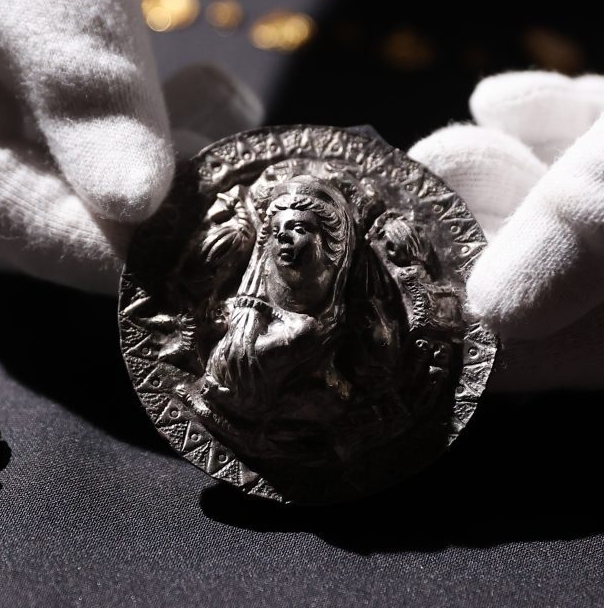 Silver medallion, Phanagoria [Kuban], 1st century BCE female burial [d/b]
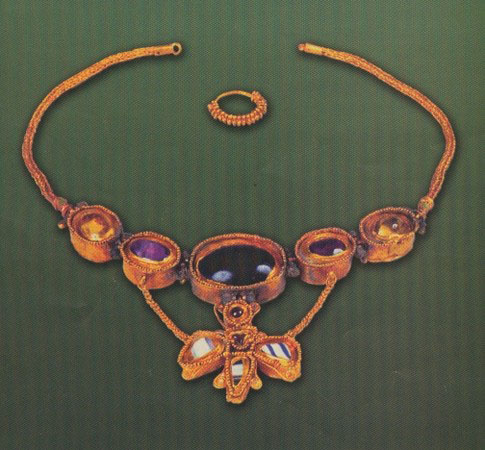 Jewelry from a rich Sarmatian burial, village Mikhailovka, Odessa region, Ukraine
 Belt sets, 3rd century, Southern Ural
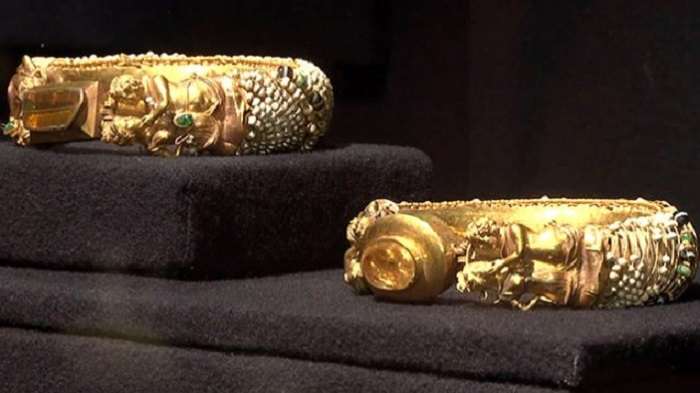 Bracelets from Nogaichik barrow, Sarmatian grave from Crimea [d/b]
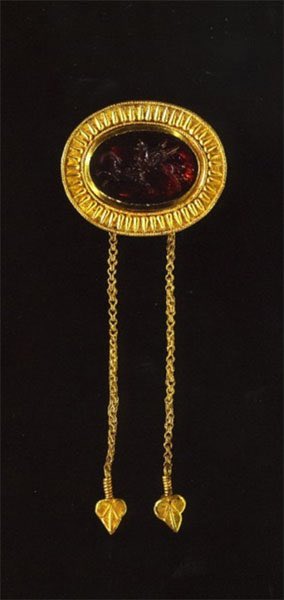 Tomb of Crepereia Tryphaena
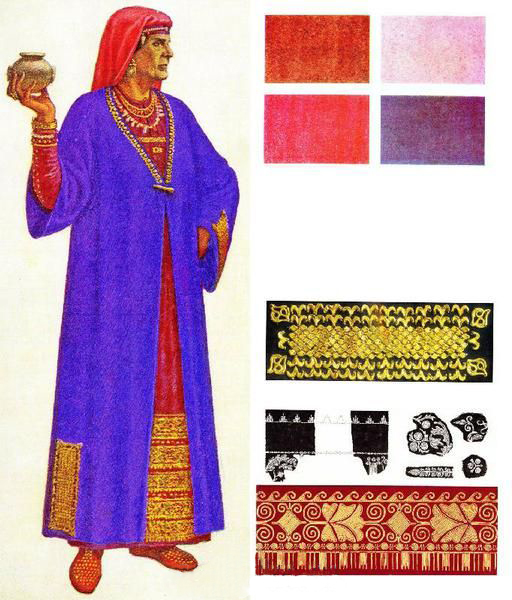 Sokolova Mogila, the 1st century burial of Sarmatian priestess
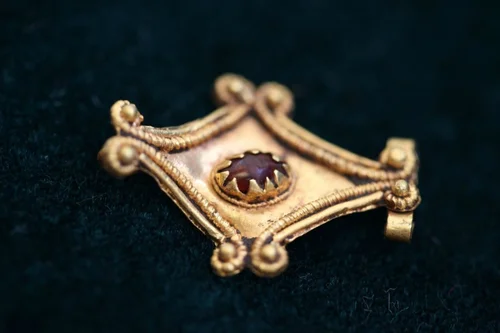 Psenafa [Псенафа] archaeological complex. Hellenistic Sarmatian-Meotian burial
 Kichiginsky burial mounds. Female burial, 4th century BCE
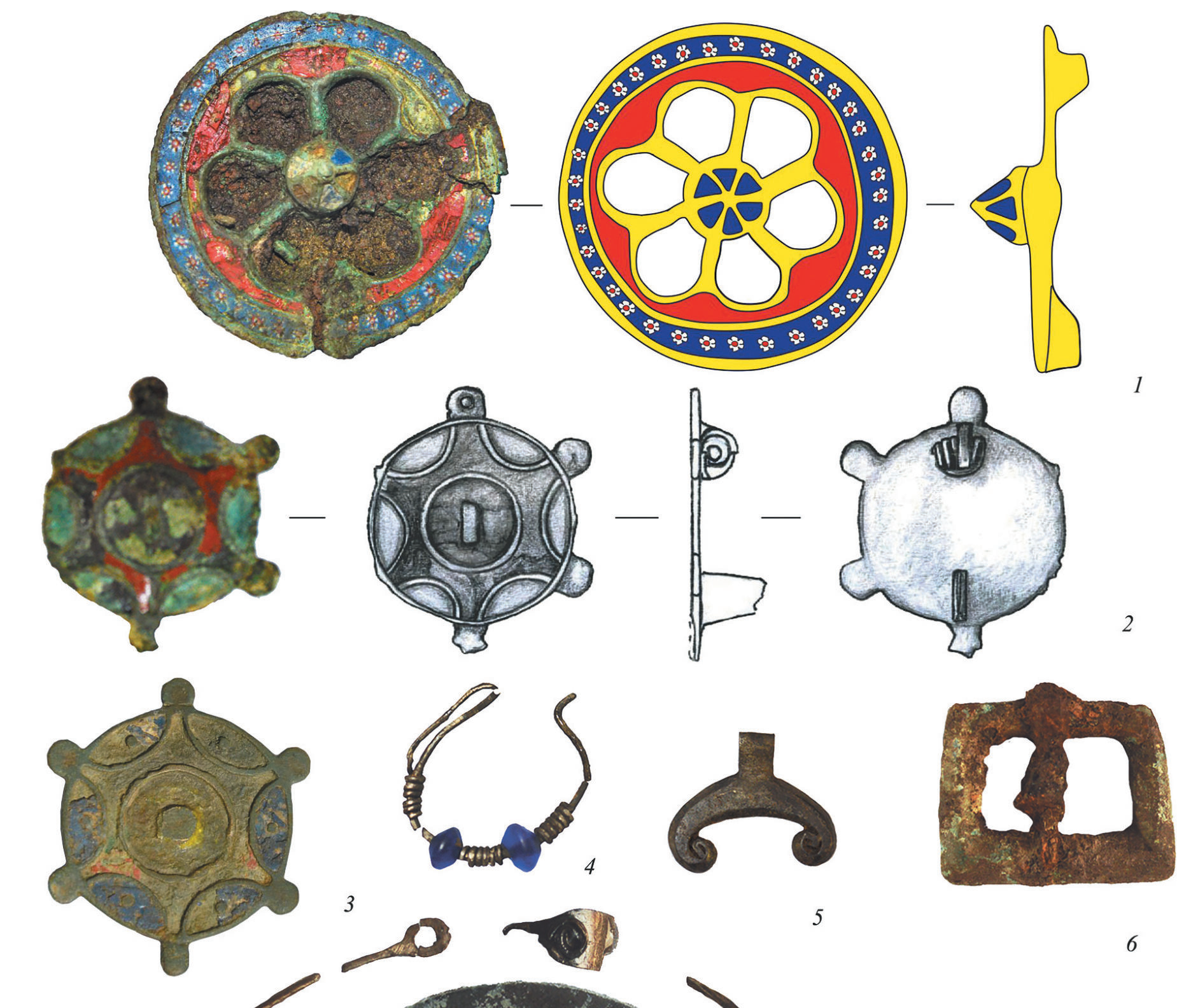 Enameled wheel-shaped brooches from Sarmatian burials