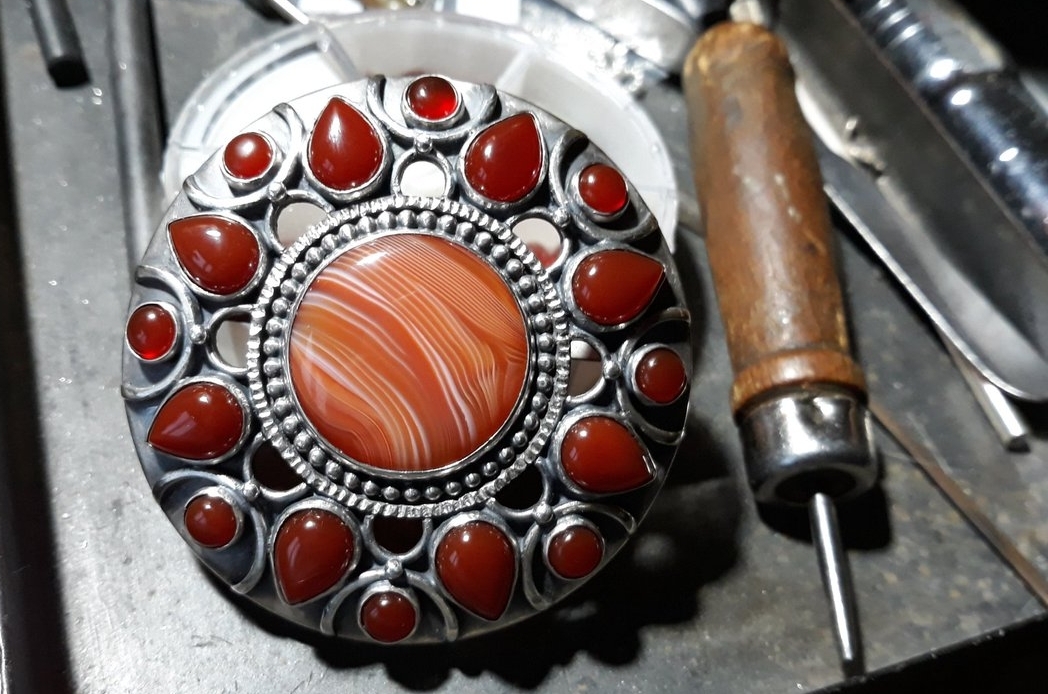

A well-preserved carnelian ring, of an unusual shape, discovered during an archaeological excavation in 1973, in the Kalemegdan Park, near the Cvijeta Zuzorić Pavilion. 4th century, Roman time Serbia
Among the Romans, there was a belief that carnelian made the wearer brave and had the power to heal wounds from weapons. The ancient writer Theophrastus* even states that the dark red carnelian was masculine, in contrast to the orange one, which embodied the feminine nature.
*Theophrastus, ancient Greek philosopher and mineralogist from the 4th century BCE.

Carnelian Ring. Ephoreia Archaioteton Periphereias Thessalonikes (no inv. no.)
The ring was unearthed “in a very early Muslim graveyard excavated in Thermi, a settlement in the plain east of Thessaloniki, which, in all probability, is datable to the first century of the Ottoman occupation of the region. [15th century]
The ring has a planoconvex hoop with a small projection at the middle of the bottom. The hoop is raised on the shoulders, forming triangular projections. The ovular, raised bezel is slightly undercut to project, and its upper surface is flat and plain.”
“Late Byzantine Jewellery from Thessaloniki and its Region: The Finds from Ippodromiou 1 Street and Other Excavations” Tassos Antonaras
https://www.academia.edu
Carnelian ring, Novo Brdo (Serbia), 14th/15th century National Museum in Belgrade, IN 24_4966
Serbian artistic heritage in Kosovo and Metohija. Identity, significance, vulnerability. Second revised edition, eds. M. Marković, D. Vojvodić, Belgrade 2017 (catalogue of the exhibition) https://www.academia.edu


Related posts:
 Medallion with a chain (belt decoration?), Roman time Serbia, 4th-5th century [d/b]
 Jewelry and metalwork of Roman Serbia – an overview
 Greek / Hellenistic Serbia – overview
 Sarmatian jewelry from Banat, Great Hungarian Plain / Pannonia (Romania, Hungary, Serbia)
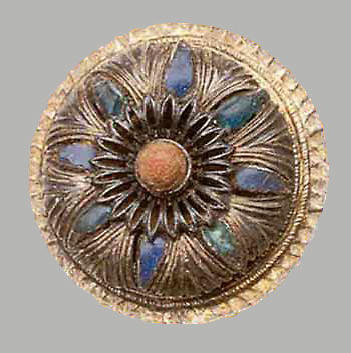 Waldgirmes brooch, silver, Roman, 5 BCE–16 CE [d/b]
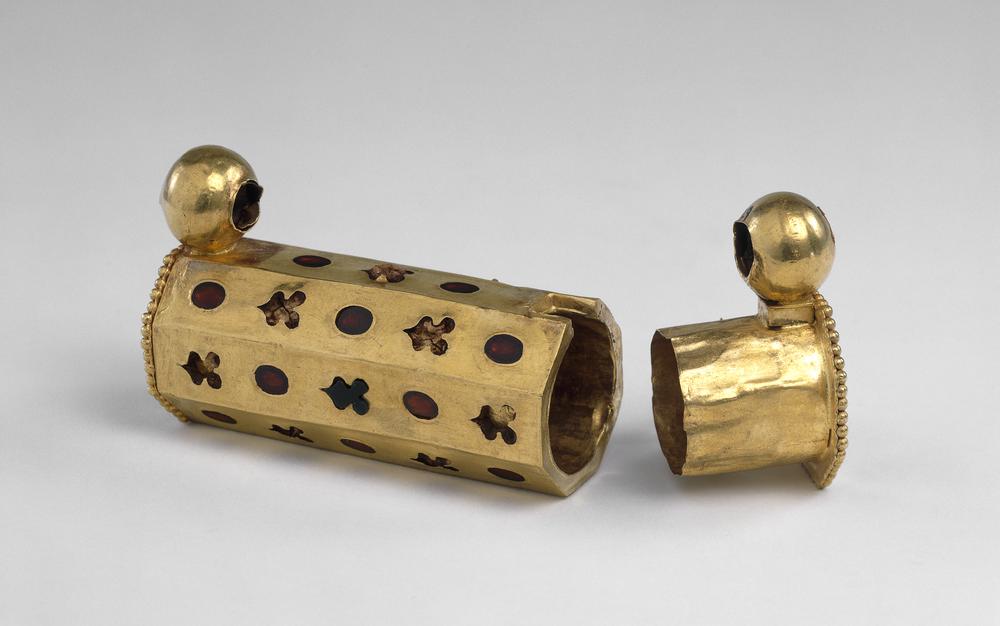 Cylindrical amulet containers – an overview
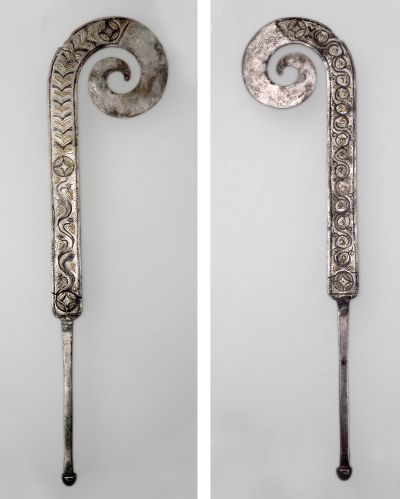 Silver augur staff, 3rd/4th C, Roman time Hungary, Pannonia [d/b]
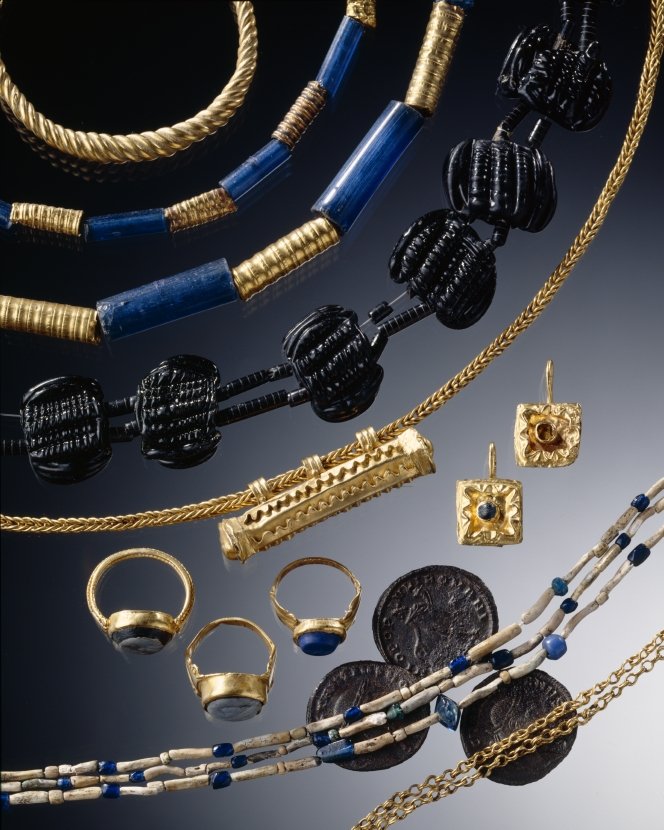 Isny hoard, 2nd/3rd century, Roman time Germany
 Gold ring with Cybele in a naikos [d/b]
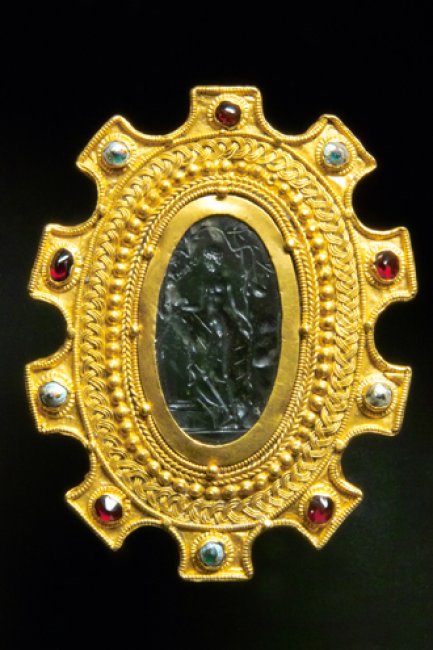 Brooch, 3rd-4th C, Dura Europos, Roman time Syria [d/b]
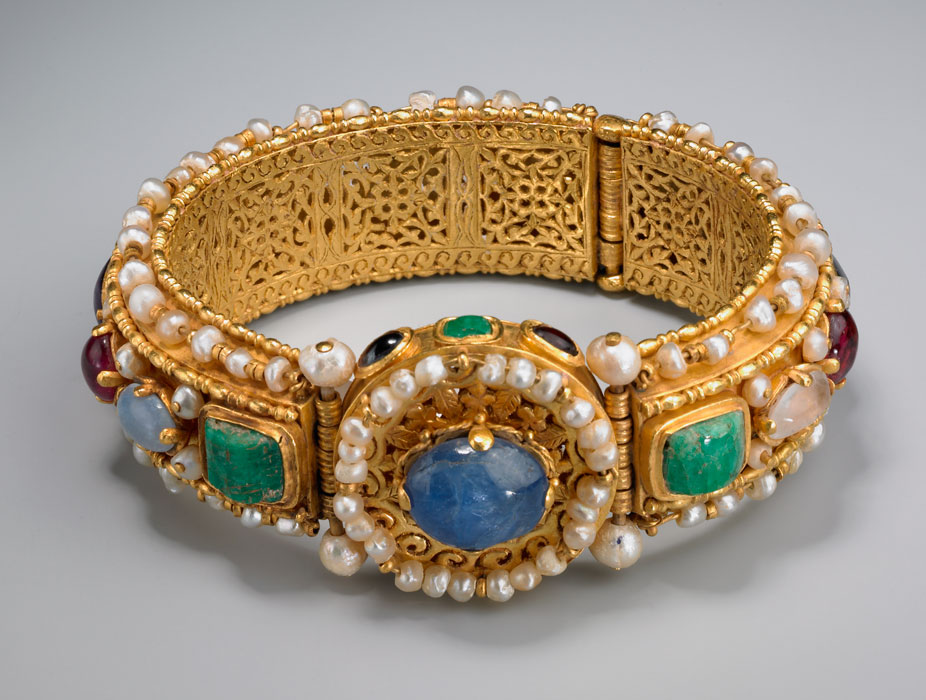 Bracelet, Byzantine, 6th C [d/b]
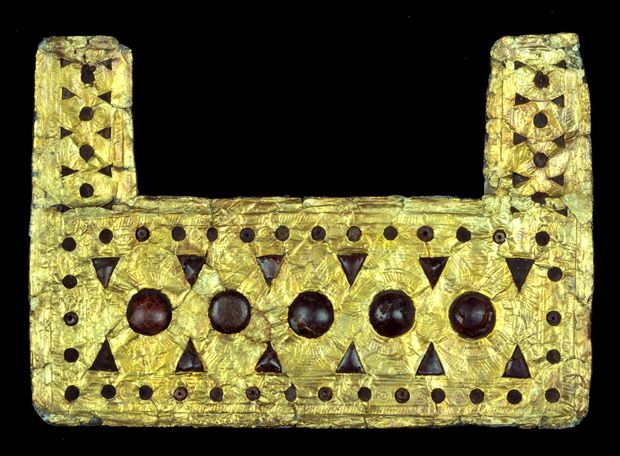 Pectoral, Etruscan, 7th C BCE [d/b]
Hello! First, I want to say that I love your website so much and really appreciate all the work you put into it. It is such a fantastic resource. I wanted to add a similar example I remember seeing from the Princeton excavations of Antioch, inv. no. 4941-j13. I was super curious about it at the time and am excited to see more examples! https://artmuseum.princeton.edu/art/collections/objects/113691