https://dariknews.bg/regioni/plovdiv/otkriha-zlatni-nakiti-v-mogilata-kraj-brestovica-1124074
lepsza fota https://www.petminuti.com
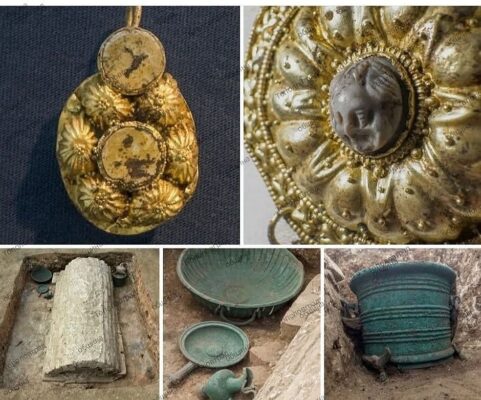
Pamuk Mogila near the Plovdiv village of Brestovitsa, Bulgaria, 1st century
https://bg.wikipedia.org/wiki/%D0%9F%D0%B0%D0%BC%D1%83%D0%BA%D0%BB%D0%B8%D1%8F%D1%82%D0%B0
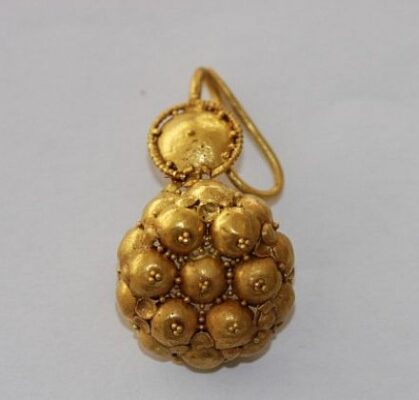
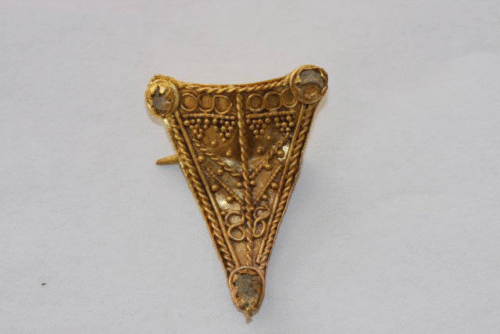
Gold jewelry belonging to a woman from a prominent Thracian family was discovered by archaeologists during excavations of the mound near the Plovdiv village of Brestovitsa, Bulgaria. They were found in a third grave dating to the 1st century. Archaeologists suggest that the woman may have been the wife of a ruler. Her burial ritual was cremation. A wooden chest with appliqués, two bronze locks in the shape of a deity and a clasp were found in the grave. The chest also contains two gold jewelry made of solid gold – a brooch with filigree and a cassette enamel with a preserved gold pin on the reverse side of the brooch.
https://www.standartnews.com
The female burial was accompanied by the placement of a wooden toilet chest, which had rotted and only the appliqués and two massive gold ornaments remained – a brooch and a gold pendant, Kitsyov said.
The second piece of jewelry a type of hairpin, which is shaped like a hemisphere and decorated with gold balls. Three glass embalming jars were also found in the grave, in which perfumes and fragrant oils were stored. A bronze patera, a bath vessel with handles, was also found.
Archaeologists have discovered unique gold jewelry belonging to a wealthy woman from the 1st century AD in the Pamukliata mound near the Plovdiv village of Brestovitsa. A brooch and a hairpin made of real gold prove that a noble lady was laid to rest in this grave, probably the wife of the high-ranking warrior, whose burial the specialists excavated and studied a few days ago, marica.bg reports.The priceless collection of finds from this hill is also supplemented with a full set of toiletries, carefully arranged in a box. They are the personal belongings of the woman who was buried by cremation. They were placed together with the bones after the burning, explains the head of the archaeological expedition, Dr. Kostadin Kisyov. The brooch is triangular in shape, finely decorated with filigree, in the corners there are applied enamel ornaments that resemble knitted lace. On the back are preserved the needle and pin with which the jewel was attached to the garment – all made of pure gold. The pendant – an ancient hair clip, impresses with its size and appearance. It is massive, in the shape of a hemisphere and with several gold granules. Its function was to hold strands of hair, but it also served as decoration, explains the specialist.
Gold jewelry from such an early period and of this type has not been discovered before, says Kisyov. Moreover, the valuable women’s accessories were in a wooden chest with bronze fittings. Over the centuries, the wood has rotted, but the appliqués, locks, silver handles and the bronze bottom of the box have been preserved. Three glass embalmers were found in it, with dried dark-colored sediments on their bottom. A chemical analysis of the material’s composition is yet to be done. The burial hearth also contained a small bronze basin, two large clay embalmers for pomade, and a bronze patera – a watering can for watering water, something like a bath tub with a handle. https://blitz.bg/regioni/bezcenno-zlato-izskochi-ot-pamukliyata-snimki_news213344.html
Early 2nd century, Bulgaria
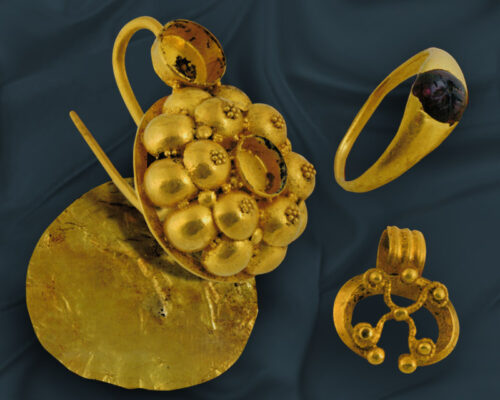
The Healer’s gold Jewelry
Krastava Mound (in the area of the village of Dragodanovo, Sliven District), Bulgaria [Златните находки от Крастава могила с. Драгоданово]
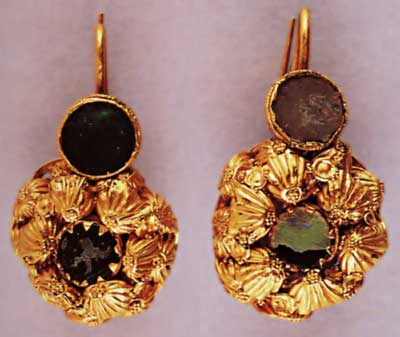
https://apollon.blog.bg/izkustvo/2011
Early 2nd century, Bulgaria
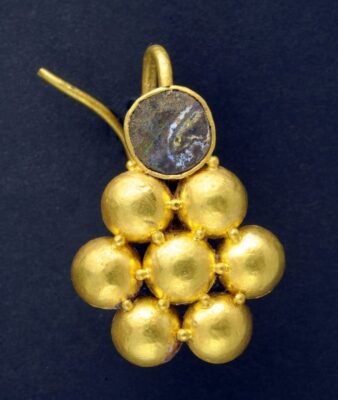
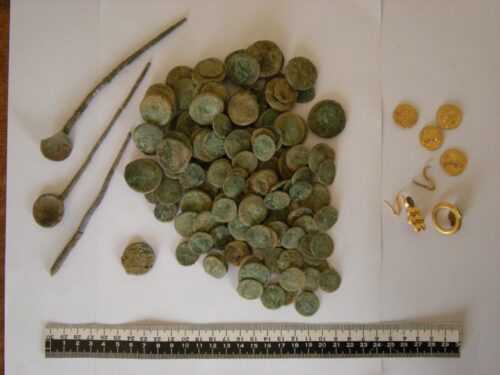
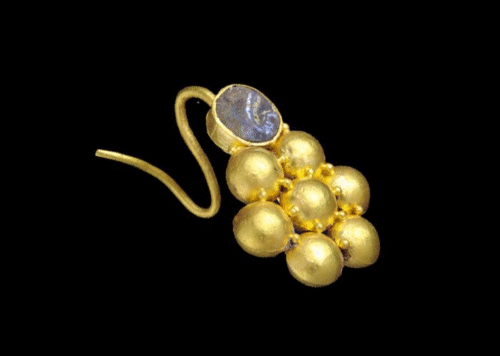
Roman-era earring found near Kiryat Gat, Israel, part of a hoard.
The treasure trove includes a gold ring with a precious stone in the image of a winged goddess, an earring in the shape of a flower, two sticks of silver and around 140 coins. The coins date from the time of the Roman emperors Nero, Nerva and Traja, from 54-117 CE.
“The cache was discovered wrapped in frayed cloth fabric and buried in the courtyard of a recently excavated Roman-era building. “This is probably an emergency cache that was concealed at a time of impending danger by a wealthy woman, who wrapped her jewelry and money in a cloth and hid them deep in the ground prior to or during the Bar Kochba revolt,” said archaeologist Sa’ar Ganor of the Israel Antiquities Authority.
During the Jewish rebellion of 132-135 CE, Jews under Roman rule would re-strike coins of the emperor Trajan with symbols of the revolt. This hoard includes silver and gold coins of different denominations, most of which date to the reign of the emperor Trajan”
Source https://www.timesofisrael.com/cache-of-roman-coins-and-jewelry-discovered-near-kiryat-gat/
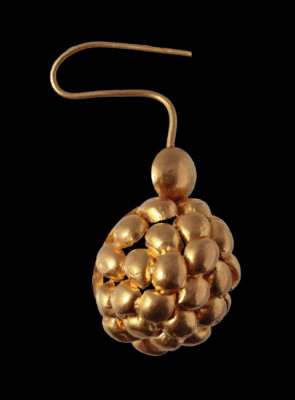
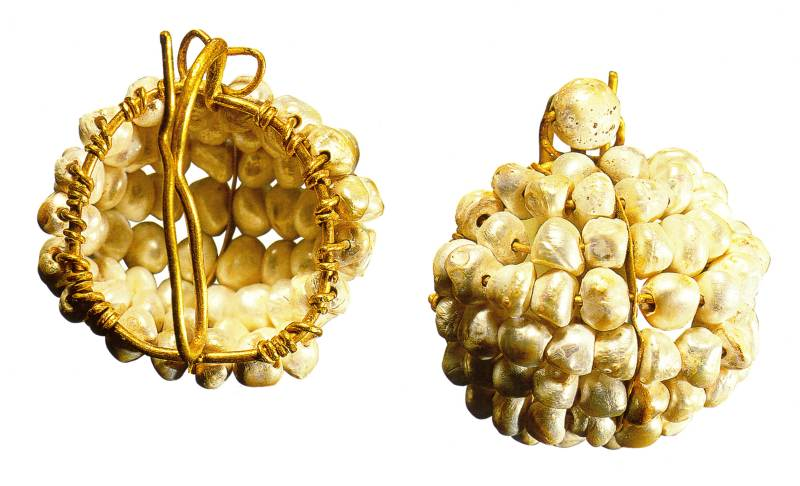
sanctuary Tintignac 1st-2nd century
https://journals.openedition.org/adlfi/79608
https://www.academia.edu/19849792/Tintignac_un_lieu_de_culte_Gallo_Romain_Les_Gallo_Romains_2014
Le sanctuaire antique des arènes de Tintignac
sanctuary Tintignac 1st-2nd century
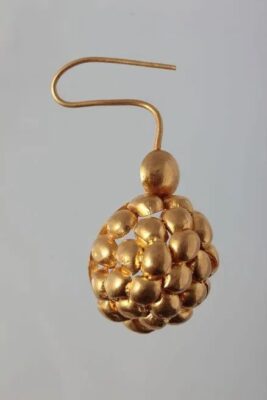
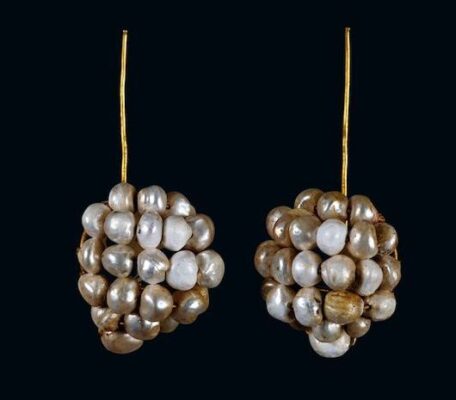
Photograph by DEA/ALBUM
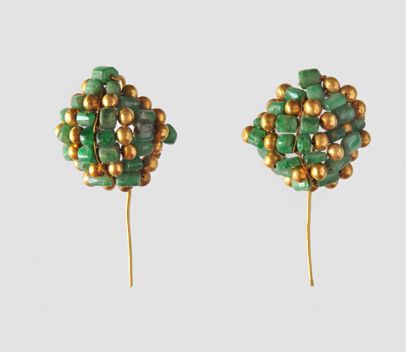
©SSBAPES
https://www.pompei.numismaticadellostato.it
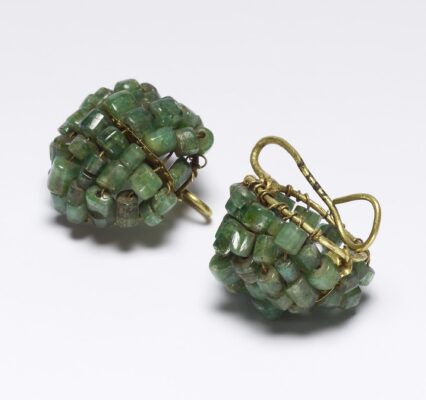
Naples, the Vesuvian area, 1st century. Diam. 2.2 cm
Pair of earrings with hexagonal emeralds threaded on a convex grid of gold wires, fastened to a circular frame.
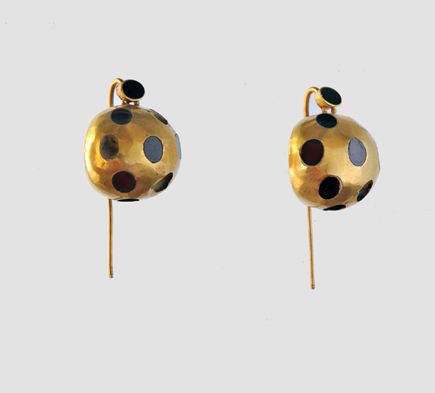
https://www.pompei.numismaticadellostato.it
https://exhibitions.kelsey.lsa.umich.edu/oplontis-leisure-and-luxury/jewelry.php
Related posts:
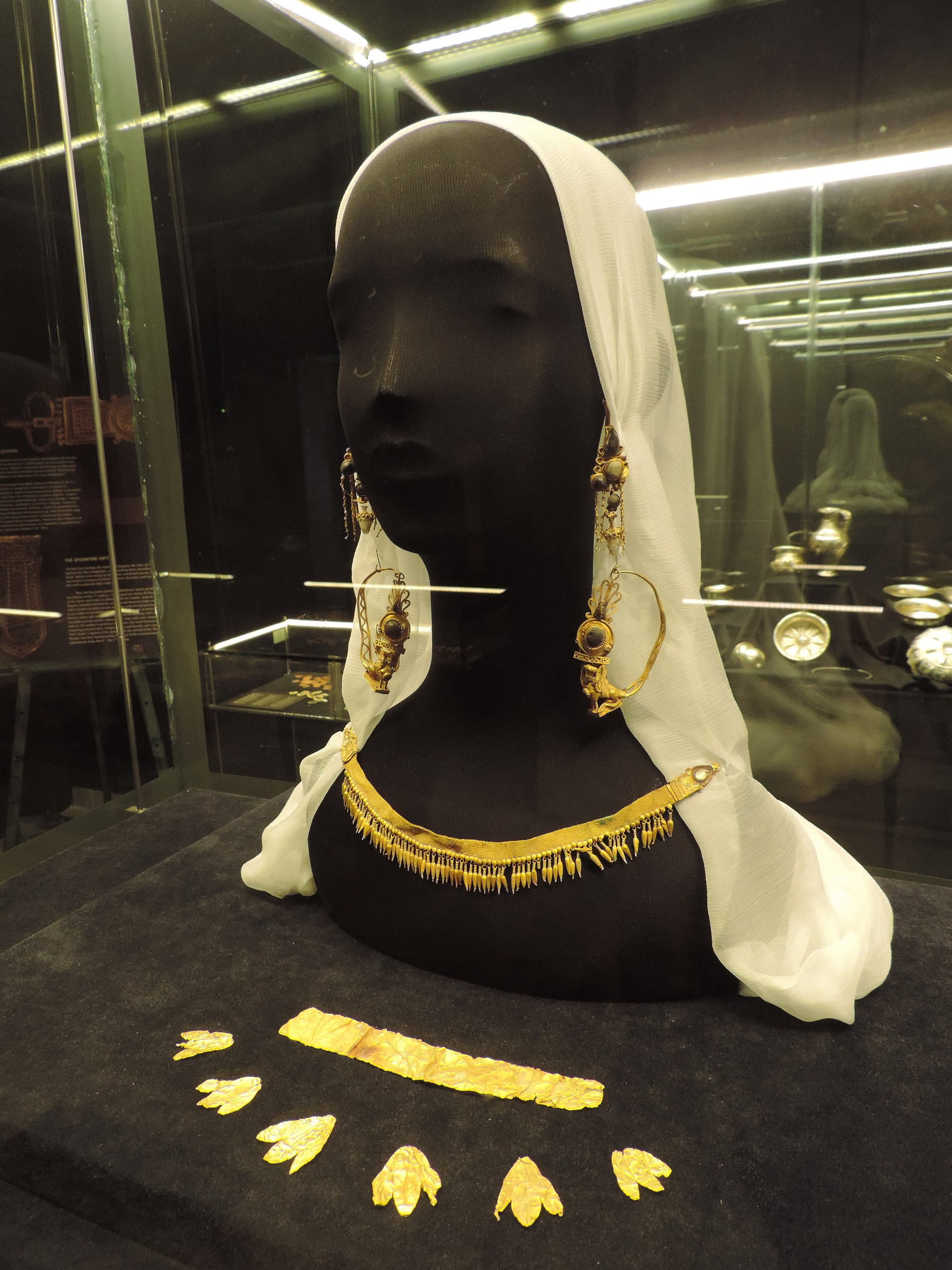 Jewelry of the Thracian priestess Leseskepra, Anchialo, Bulgaria
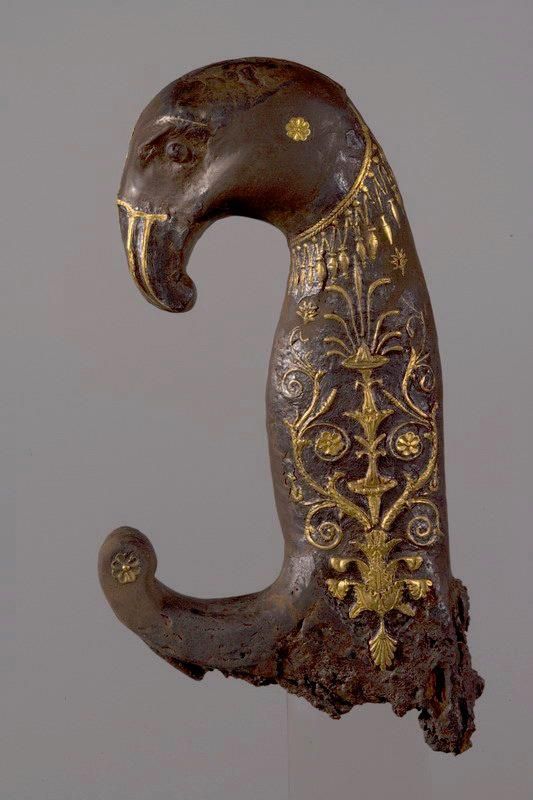 Ornaments of Thrace
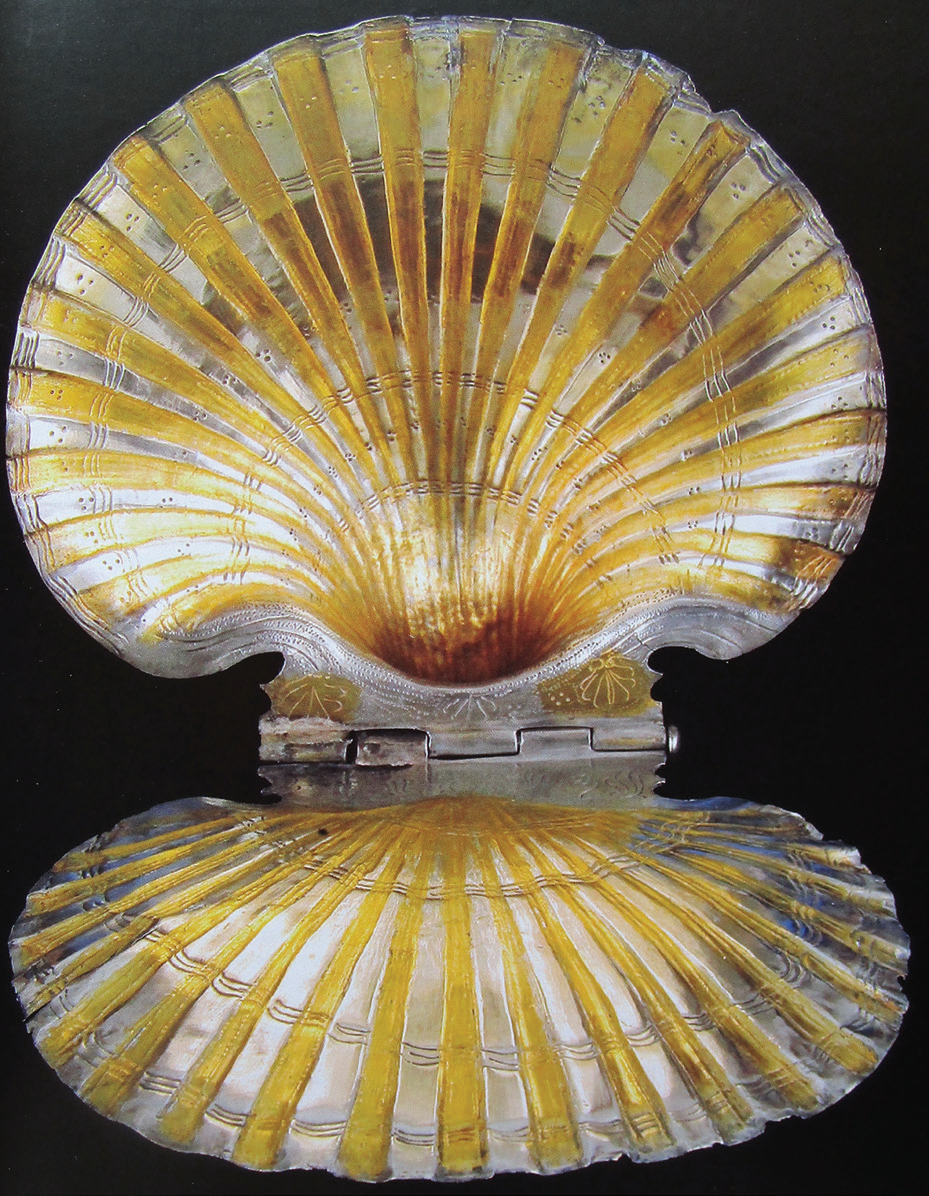 Scallop shell pyxis from the Golyama Kosmatka Tumulus; Bulgaria [d/b]
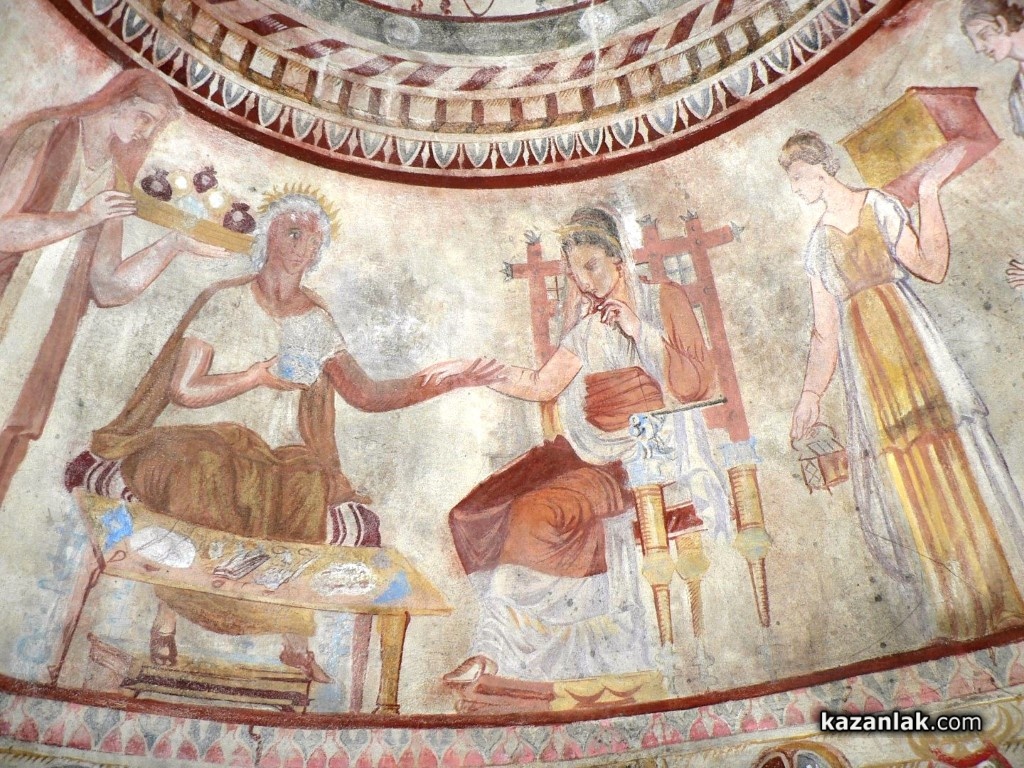 The Thracian tomb in Kazanlak, Bulgaria. Quick notes
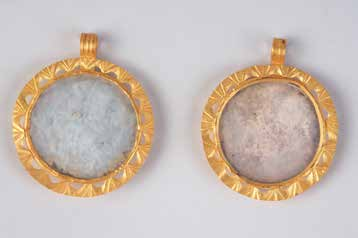 Jewelry from a female burial at Silistra necropolis, Roman time Bulgaria.
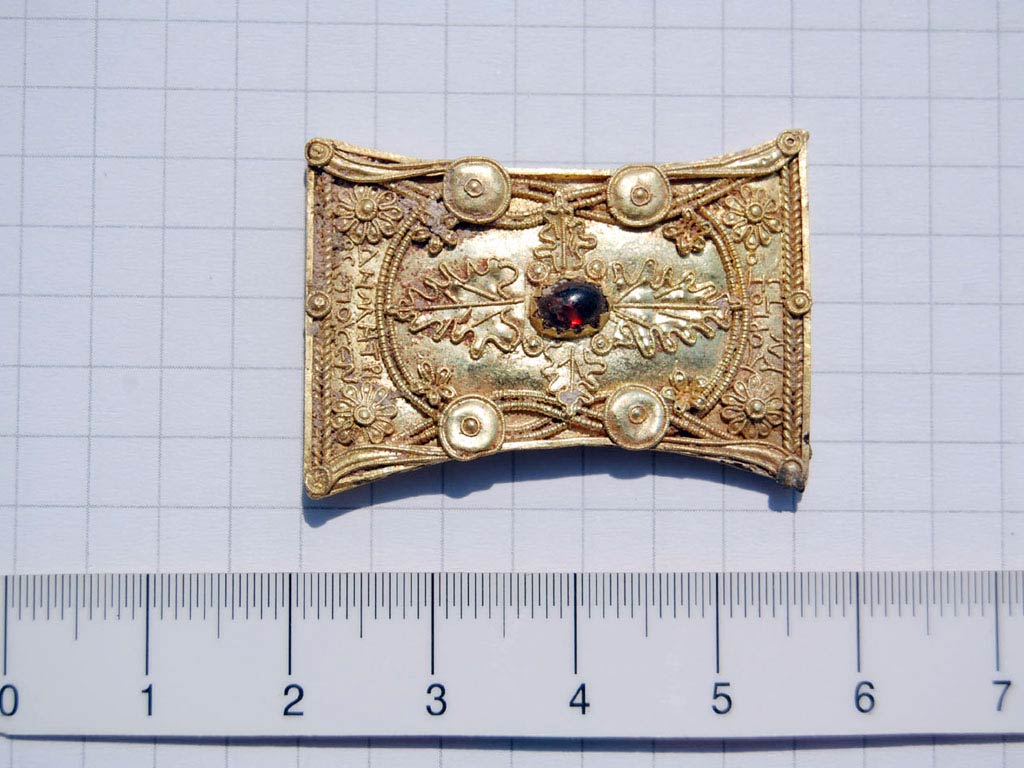 Diadem with a central plate, 3rd century BCE, Sinemorets, Bulgaria [d/b]
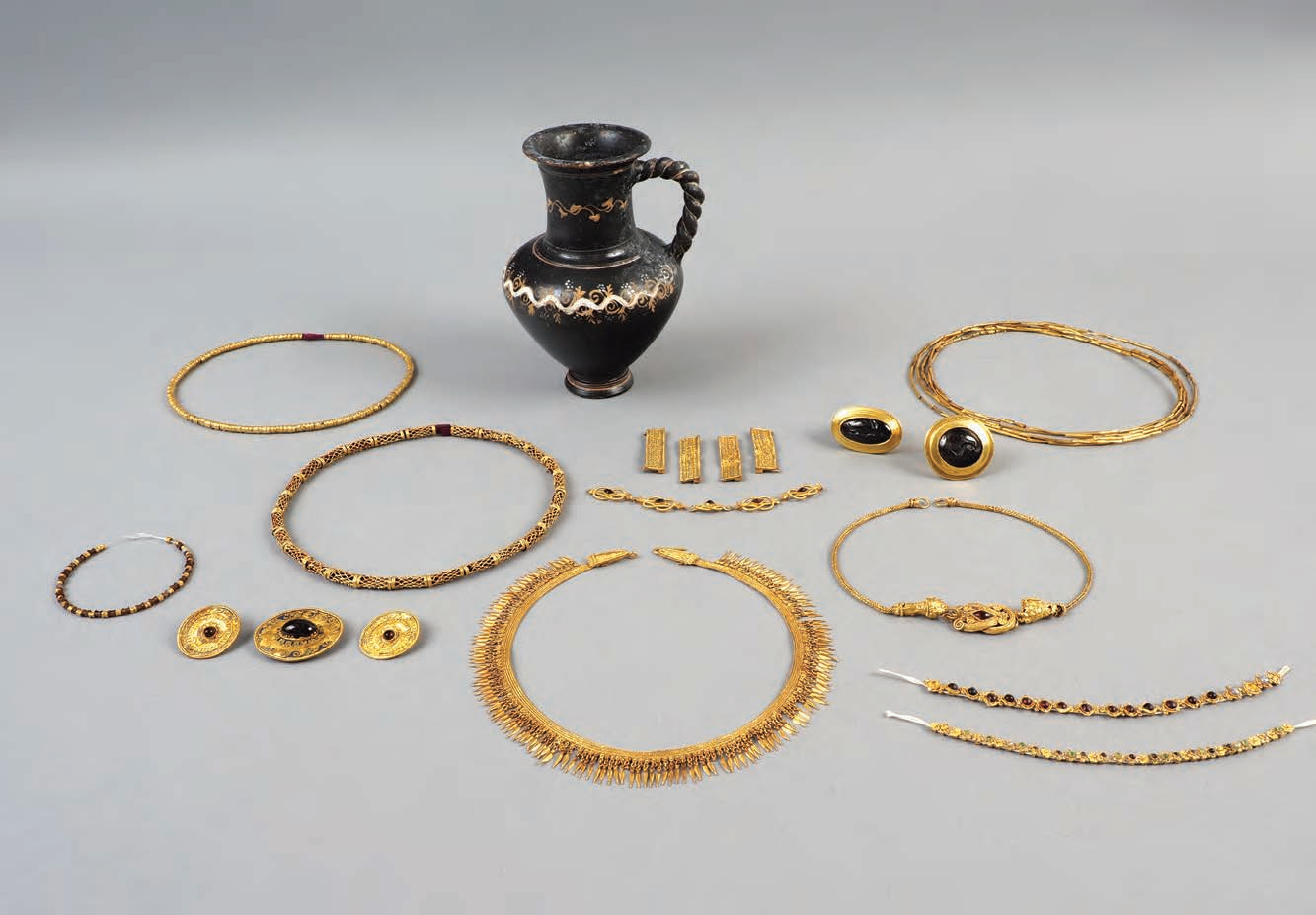 Mesambria, 3rd century BCE, female burial [Bulgaria]
 Village of Kapitan Petko Voivoda in Topolovgrad, Bulgaria. Thracian female burial, 2nd century
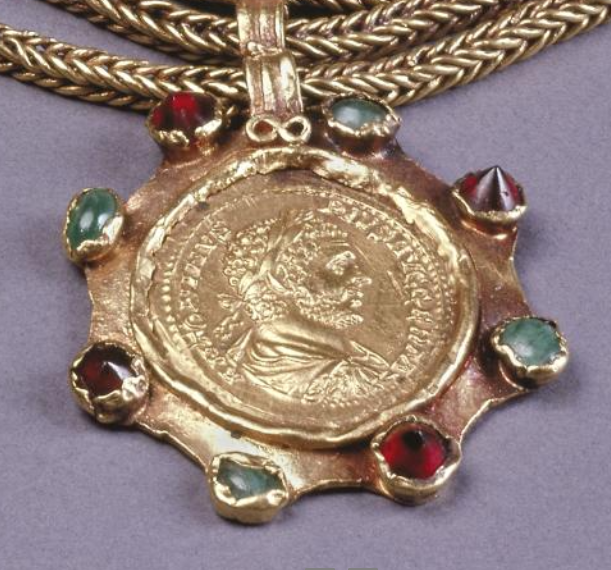 Roman period necklaces with pendants – an overview
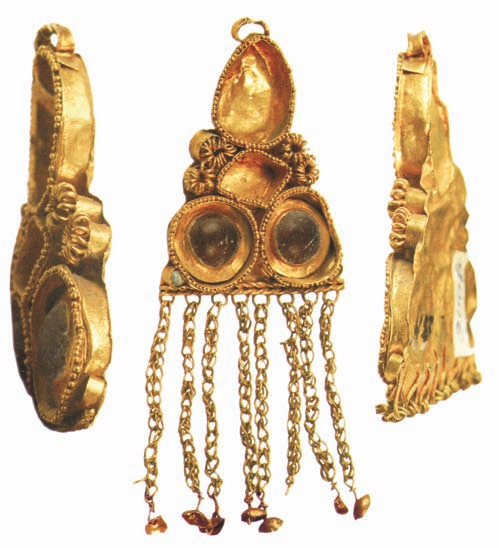 Romania, the Buzău treasure. Sarmatian. Triangular earrings
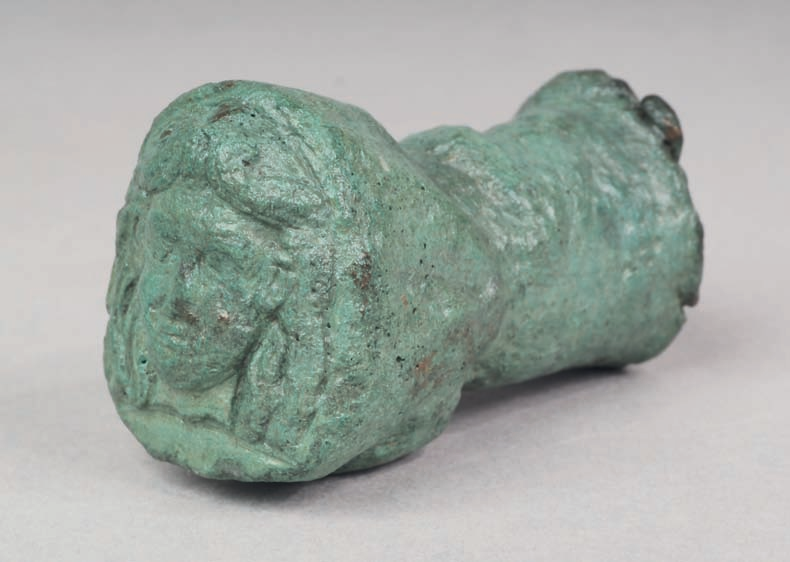 Punches for toreutics and jewelry making. Metalworker’s tools from a territory of Bulgaria
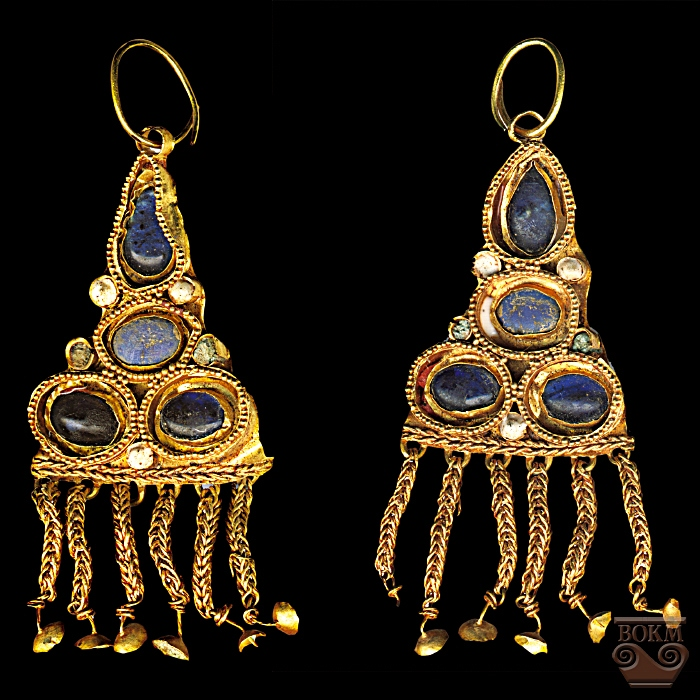 Sarmatian triangular earrings – an overview