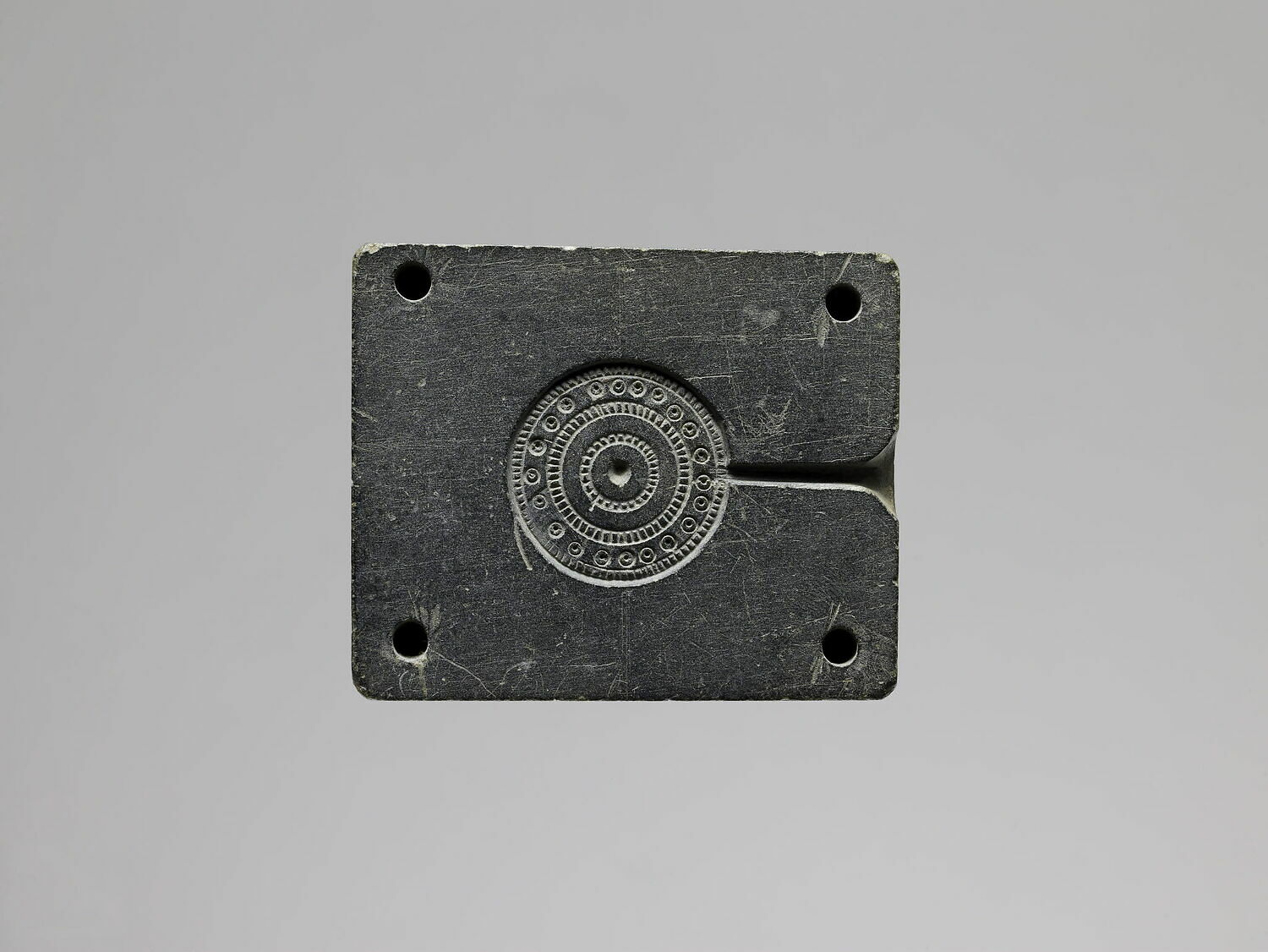
The medallion, carved in steatite, most likely served as a mold for making impressions in clay or wax. This mold was excavated in 1930 at Dura Europos, in House of the Priests. J.A. Baird mentions a lead patera found in a temple of Artemis nearby the Priestly House made of a similar mold. That indicates local and mass production.
In the Yale Art gallery there is the a plaster cast of this mold >> https://artgallery.yale.edu/collections/objects/87107
The mold is a part of the Yale Art collection 1931.584.1.1-.2
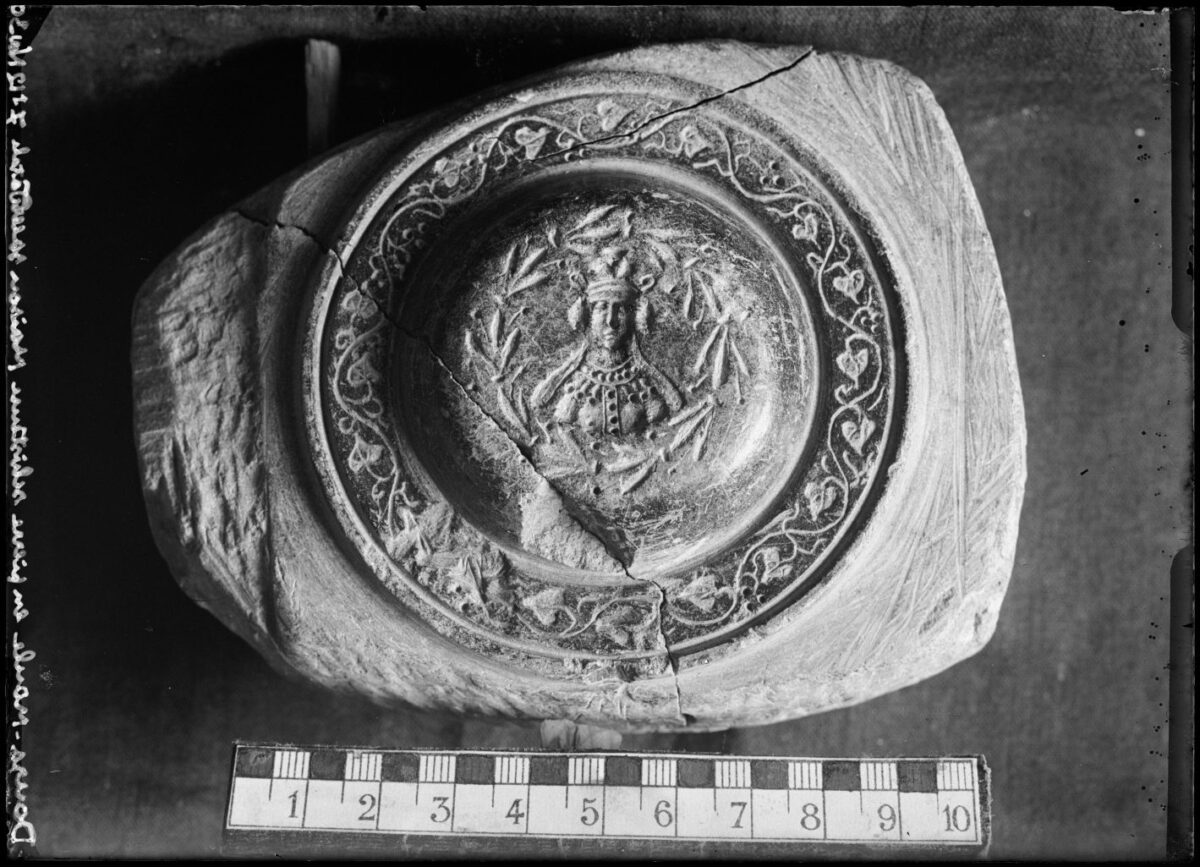
Yale Art collection 1931.584.1.1-.2
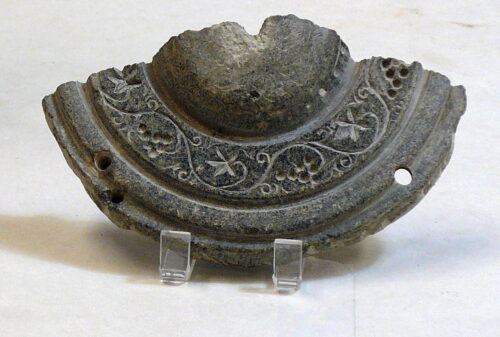
In the Louvre collection there is a fragment of another steatite mold found in Dura Europos, dated to the 2nd-3rd century.
It is larger, has diameter: 11.5 cm [Height: 2.6 cm], and is decorated with grapevine.
Is described as “a type of double mold pierced with two holes”.
In the Yale AG there is a part of the steatite mold [photo below] that seams to be the second part of the mold from Louvre. Excavated at Dura, Temple of Atargatis, is dated to the 2nd century.
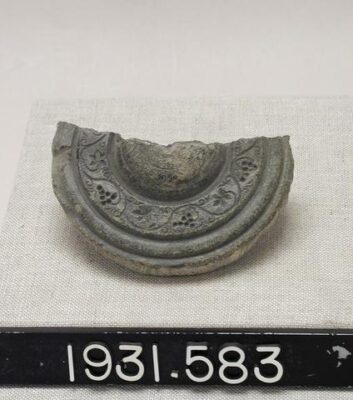
https://artgallery.yale.edu/collections/objects/5178
- J.A. Baird, The Inner Lives of Ancient Houses: An Archaeology of Dura-Europos
- G. Azarpay, Nanâ, the Sumero-Akkadian Goddess of Transoxiana. Journal of the American Oriental Society, Vol. 96, No. 4 (Oct. – Dec., 1976), pp. 536-542 https://www.jstor.org/stable/600086
Related posts:
 Parthian pendant / brooch – an overview
 Silver brooch with a glass, Dura Europos, Roman Syria [d/b]
 Medallion with a goddess, 2nd C, from Banias, Syria [d/b]
 Bronze age jewelry molds / matrixes from Syria.
 Gold medallion from Tell Bazi, Syria, 14th-13th C BCE [d/b]
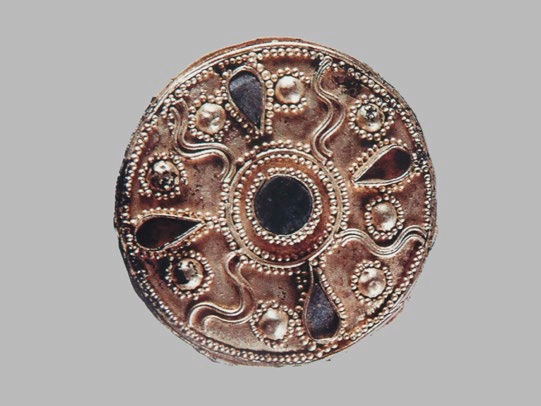 Medallion from Ebla, Syria, 1750-1700 BCE [d/b]
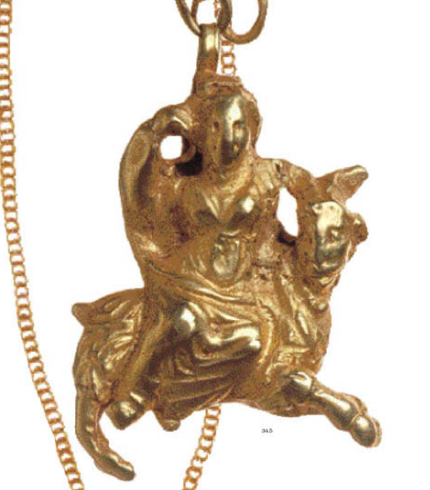 Goddesses with animals – overview
 Medallions with a sun motif
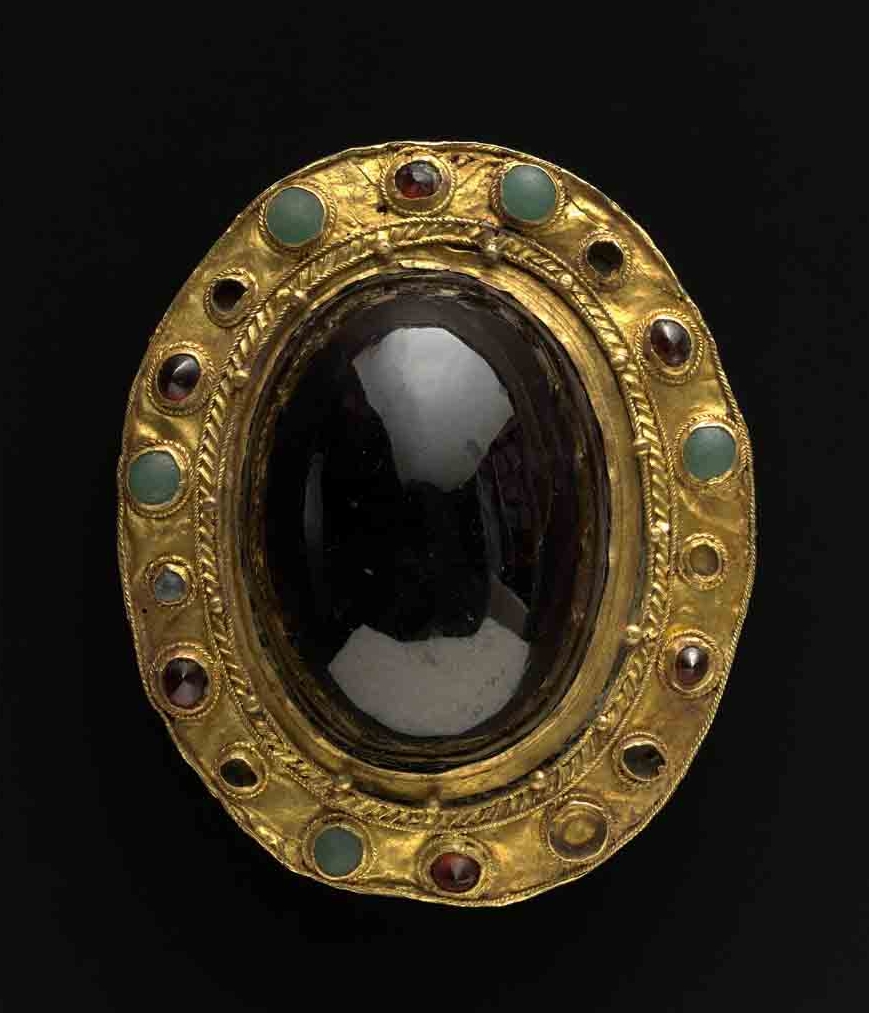 Brooch with sapphire, 1st-2nd century [d/b]
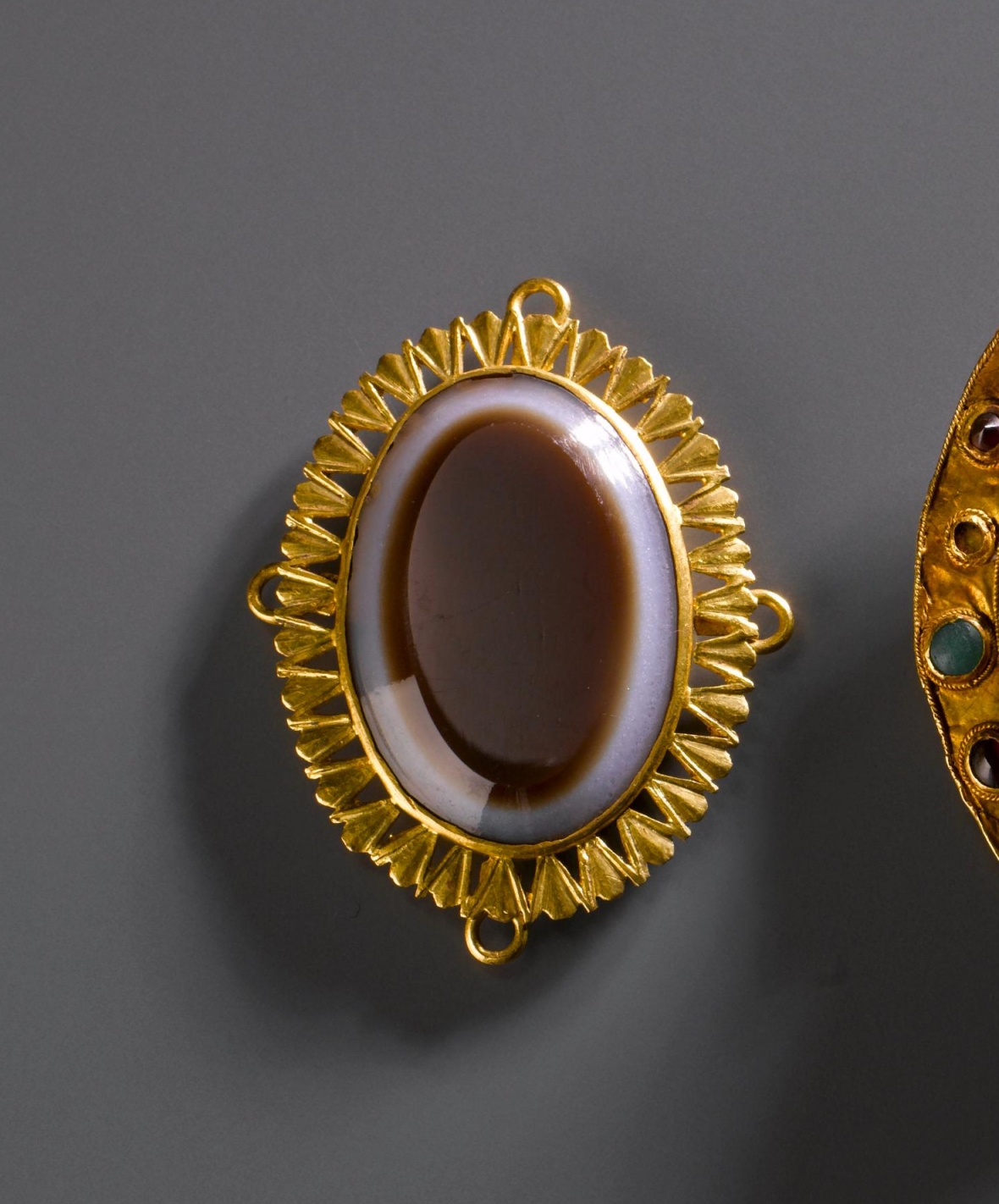 Medallion with sardonyx, 3rd century, Syria [d/b]
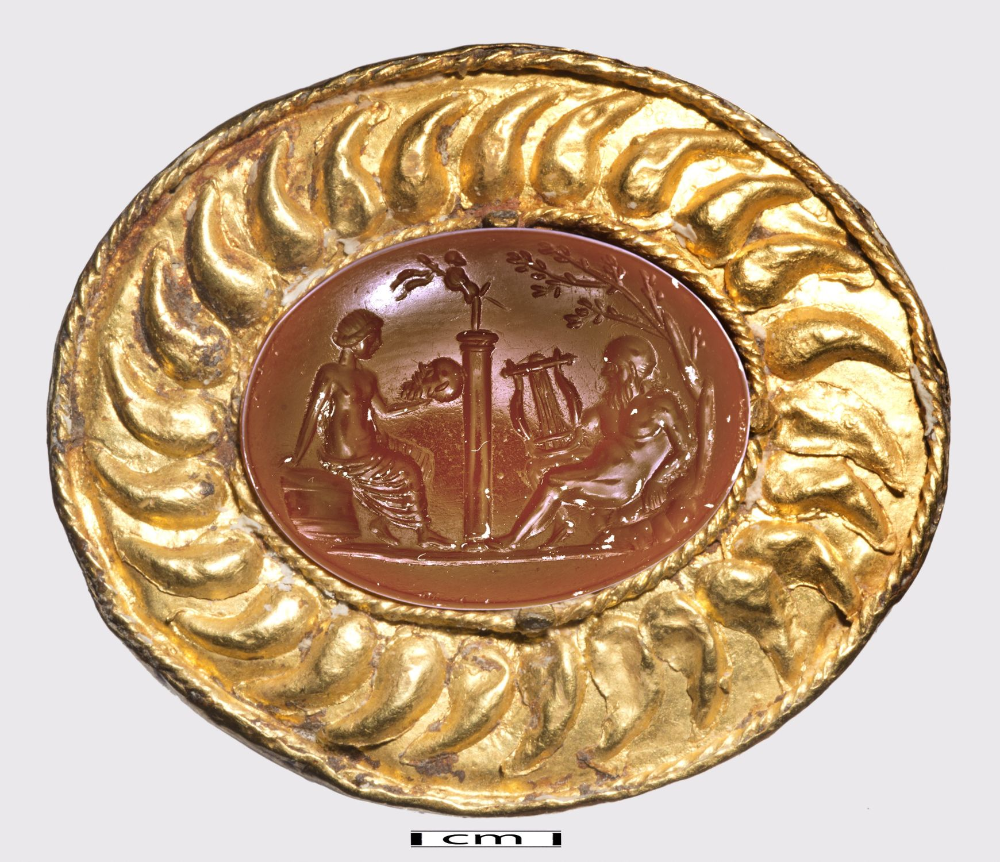 Gold brooch with an intaglio, Tartus, Roman time Syria [d/b]
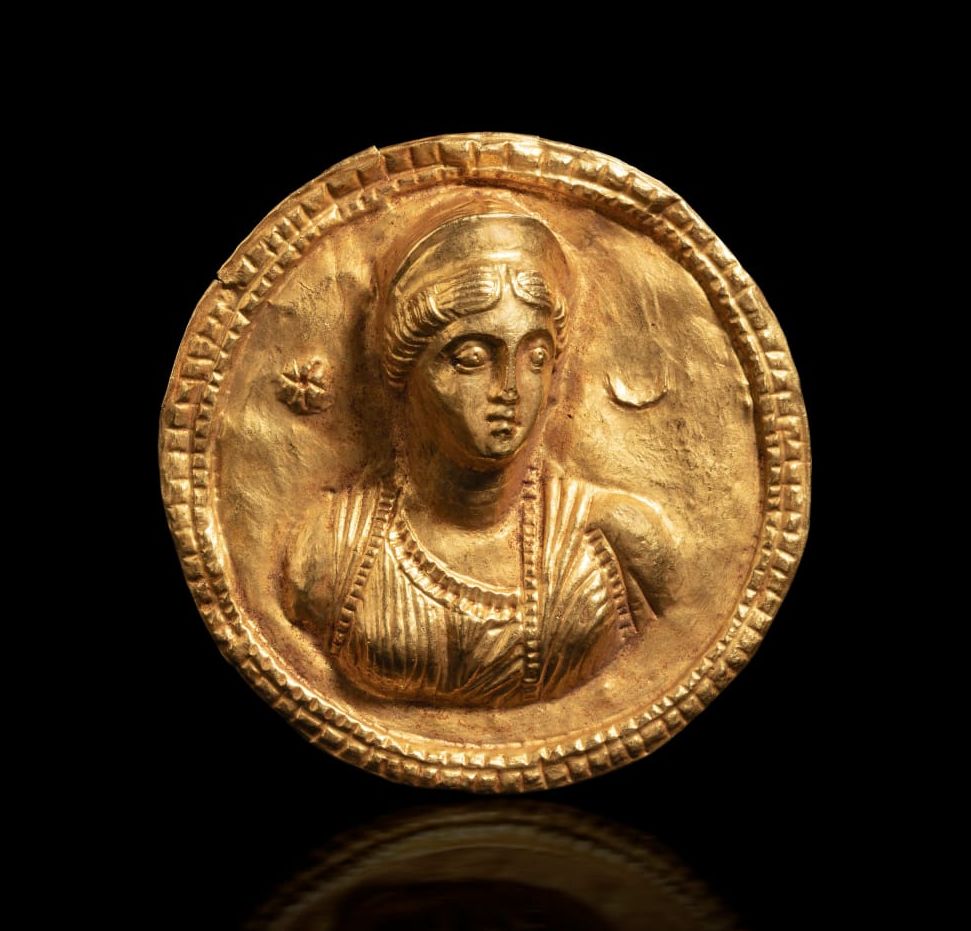 Medallion with Aphrodite, 2nd-1st century BCE, Hellenistic Syria [d/b]